Back to writings
Back to writings
REASON AND BELIEF
Reason is the instrument with which we view and judge our life and the universe. Everything must fit into a formula created by us. The ‘big bang’, what existed before the ‘big bang’, thus before time and therefore an impossibility to investigate/define this, because 'before' is an indication of time and therefore cannot be used, black holes, antimatter and dark matter.
These are two cute visualizations of the 'big bang' and what happened afterwards, but light only originated at the moment of the 'big bang' (and light has a speed), so what do we actually see...
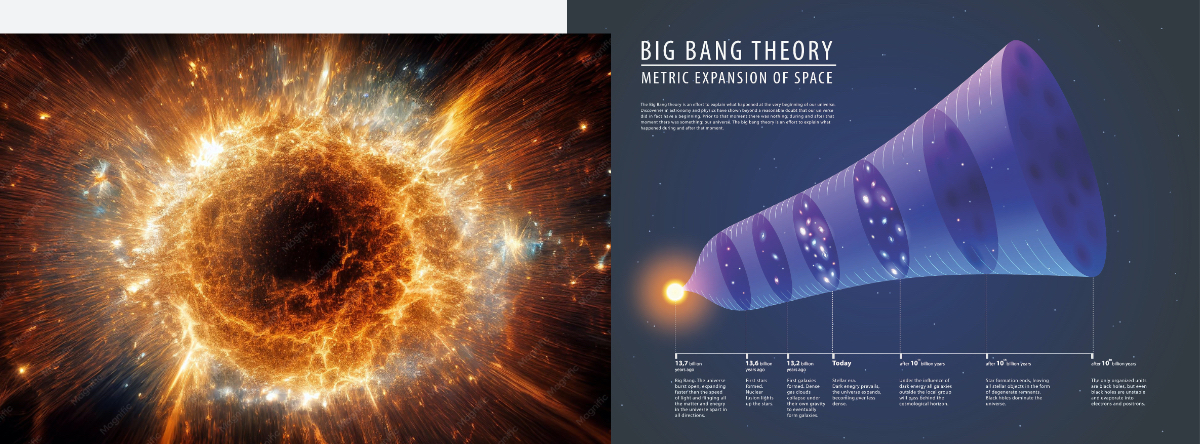
We are digging a tunnel kilometers long where we make the smallest particles collide at dizzying speeds, we look at the oldest light, and we calculate a lot.
Every time, I run into ‘we are almost there, soon everything will be clear’ or ‘the moment this happens is infinitely short, barely capture-able, observable’. It strikes me as rather hopeless.
Am I really supposed to believe exclusively in reason? Is this not, alongside all the concrete results, a current ‘religion’ instead of the one of the idea that the world was flat, that an old man with a beard had created everything, and that we are the guardians of the universe (what arrogance by the way)?
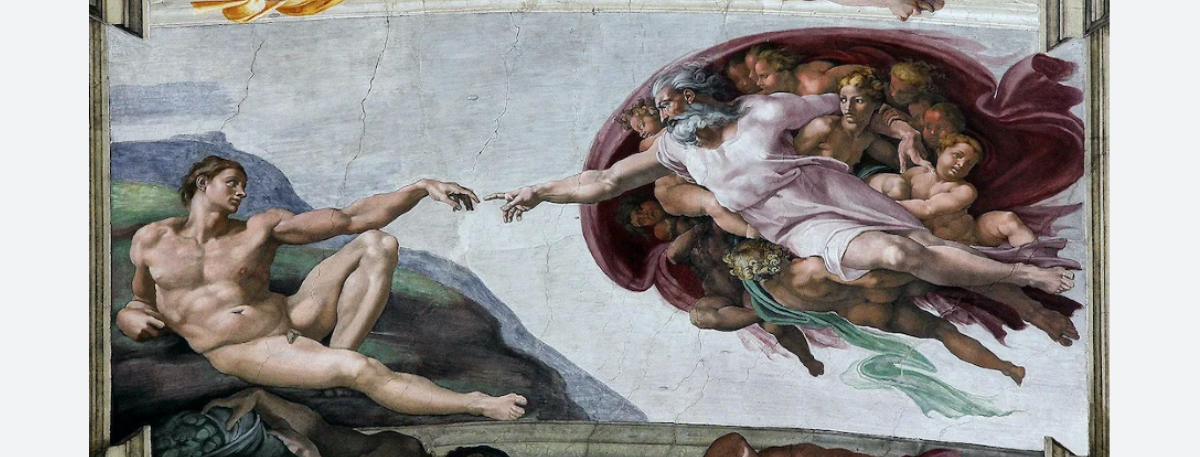
That we are doing well, provided we just plough through the Bible long enough and listen to a few gurus in monk's robes or with a red dot on their foreheads? Do words/definitions not fall hopelessly short? And still do even now?
It revolves around the verb ‘to believe,’ whether we like it or not. Around how a perfectly coherent idea or doctrine must be able to encompass everything, even the intangible. Control over everything in order to live with peace of mind.
I integrate my interpretation of religion into that all-encompassing image so as not to lose the uncontrollable; on the contrary, to let it play along. It is my way of not letting that slippery bar of soap slip away.
FAITH
When I began the works for the Gesù Redentore, Don Marco asked if I belief. I answered in the affirmative, and that was enough for him. Exactly what faith that entailed did not matter to him. It was a reassurance for him and for me. For him, too, believing probably implies first and foremost that not everything will ever be explainable by us, but that it certainly has an influence on us. It is actually a humble standpoint.
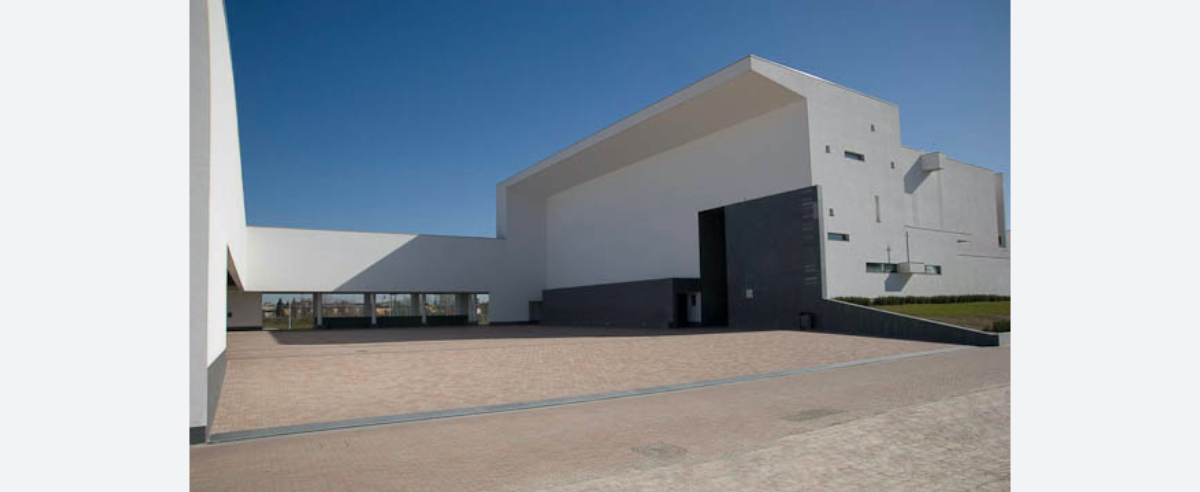
Religion is something that has occupied me for years: was I an atheist or not? Eventually, I realized that besides everything man can reason about, there might well be much, much more. I understood Wittgenstein with his famous statement: 'What we cannot speak about we must pass over in silence', but that that is indeed the essence of the all.
What good is this? Everything has now found its provisional place for me, even though I have no use for my God, or whatever you want to call that inexplicable.
I make art. At least, that is what others claim. For me, it entails the search for beauty, among other things, and the integration of mystery. Beauty—what is that? A conclusive definition of beauty has never been given. The mystery is clear as a word, it does involve the irrational, unexplicable, but it doesn't make it clear.
I react to what happens around me, to what touches me.
I get close to the mystery in a painting by trying to go beyond reason. That something manifests itself in that work that still fascinates even after several years without revealing itself (Karl Kraus said that an artist can make the riddle out of the solution).
I can study as much as I want (and that is a requirement; it brings me to the edge from where I can take the leap). If there is not something intangible in the canvas, it remains a clever work, a trick, not a real work of art. So when I work, I must lose myself in that process, so that something can emerge that I cannot control. That is just how it is. To fall into that 'hole', a 'mistake' can help...
THE DISTURBING ERROR PRINCIPLE
Balancing on the edge, I throw myself into the unknown. Often, the next day, I see that I have failed. That it has yielded a nonsensical result. So I have to try again. Hence the assertion that a good painting of mine is often the sum of the 'corrected errors'.
The argument concerning the 'woven-in error' goes back at least sixty years. My mother once told me that there must always be an error woven into the pattern of a Persian carpet. Faith says that only Allah is perfect. If the carpet were perfectly symmetrical, it would compete with Allah. I interpret that, too, to mean that it would then be untouchable. I am a human being and therefore cannot achieve total perfection. I must turn the 'error' into the fortunate solution of the painting.
I realized this thanks to an artist friend who, years later, came up with a similar proposition regarding perfection-imperfection. He claimed that every good work must contain a ‘flaw’ (so, human work?). Such a 'flaw,' provided it is in the right place, is like a 'pleasant nail' that you keep snagging on. Since then, I have searched for such ‘flaws’ in others.
Here is a list:
The landscape of the ‘Mona Lisa’.
The hand of ‘David’ by Michelangelo.
The age of Mary in Michelangelo’s ‘Pieta’ in St. Peter’s.
The proportions of the bodies and the attachments of the heads in Michelangelo’s ‘Chapelle Mediciee’.
The theatrical-set-like landscape of Botticelli’s ‘Spring’.
The background of ‘The Descent from the Cross’ by Rogier van der Weijden.
The unsettling atmosphere of Caravaggio’s ‘The Musicians’.
The hands of the right figure in Caravaggio’s ‘The Emma Passers-by’, making an important gesture.
The scratch in the eyebrow of Rembrandt’s ‘The Self-Portrait’ in Kenwood House.
The hand of Banninck Cocq in Rembrandt’s ‘The Night Watch’.
The place of the spectators in ‘LAS MENINAS’ by Velazquez.
The floors in Vermeer’s paintings.
The skirt of ‘THE DANCER’ by Degas.
The hole in the sculpture ‘CITY WITHOUT A HEART’ by Zadkine.
It is too much to show, all these 'mistakes' that are in the right place and are therefore the strength and essence of the work.
You could say that Francis Bacon tried to make of that ‘mistake’ his trademark. It fits this/his time. That is why I often look at his work and try to see where it works and where he falls short.
I remember a discussion with a friend about the red and blue bow in Velazquez’s ‘WOMAN WITH A FAN’ from the Wallace collection. That bow irritates me; it doesn't appear anywhere else as a color. My friend disagreed with me. Cover it with your hand and judge for yourself. Yet, perhaps this is why it is a good painting. The irritation gives it a sharper edge; it is perhaps the 'nail'.
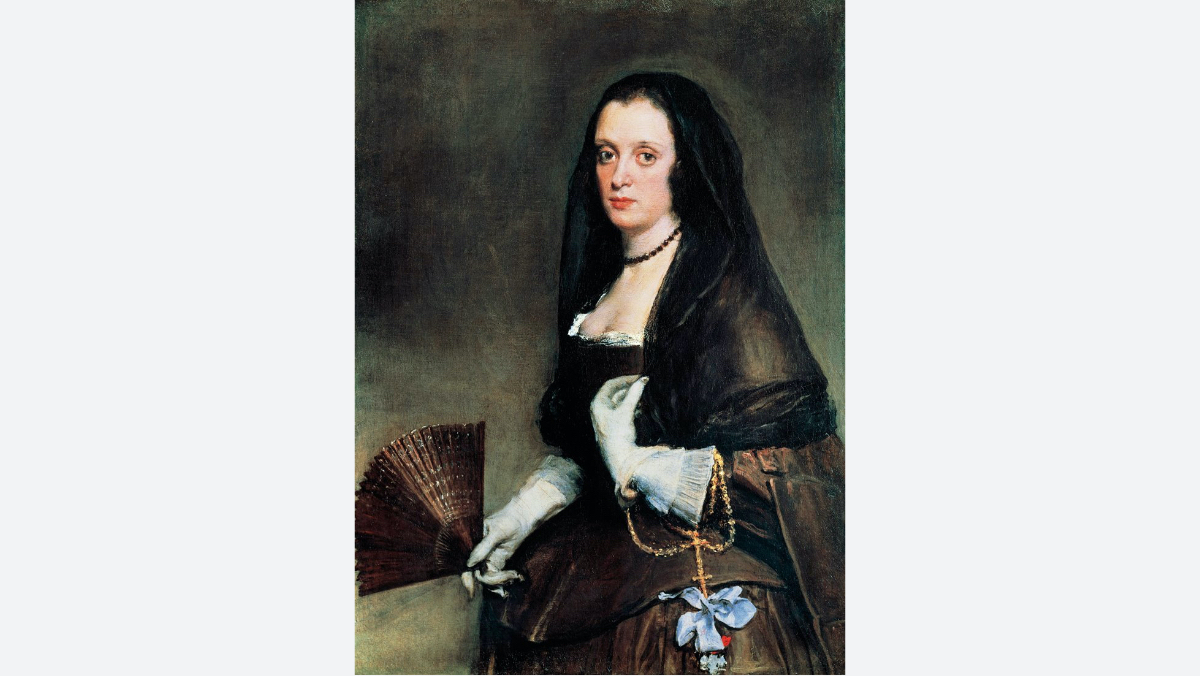
Woman with Fan.
FAILED ATTEMPTS
Sometimes an attempt has been made in a banal manner. What to think of the skull in Holbein’s ‘THE AMBASSADORS’? It may serve as a moralistic motif, but I feel it falls outside the painting. It doesn’t work; it is merely distracting.
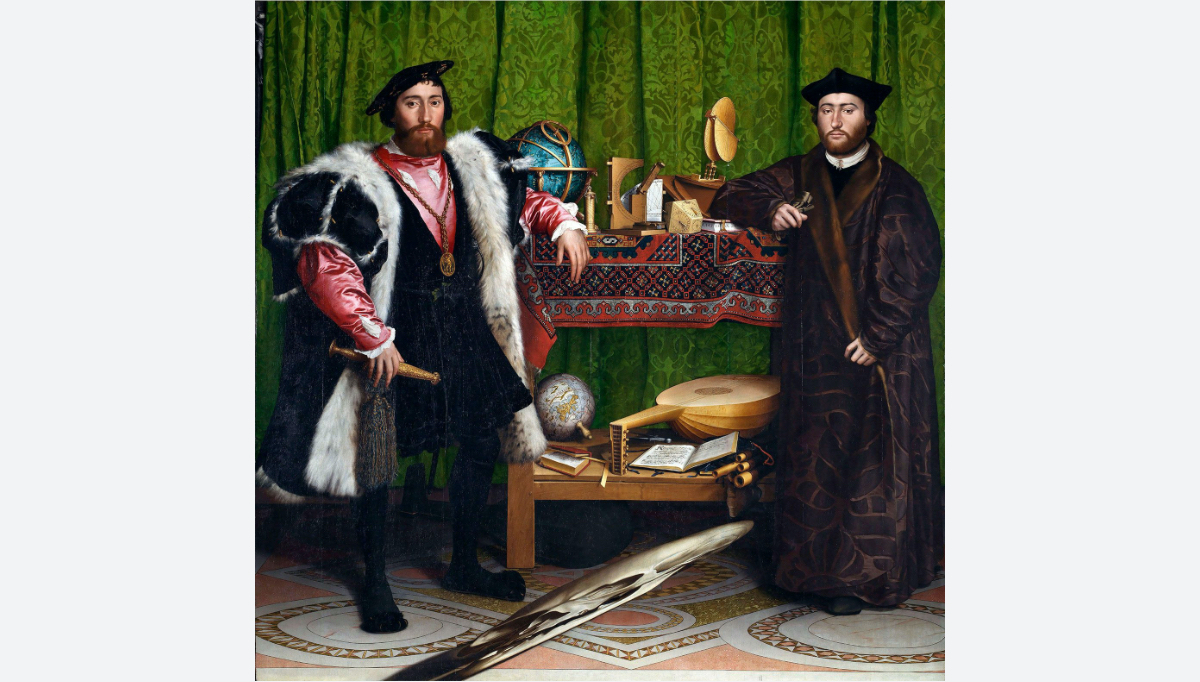
The Ambassadors.
Turner went off track in his ‘WAR. THE EXILE AND THE ROCK LIMPET’.
Too much an attempt to convey a message and too little an attempt to create a good painting. Napoleon would do better to disappear from the scene. It is a 'wrong mistake'.
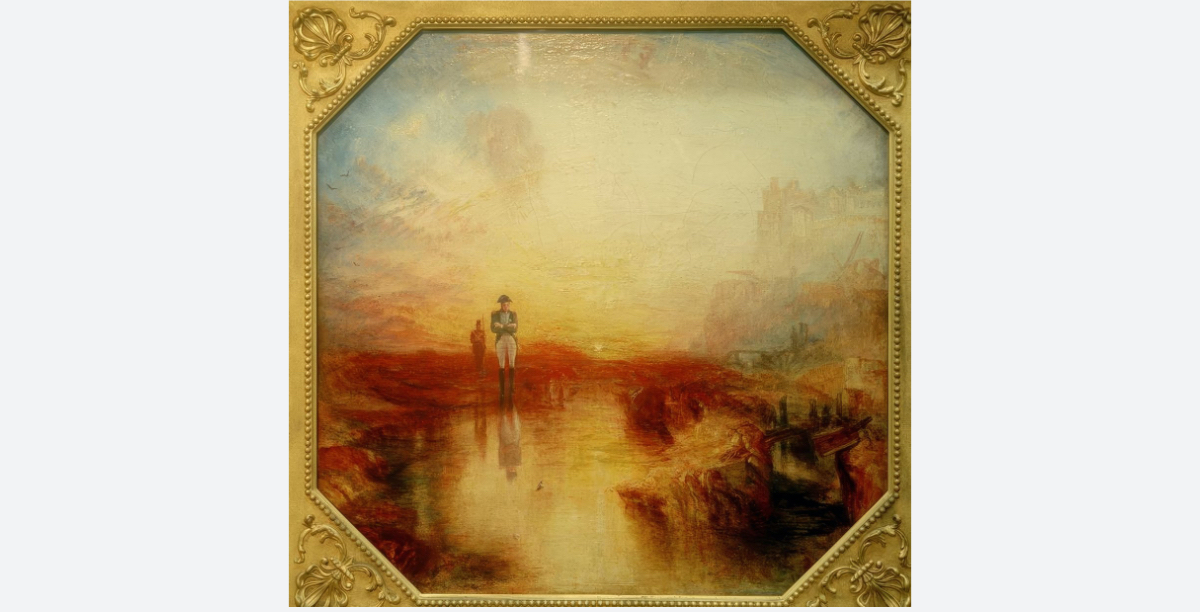
War. The exile and the Rock Limpet.
ARE THERE EXCEPTIONS HERE AGAIN?
It took me years to be able to appreciate Raphael's work. Is it due to perfection? He is the ultimate Renaissance artist. Everything is perfectly balanced. No 'nails' to get caught on. Or should I take another step back and realize that perfection created by a human is impossible and is therefore the 'ideal mistake'?
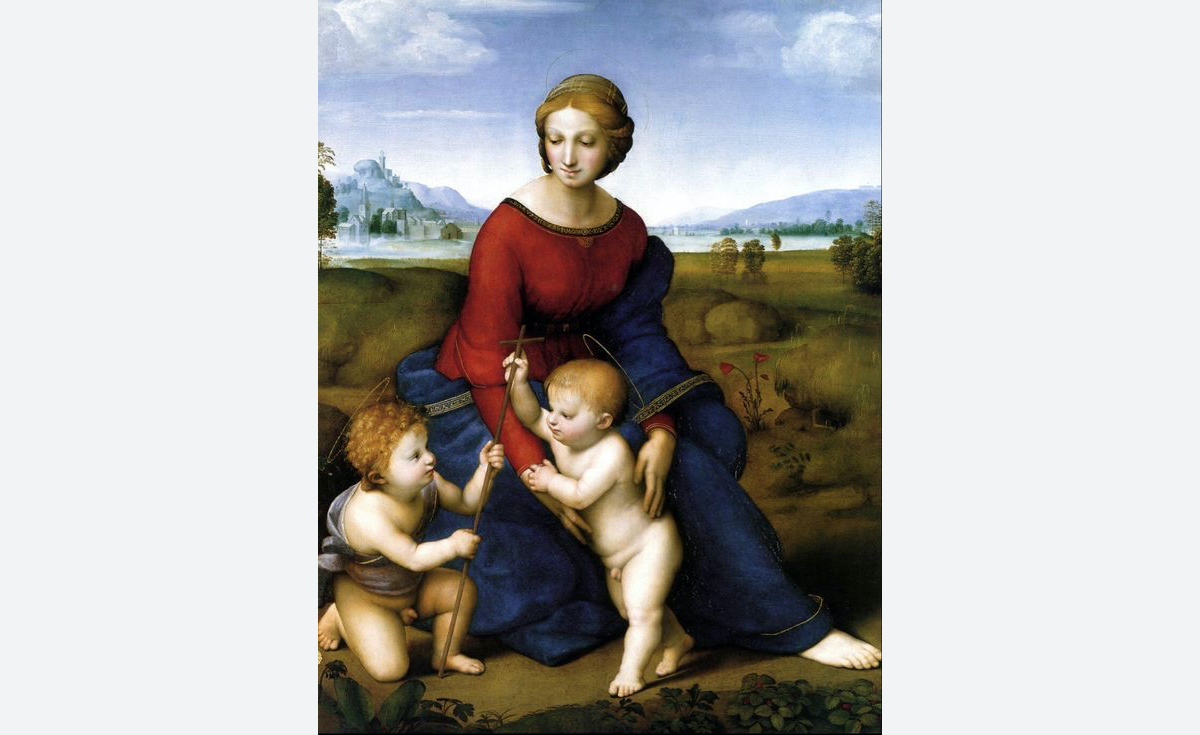
Madonna of Belvedere.
Should art be divided into two categories? The art that shows imperfection and the art that seemingly shows God? Many of Willem Kalf’s still lives are an example of the latter. As are Rachel Ruysch’s flower still lives.
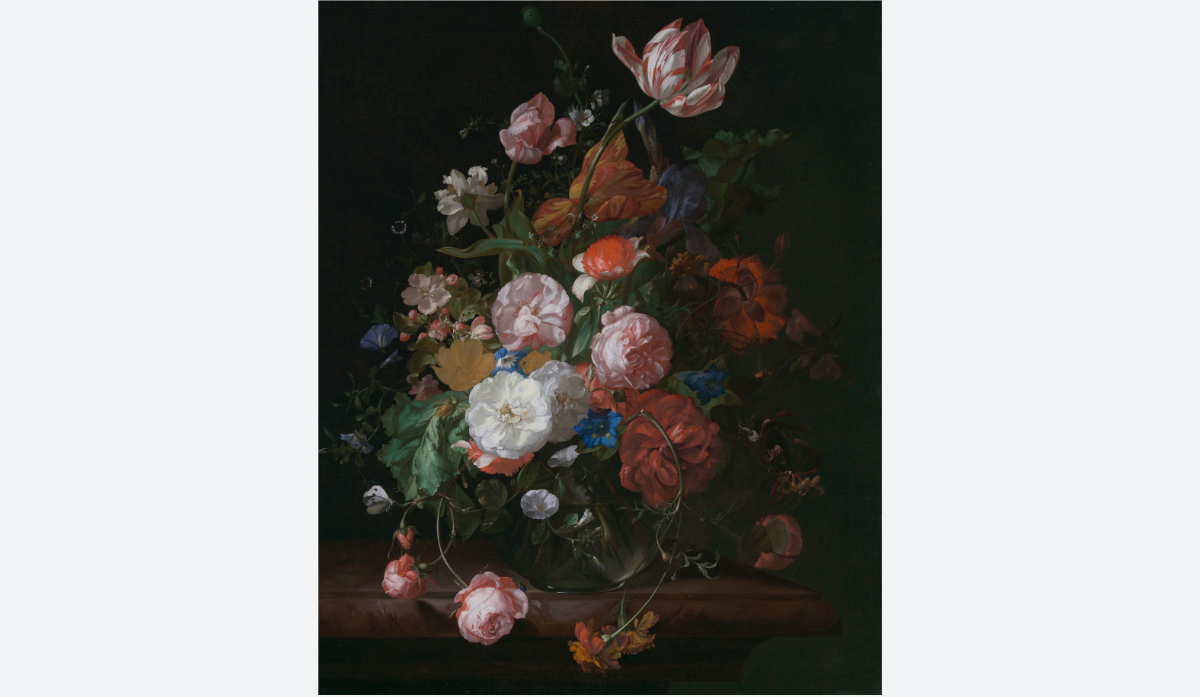
I also concern myself with this ‘perfect’ art. My flowers have no 'thorns' or 'nails'. Or do they? In these works, I strive more for quiet harmony (but with a distance/break between the object and the background; so, after all...?). Do they, however, show their 'nail' much less emphatically?
Lately, I have been thinking about death a lot (when don't I, actually? Especially when things are going well, the Grim Reaper comes by for tea). Is death the ‘nail’ of life? Seen by us as the 'flaw in the tapestry'? Personally, I have made peace with it; I have arrived at a 'friendly respect'. I might even see death as a liberation.
God disregards reason, time, and space. I plod on... including making crooked theories. And what about all these words? Click on the title 'sining pope' under the detail of the pope by Francis Bacon to hear the Miserere.
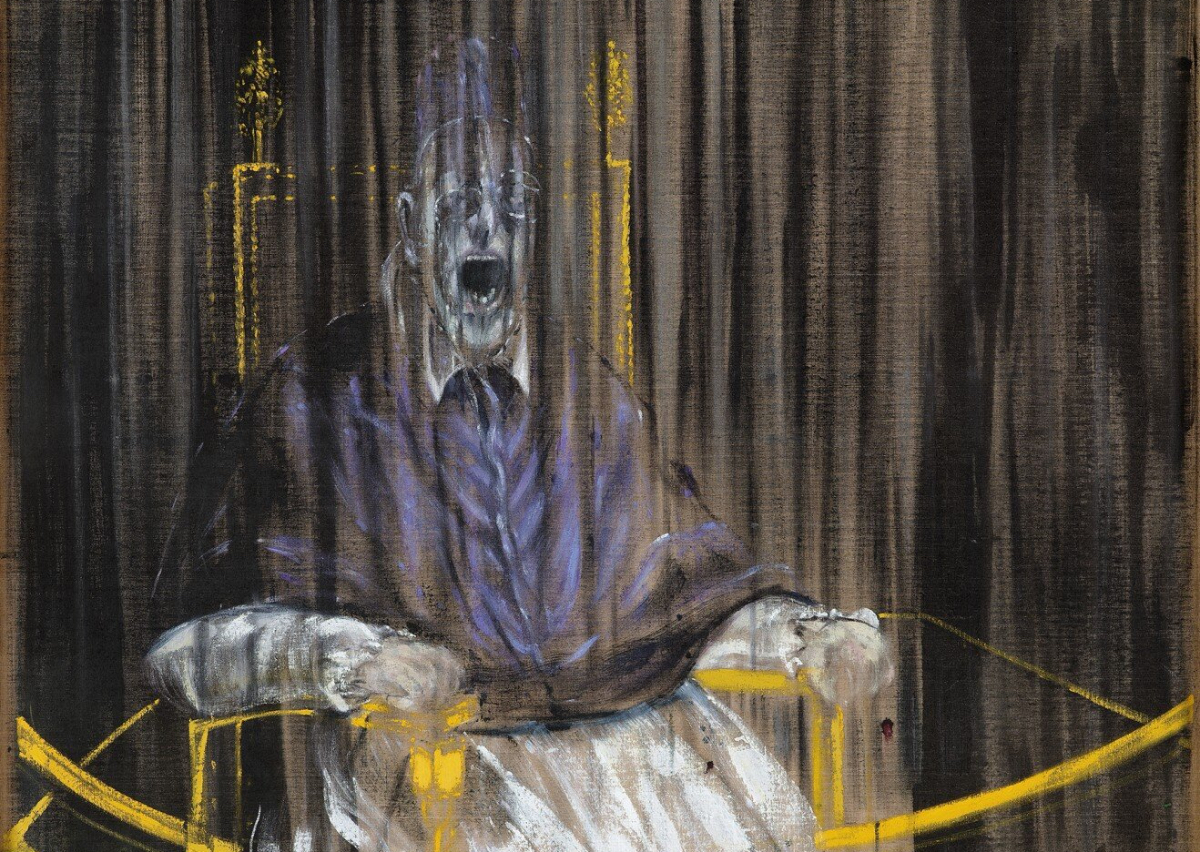
'singing pope'
June 9, 2026, Barcelona.