HOUSES AND STUDIOS, MY LIFE SO FAR (2021)
And here I am… a new year (2021) and a new studio in a new but familiar country. How does that feel, that is the question. I don't know. It feels…
Looking at the recent past:

Barcelona
In Barcelona, after twenty years, everything had become rather worn down. I walked the same streets; everything looked sort of gray. I didn't know enough people who challenged me here, who inspired me. At first, I thought I'd meet them, but many have disappeared, some without a trace, others have died too soon. Perhaps the harvest was too meager.
It could also be due to the passing of time, my age. I now live more introspectively, less receptive than when I was thirty.
The virus came, and I stumbled. I had been living long, too long on the edge, and now I saw a big hole.
I've seen holes around the corner many times before, but this one was getting really big. Initially, I thought I could still plug it, but it became too much. I did't sleep well. How much longer will this virus keep messing my life up? All in all, it was better to move for good, I thought. On to a better environment… an environment where I can dedicate more time to painting and waste less time on peripheral matters. Time will tell whether it's truly better here, but illusions always help.
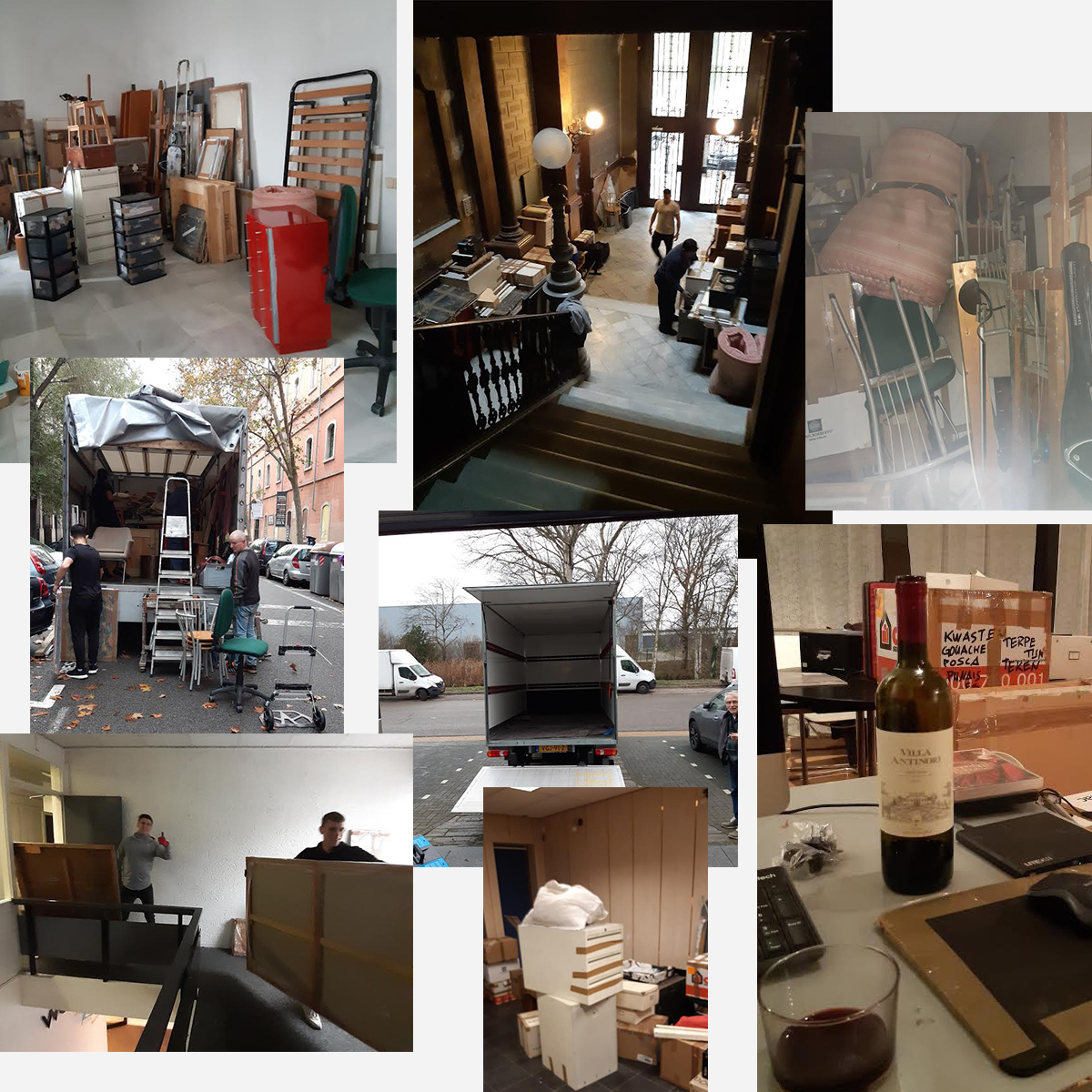
Moving Spain – Netherlands.
How many times have I moved? I've lost count. More than twenty times, at least. You quickly reach that number if you move five to seven times a year. That's what happened to me in Florence. Anyway, here's a general overview and a few memories…
The first three years of my life, I lived on the Sarphatistraat in Amsterdam. I remember nothing of that house. I have some photos. When I look at them, I see strangers in a strange room.
Seeing my mother is a shock. I'm now three years away from her death, and here I see a young woman, but a woman with a world war under her belt. A mother who is happy and lets her son touch the heart of a tulip.
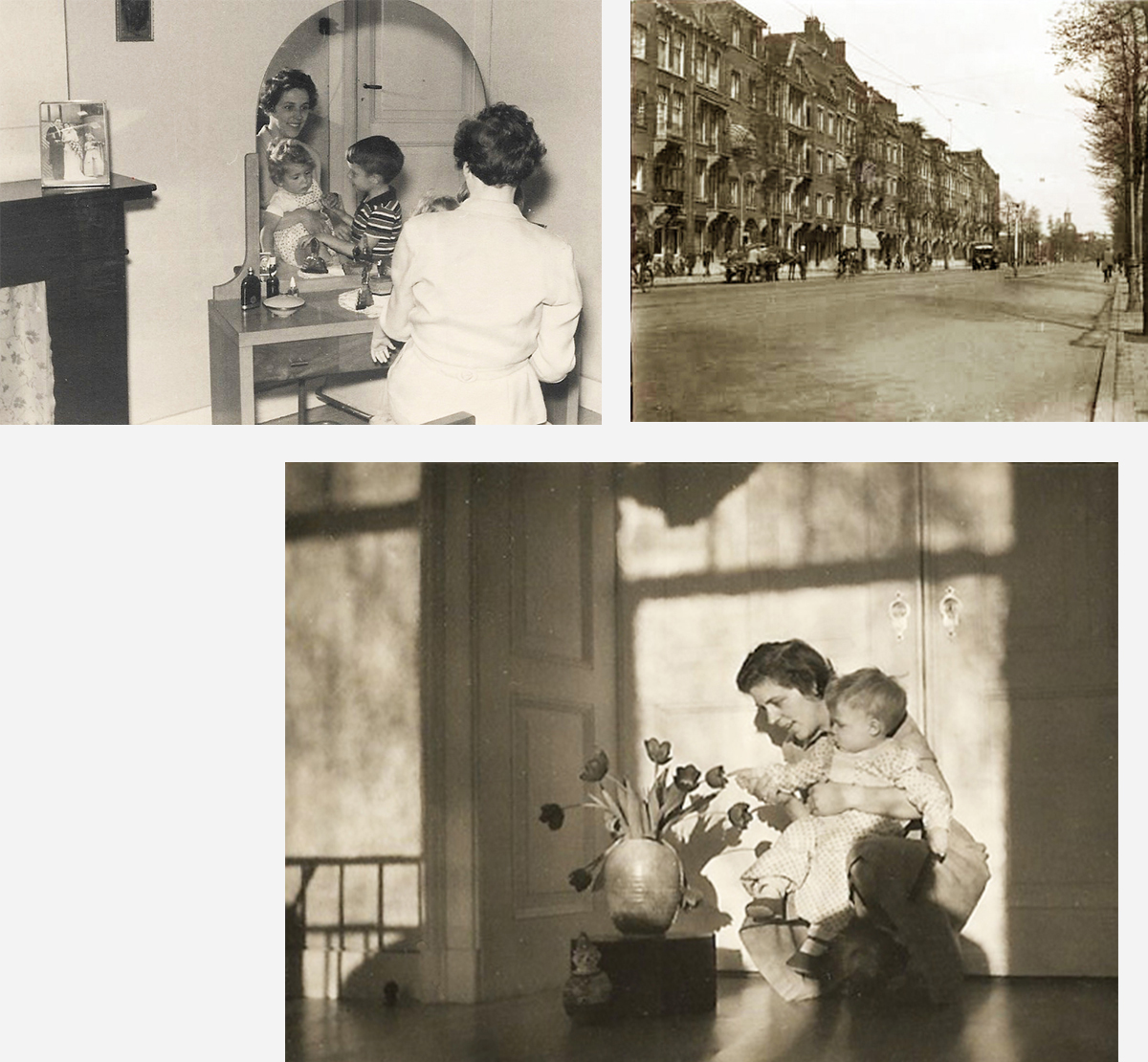
Sarphatistraat, Amsterdam.
Worth mentioning is the line from Nescio's ‘The Freeloader’: ‘Besides the man who thought the Sarphatistraat was the most beautiful place in Europe, I've never known a more peculiar fellow than the freeloader’. Is that street so beautiful? For me, that street holds a certain mystery because of the absent memory.
We moved to the Simon Stevinstraat, to a bigger house.
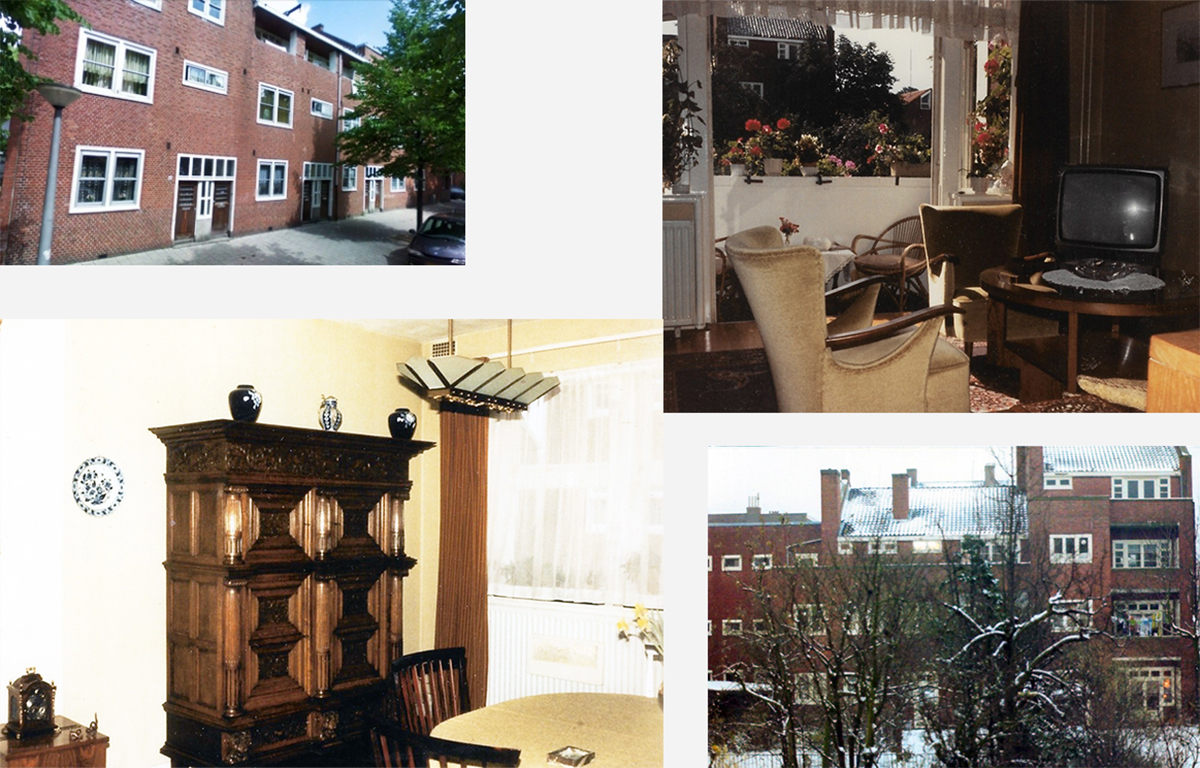
Simon Stevinstraat, Amsterdam.
This is the house of my childhood and adolescence. My earliest memories of that house are of being unable to sleep. First because of the strange surroundings, then because of my ‘growing pains’. I wrote about this in my text ‘IN SEARCH OF A STYLE’: ‘HANDS, MONUMENTALITY AND CONSOLIDATION, 1993-1999’. It was also in that house that I took my first, meager steps toward the opposite sex.
A special memory: The street is right behind the Ringvaart canal. Many dogs used to be walked on the dike. My grandfather (he lived in the house below us) had a fear of contamination, and once when I walked along the dike with him, he didn’t allow me to talk because of the amount of dog poop. I had to breathe through my nose otherwise the germs would fly into my mouth. How would he have lived under COVID?

In the garden with grandpa.
I was seventeen when I moved to the Marnixkade. Accepted at the Rietveld Academy, I felt quite something, a budding painter living in the 'most important city' in Europe studying ART. And the apartment was right next to the Jordaan, a famous neighborhood…
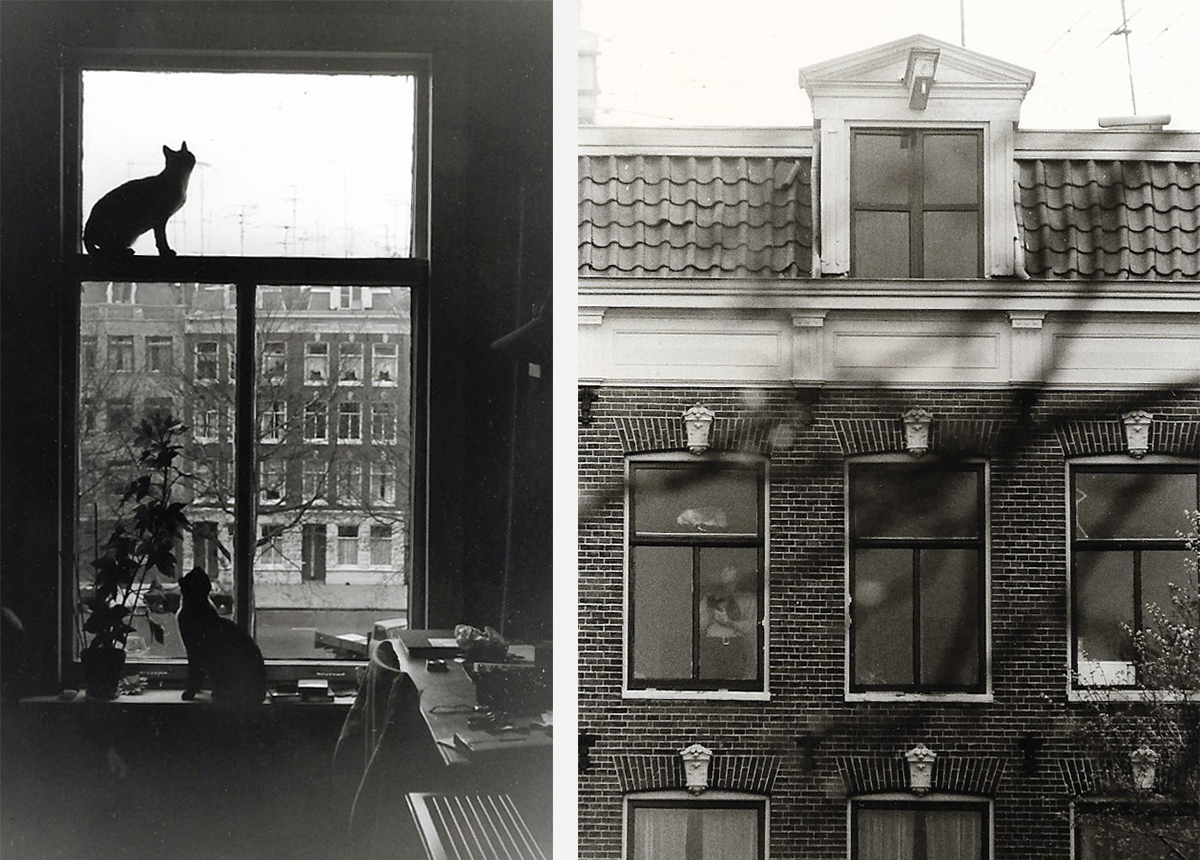
Marnixkade, Amsterdam.
There's nothing worth mentioning about the half-apartment, except for the flaxen, dirty-white wool carpeting. A filthy sort of white ‘grass’… I hate wool and wool sweaters (still do, don’t ask me why). For years, I had a cold almost all winter because I refused to wear sweaters.
Halfway through my academy years, I moved to the Van Ostadestraat.
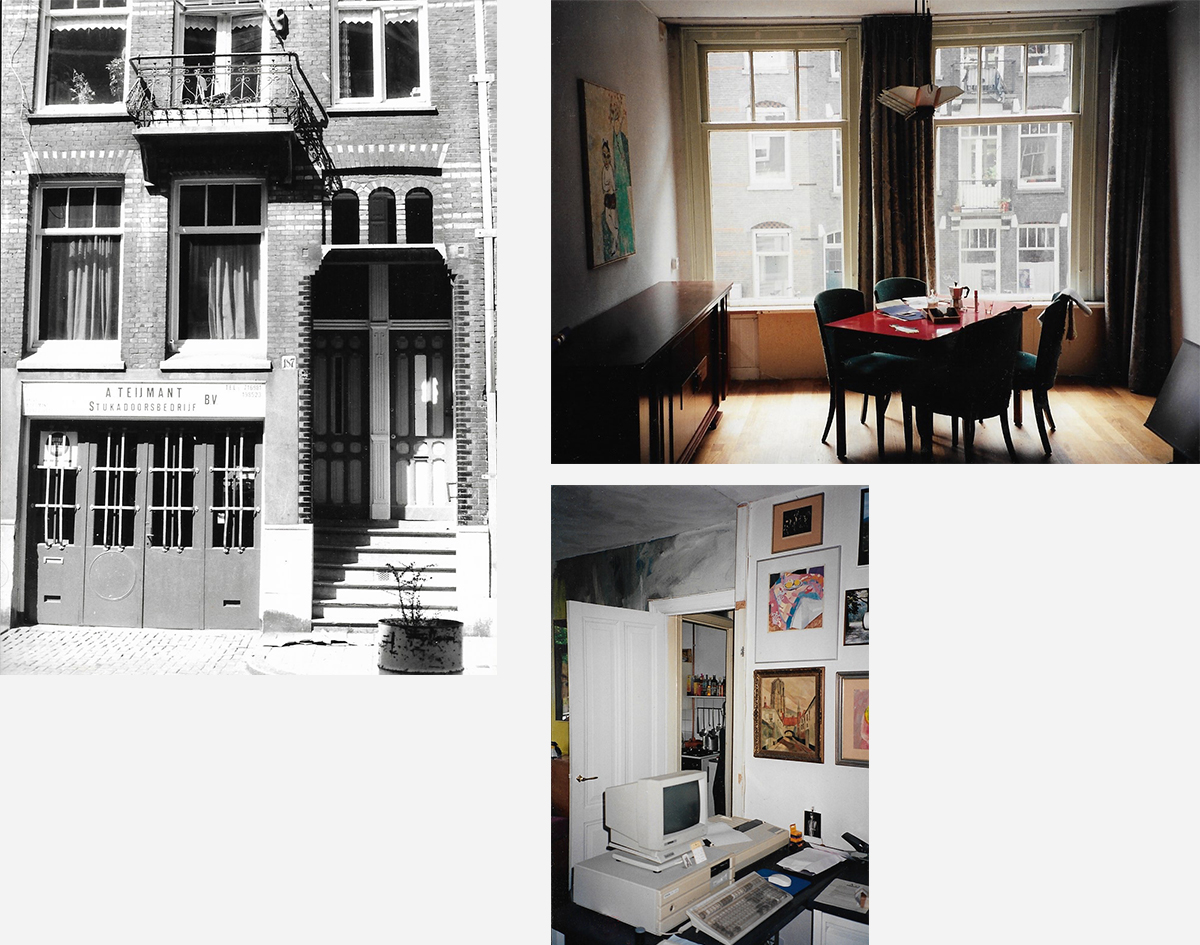
Van Ostadestraat, Amsterdam.
That's the address I lived at the longest of all my Amsterdam residences.
In the autumn of 1980, I moved to Florence. I had successfully completed the Rietveld Academy and left with a one-year scholarship.
My first stop was a guesthouse aptly named ‘La Mia Casa’. It was located on the square where the beautiful Santa Maria Novella church is located.
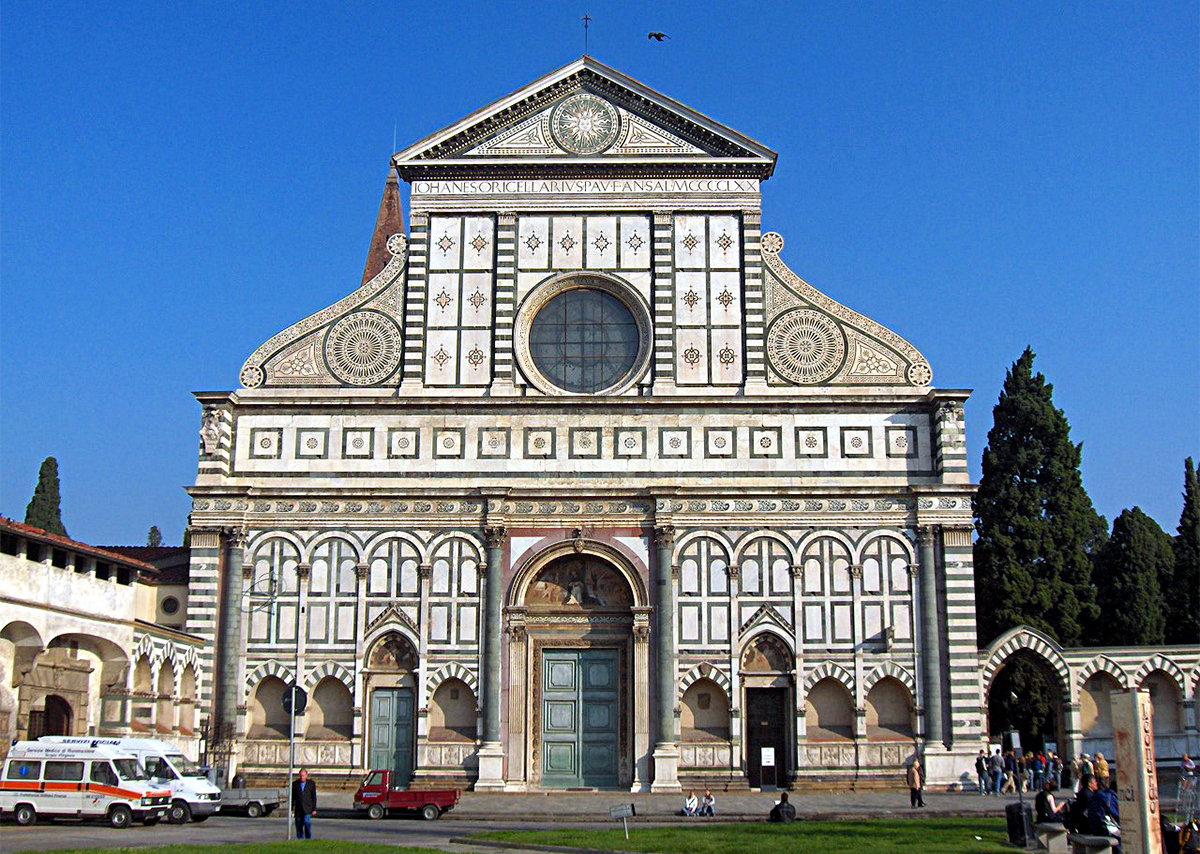
Santa Maria Novella, Florence.
The owner looked like Dracula, but he was a very caring man. One night, when I was late to go to ‘La Mia Casa’ and slept elsewhere, he spent the whole night on the bench by the entrance.
I couldn't call him because there wasn't a gettone (phone token) to be found in all of Florence. That week they doubled in value, so no one sold them.
From there, I moved between five and seven times in the first year. It was my first foreign adventure: what, coming from the ‘most important city’ in Europe, what, an up-and-coming ‘revolutionary genius’... I was brought down hard. A very educational hard lesson. I recommend such an experience to everyone.
Fortunately, I was allowed to paint in Gianni’s studio in the morning. He was often my savior and responsible for my love for the opera. He had a huge collection of opera cassettes, which I listened to while at work.
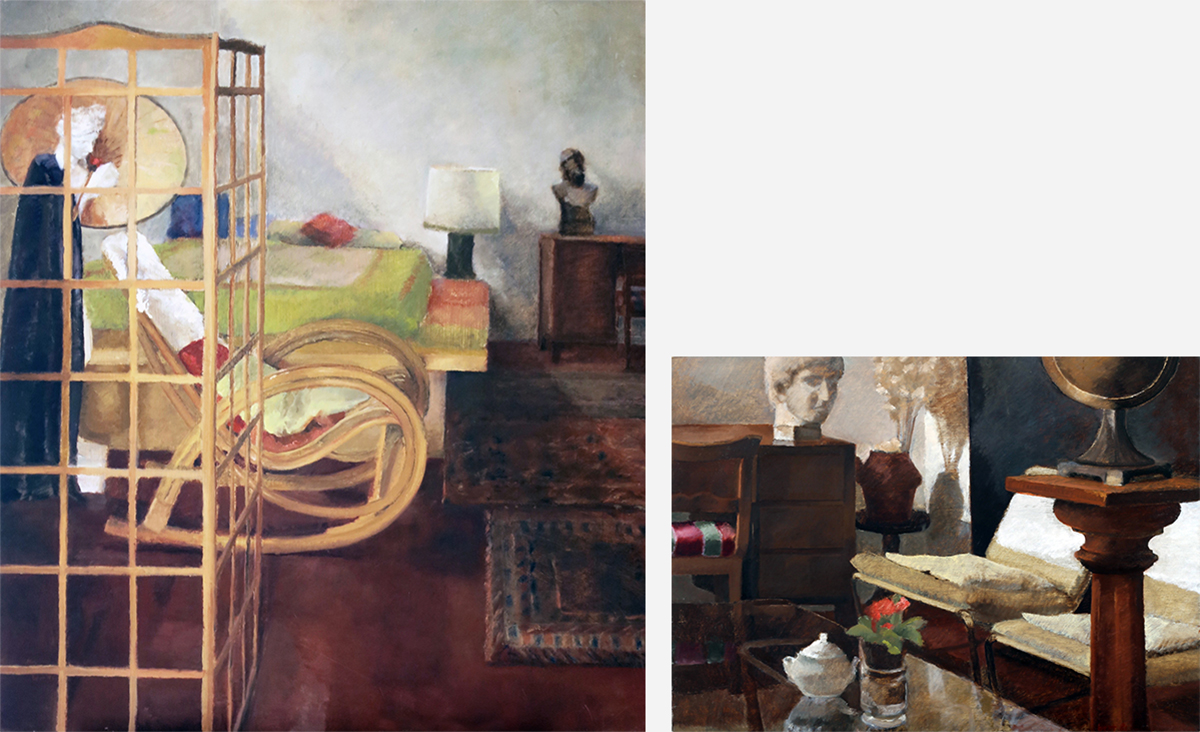
Paintings made in Giannis' studio.
I practically fled home twice. Once because the woman who rented me a room was addicted to barbiturates. Her boyfriend was studying medicine… She was a manipulative ghost. Beautiful body with a sick mind.
I also fled a house because the other tenants had let the phone bill reach astronomical heights… there was a lock on the phone that still had a rotary dial. They had unscrewed the dial, lock included, and called their friends and family abroad every night. At some point, they sensed something was wrong. I was the last to leave. All this happened in the first year.
I stayed for two more years.
First, in the hills near Villamagna. The house was beautiful, the winter was harsh, and Terenzio didn't arrive… He was the one who knew how to light the stove, but he was hiding at his parent’s in Sardinia, waiting for spring. So Giovanni (who lived there too) and I went back to the city. Cinzia had given us the keys to Toshaki’s apartment. Toshaki was staying in Japan and wasn't supposed to know anything. This time, it wasn't me who fled, but Giovanni. He had baked apples in the oven where Toshaki had hidden his camera lenses.
When I entered, black plastic worms were swirling around the room. I don't know what Cinzia told Toshaki. I found another room a few weeks later.
I ended up at Daniela’s in via Fra Jacopo Passavanti. Daniela is probably the laziest person I've ever met. She had a huge bed in which she ‘lived’.
I remember two incidents from that address.
One summer day, I heard the same hysterical chatter coming from many houses. Everyone had the television blaring. A little boy had fallen into a well and had to be rescued. The rescuers made a lot of fuss, but despite all the shouting above the well, a contortionist being lowered, the boy died... Whether he would have been saved in the Netherlands, I don't know. At the time, I, and many Dutch people with me, thought we would certainly have gotten the boy up alive. I am now cured of this kind of chauvinism.
And then there's the wonderful story of the recovered heads of Modigliani.
The dates don't add up; but a story has to run smoothly, so I'll push the joke a bit further back in time.
The story goes that Modigliani had offered a series of sculpted heads for sale to the city of Livorno. The city council rejected the offer, and he supposedly threw the heads into the moat.
One hundred years after his birth, the organizers of the exhibition dedicated to him decided to dredge them up. Miraculously, several heads were recovered. All the authorities and art critics examined the heads and declared them authentic.
A few days later, a few young men came forward as the creators. They felt sorry for the committee and hastily created a few heads and threw them into the Fossa Real.
To prove they were the creators, they carved another head during a television broadcast using a drill. I saw the catalogs in the windows before the tv show… A few days later, an ad for Black and Decker drills told you to make your own ‘Modigliani’ heads. Since then, Modigliani (click on the name for the video about this incident) hasn't been such an untouchable genius to me anymore. What a pity I didn’t buy a catalogue...
I left Daniela's for Borgo Allegri. I could live there because Maurizio had to do his military service. I painted in the enormous living room of Paolo, Sandro, and Francesca in via Monte Oliveto.
Francesca's boyfriend was named Sasá. He studied architecture, lived in Naples, and often stayed at via Monte Oliveto.
Sasá was a sweetheart, an extremely friendly and hospitable person, always up for a chat, a good conversation.
I wished him a safe trip back to Naples countless times. The reason was this:
When I arrived at the studio in the morning, he surprised me with coffee. We had to talk at length about what I had painted the day before, what it should become, and why. When I finally managed to get him out into the hallway, I had to promise to join him for lunch. He was going to leave after lunch, because traveling on an empty stomach is so uncomfortable.
After lunch, he had to leave quickly, which of course wasn't possible. Francesca was there, and rushing on a full stomach is impossible. Luckily, there was a train at about six o'clock. He would take that one. If I left, he wouldn't come to say goodbye.
The next morning, over an espresso, he told me it wasn't wise to arrive in Naples at night. No, it would be better to take the 11:00 train... an extra half day wouldn't have made any difference. And again, I ate lunch with him...
Sasá invited me to Naples and gave me an unforgettable tour. Unfortunately, I've lost his address and phone number.
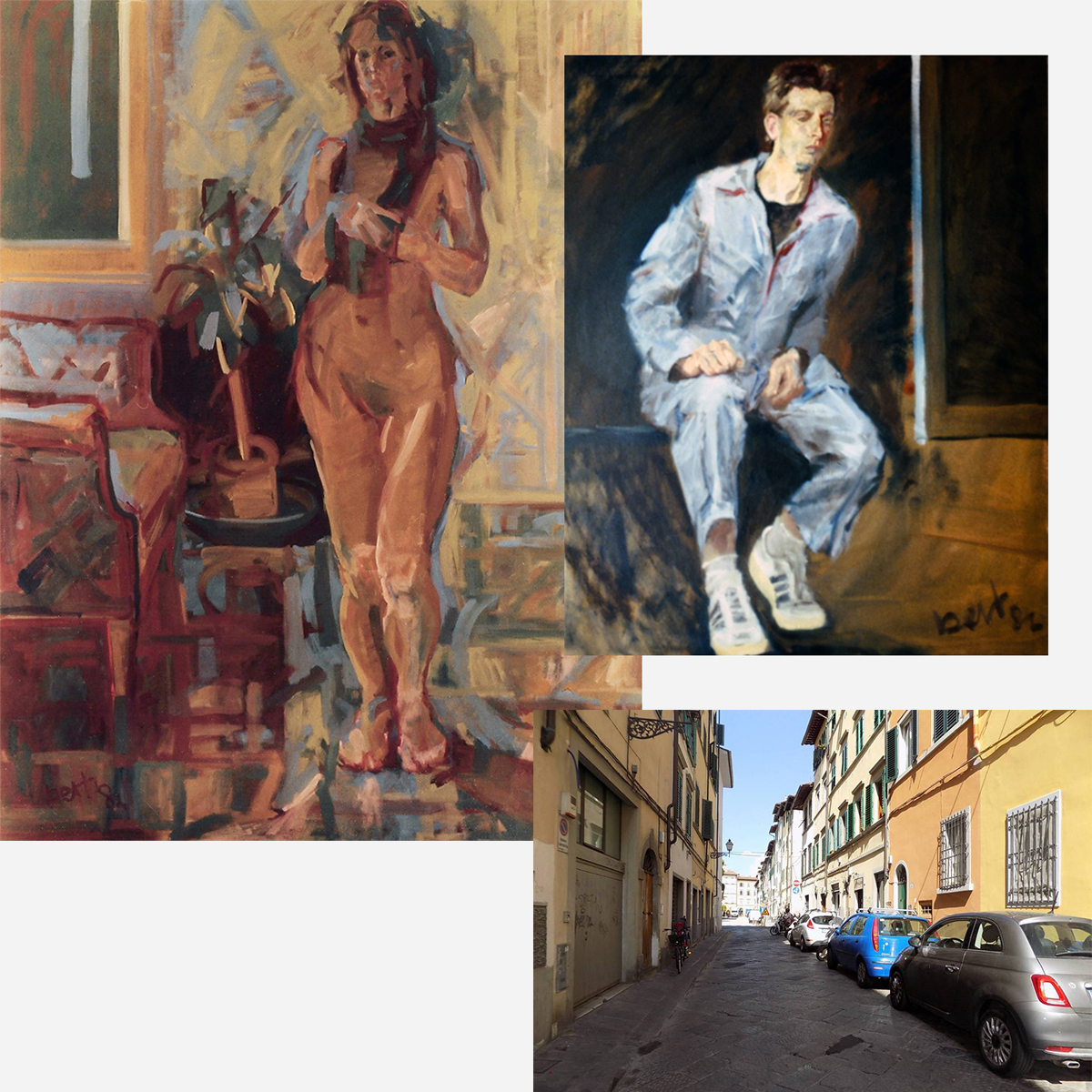
Two paintings made in the living room at Paolo's, Sandro’s, and Francesca's, and Borgo Allegri, Florence.
There's always something going on in Italy. One morning, I couldn't enjoy my cappuccino and brioche at the bar around the corner. The bar was overcrowded. It turned out that less than twenty meters from my house and the bar, a small painting of Mary had burst into tears the night before and was being visited by lots of people. There was a huge line out front. The bartender made a fortune. The official church forbade priests and their kin from paying a visit.
Fortunately, after a week I was able to have breakfast outside in the bar: Maria never shed a tear again.
In 1983, my stay in Italy came to an end. The Governmental Visual Arts Scheme lured me ‘home’.
I had sublet my apartment and was able to return. I found a studio on the Fagelstraat. Try finding one now; an affordable apartment and studio in Amsterdam!
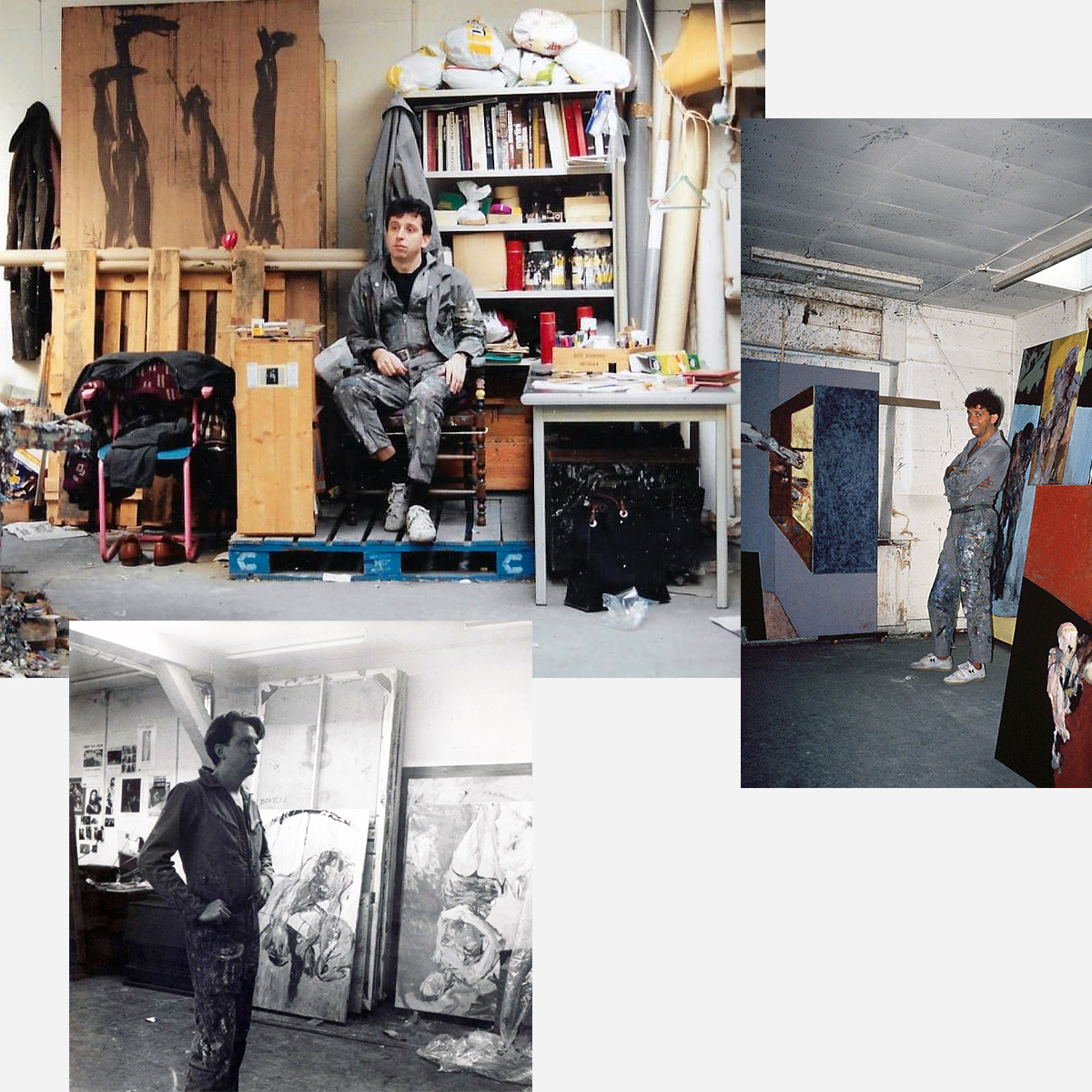
Studio on Fagelstraat, Amsterdam.
My circle of friends changed after my Italian period. Few contacts remained from before that time. The core of my current circle of friends consists mainly of people I met after my three years in Italy, and there's still a few ‘stubborn’ Italians.
During the exhibition at Jaski in 1990, I met Kim. Madly in love, and therefore recklessly, I left for New York. We managed to move three times in a year and a half. From Chelsea to the East Village to Tribeca.
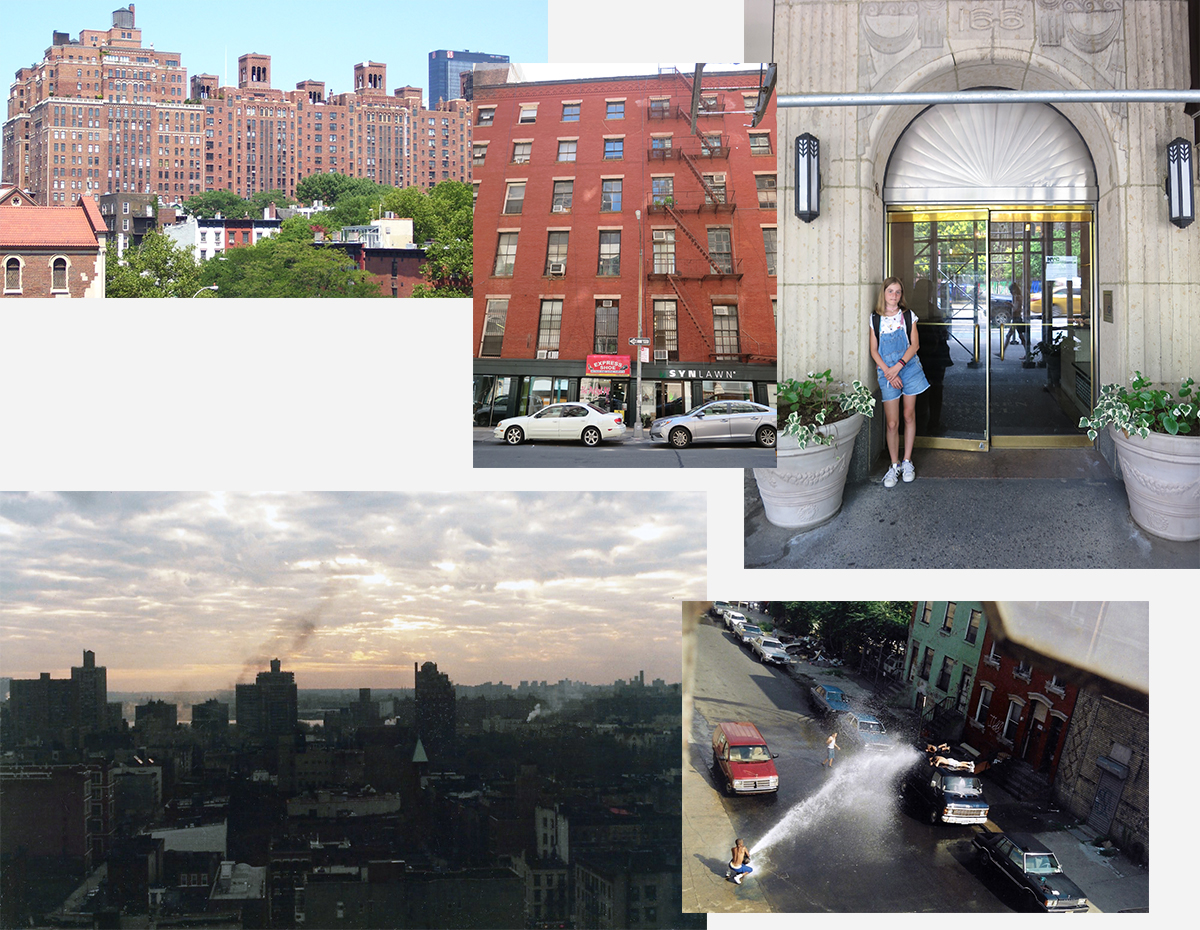
New York: Manhattan and from the window in the studio in Williamsburg.
Remarkable memory: leaving my house on Second Avenue in the morning, a revolver is offered to me for sale. Is this America? A complete stranger offers it to me; what was he thinking? What did I look like? That I wanted to get rid of someone? I know guns are easy to come by, but still…
What crossed my mind at that moment was that this might be a ‘dirty’ weapon. One that had been used to kill someone. A romantic thought. I replied that I didn't need it that day.
I also witnessed an authentic extortion scene in Little Italy. A mafioso complete with Ray-Ban sunglasses, a double-breasted pinstripe suit, flanked by a bodybuilder and an old man with a notebook, had a chat with the owner of the shop where I bought olive oil. I didn't realize at first that this was real, that I couldn't keep watching unabashedly. Where was Martin Scorsese?
Reason for leaving: our relationship broke up and I wasn't getting anything done. I'm an impossible person. Back to the ‘Pijp’ neighborhood in Amsterdam... I held out for ten years.
And then I left for Spain. Again for a woman (will I ever learn?). I had found my absolute love and had big plans. I was getting married, starting a family! Via Vilanova y la Geltrù, we left for Barcelona. Back then, a city in a state of rapid development. First we lived next to the bullring, which I frequently visited, and then right next to the Boqueria, the famous market of Barcelona.
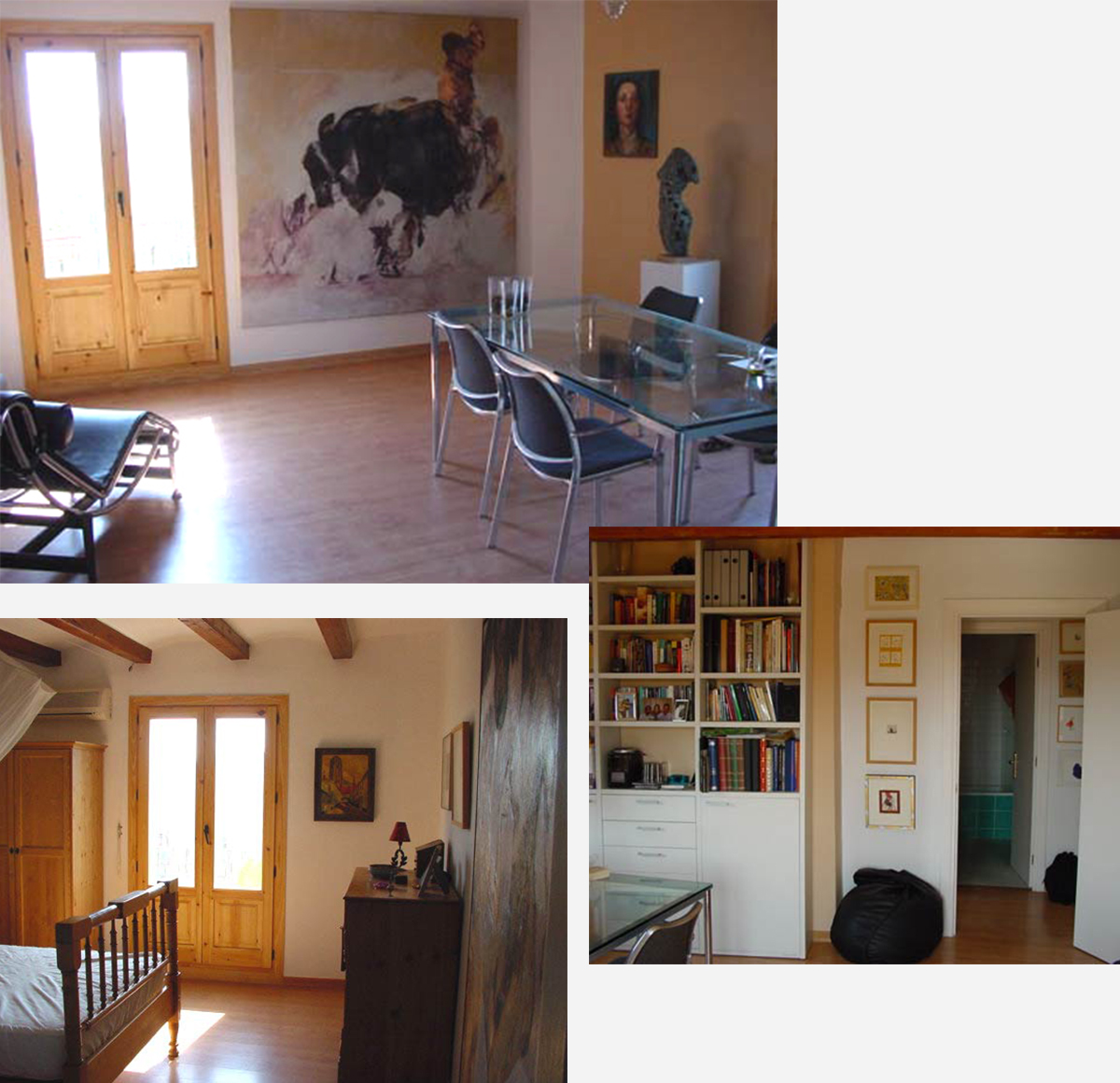
House in the Raval, near the Boqueria, Barcelona.
In the ‘Poble Nou’ neighborhood, I found a beautiful studio. The neighborhood was semi-derelict and under construction, with many spaces rented by artists. My space was in a former textile factory called 'La Escosesa'.
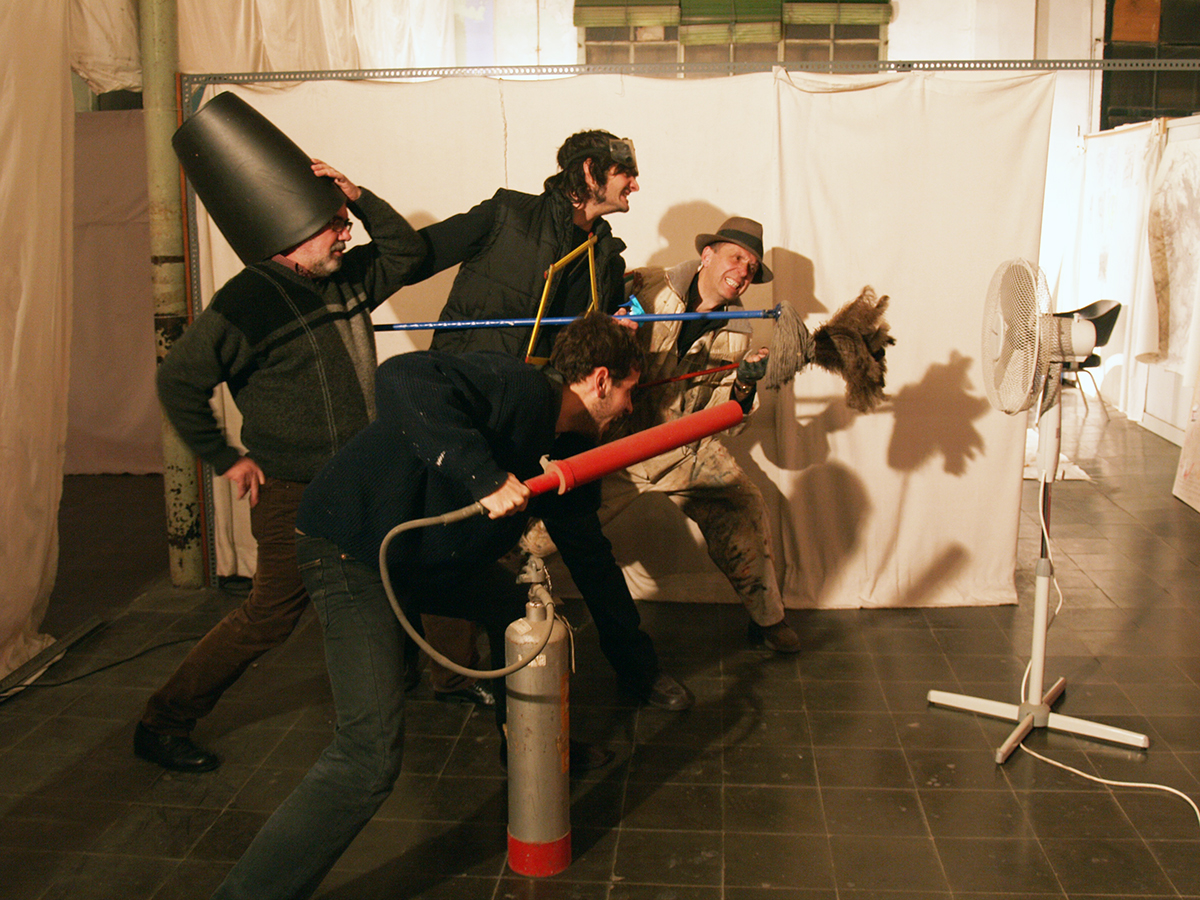
Artists and other people that had a workspace there.
There were more than twenty studios in the building, occupied by artists and people who wanted to be considered as artists. I got along well with some, but I'd gladly have ground others to minced meat.
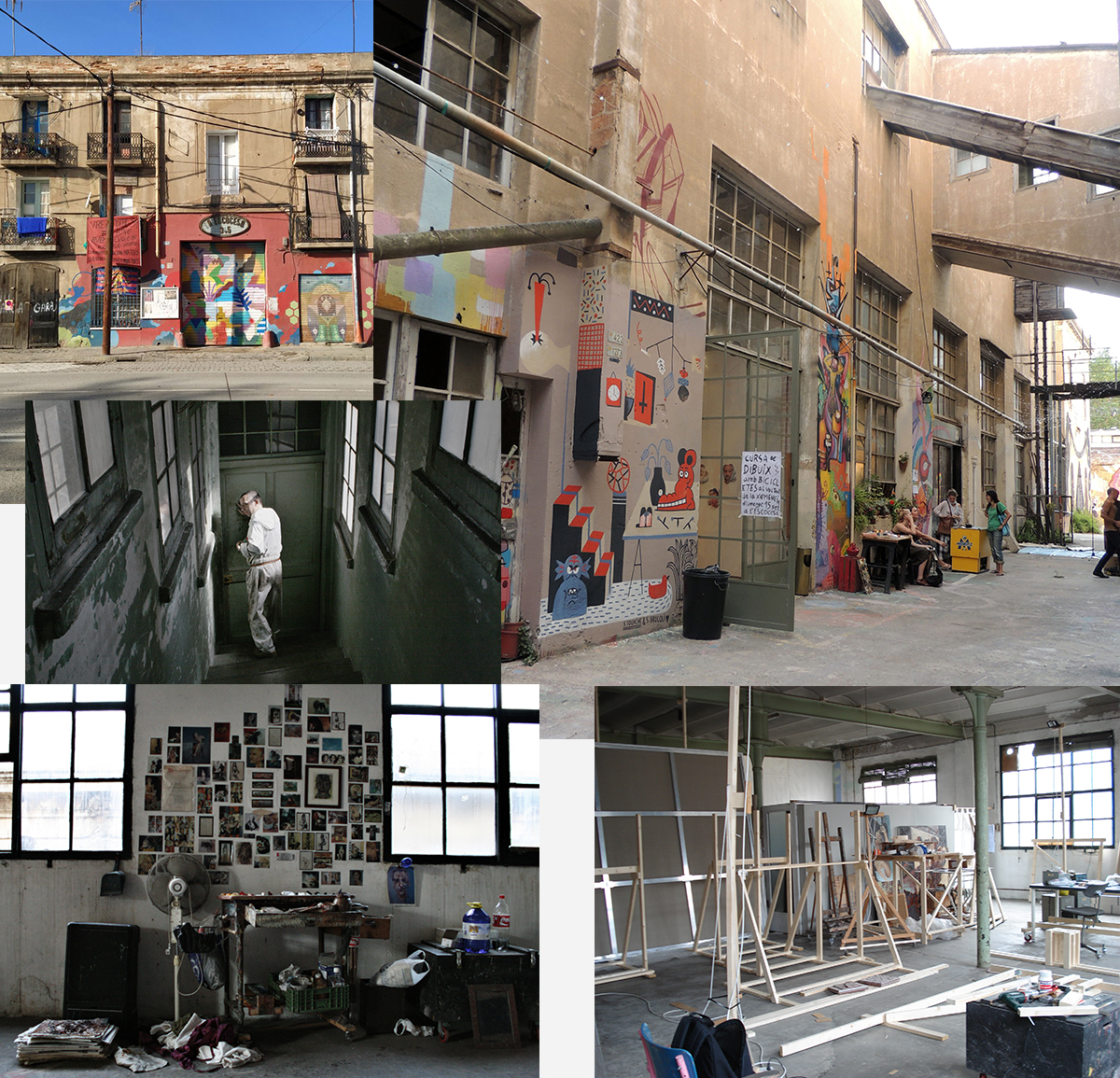
'La Escosesa', Poble Nou.
In that studio, the paintings for the 'Gesù Redentore', the new church in Modena, Italy, were made. To watch the documentary, go to Vimeo by clicking on the image below.
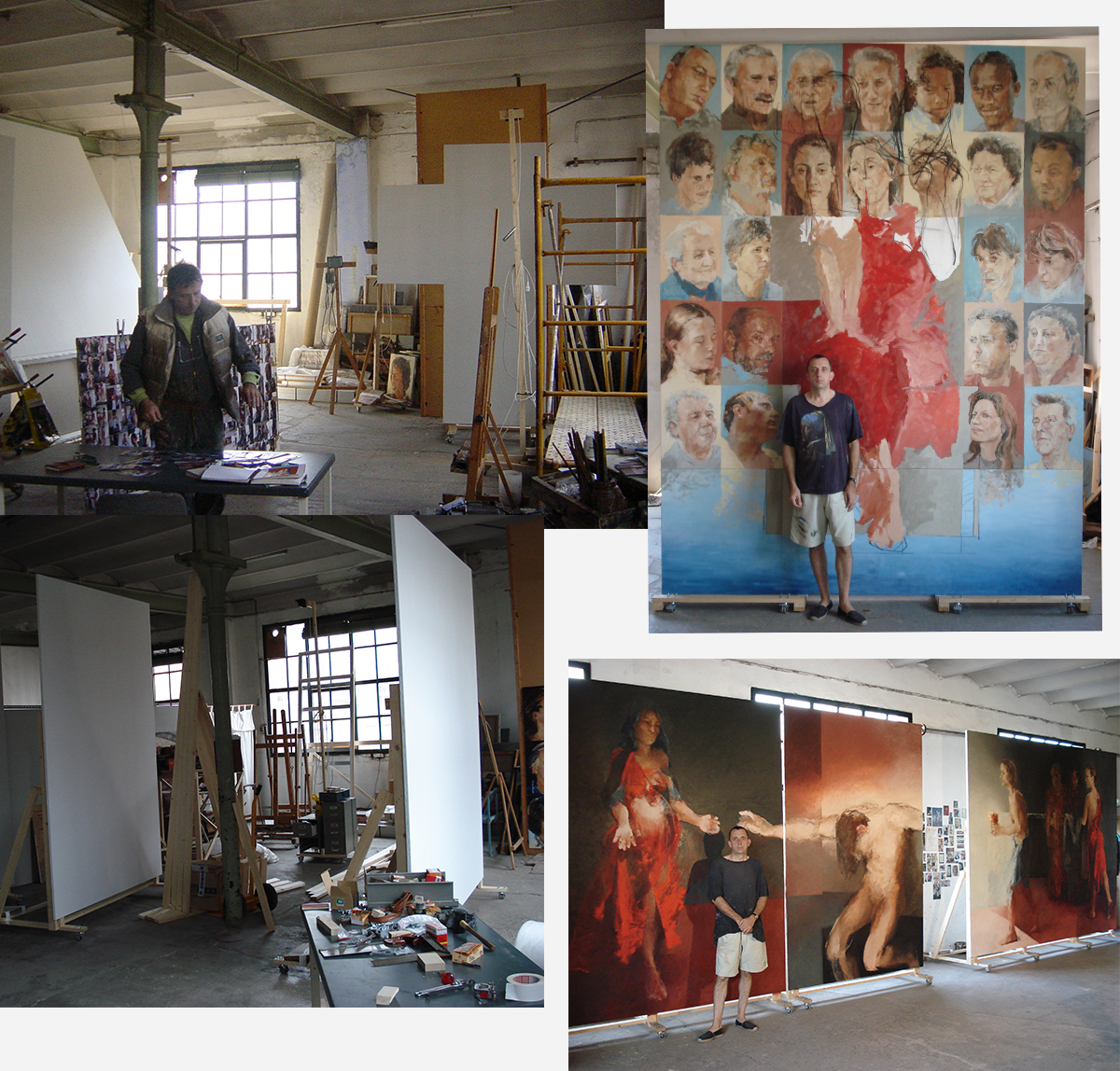
working for the Gesù Redentore.
Why didn't I stay in that space? First of all, my latest period there wasn't exactly one where I went to work with peace of mind. The downstairs neighbor permanently kept two rabid fighting dogs in his space. That was to protect the space against potential burglars. But every now and then the dogs were loose and attacked everyone. When I entered the grounds, I had pepper spray at the ready.
After a while, the city council had plans for the building and wanted to throw us out. We then set up a foundation to maintain our rights, fight for the arts and against capitalism! This meant endless meetings. I'm not good at politics.
Gala was still a baby, and I had to work hard on my assignment... to then have to spend hours discussing about nothing was torture.
Things got completely out of hand. Eventually, one of the board members ran off with the foundation money. With a heavy heart, I looked for a new place.
More about this later, but first; the country house. Our most beautiful place to live in Spain was the cottage in Garraf. Garraf is a beach town half an hour from Barcelona.
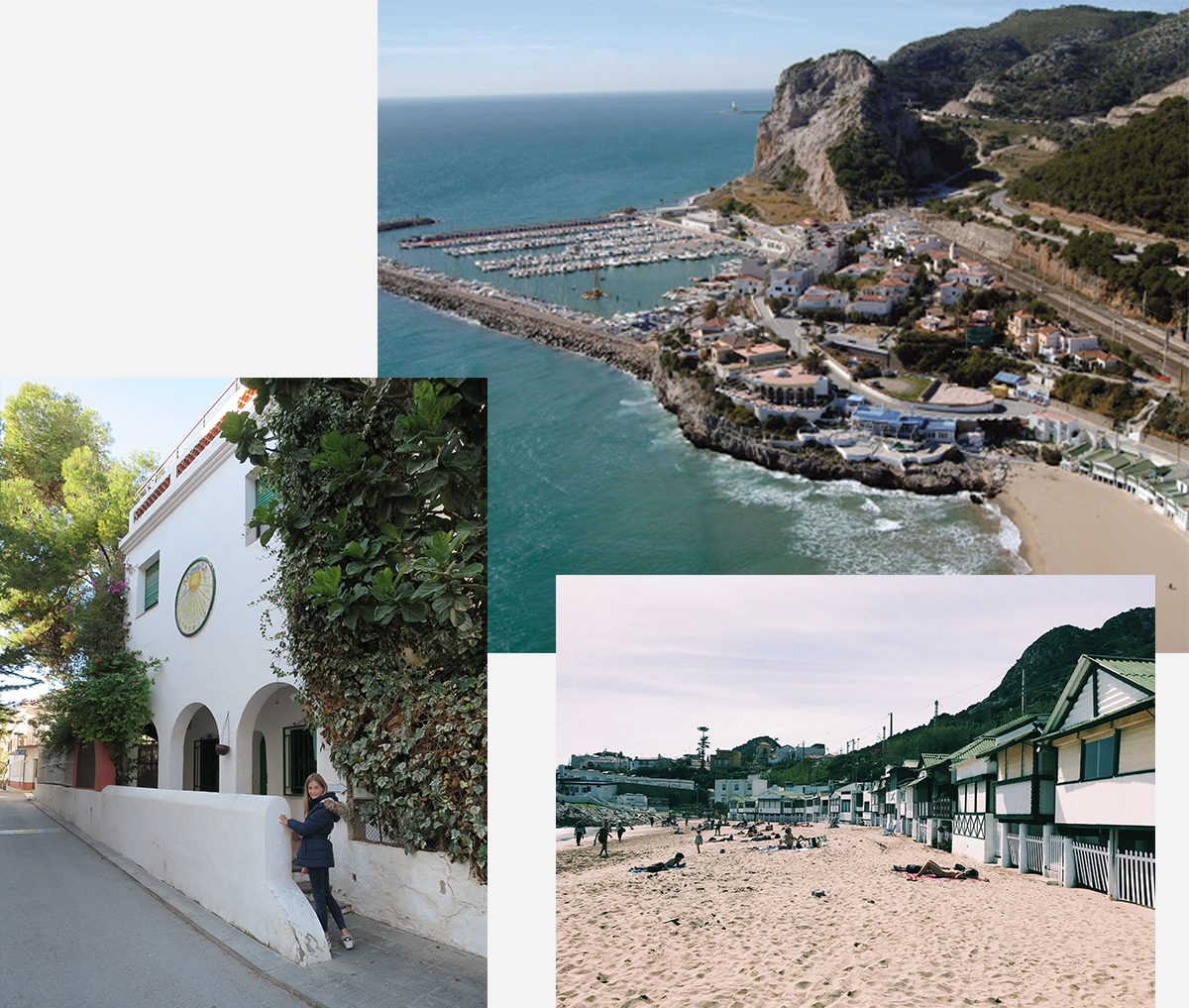
The 'Casa del Sol', Garraf.
We ended up there because of noise pollution. A flea market came to be held in front of our apartment on the weekends. It was great fun, but there was music playing from ten in the morning until one at night, and it was loud! Having a quiet conversation inside the house was impossible. In Spain, noise isn't an issue. The police didn't do a thing. I never knew how bad noise could be.
An acquaintance owned that cottage by the sea, and we could go there!
The ‘Casa del Sol’ is a detached house with a small garden. In that garden, I read the newspaper in the hammock under the trees on the Sunday mornings. On weekends, cars circled endlessly around the house, searching for a non existing parking spot.
I hardly ever showed up on the beach; too many people and sand everywhere (of course) that made reading a book or newspaper difficult.
Gala was made in Garraf, but there were already rifts in the marriage.
We moved back into the city because of the absence of school, the doctor, the shop, and so on. There, after many discussions, I moved into my studio, the studio found after the one in the ‘Escosesa’.
What's important to know about that place is that, for Gala, it's the most beautiful place we've ever lived.
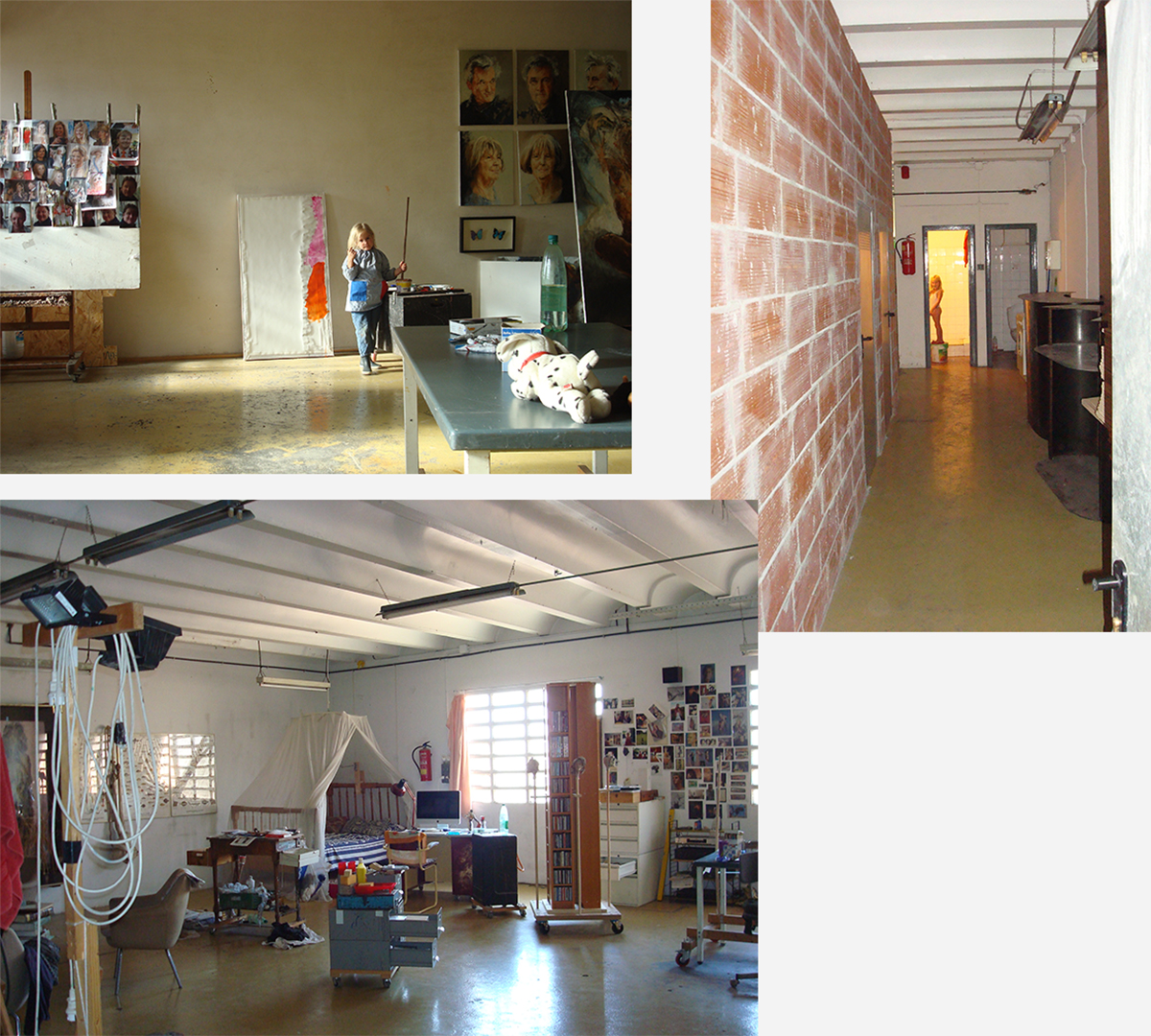
Hospitalet 1.
It was one big room. When she slept at my place, I'd pull a bed on wheels out from under mine. For some reason, the house was infested with mosquitoes, so I'd put a broomstick on each corner of the bed and then pull a mosquito net over it. Before going to sleep, I'd wheel Gala around the room a few times and then put a large sheet between her bed and my desk so she'd be in the dark.
Because of the noise, I had to leave (here too!). In the room above me, there was a professional sound system for a pop group. A group of four weary old men would regularly play the blues until four in the morning, heartbreakingly, heartbreakingly bad, and far too loudly.
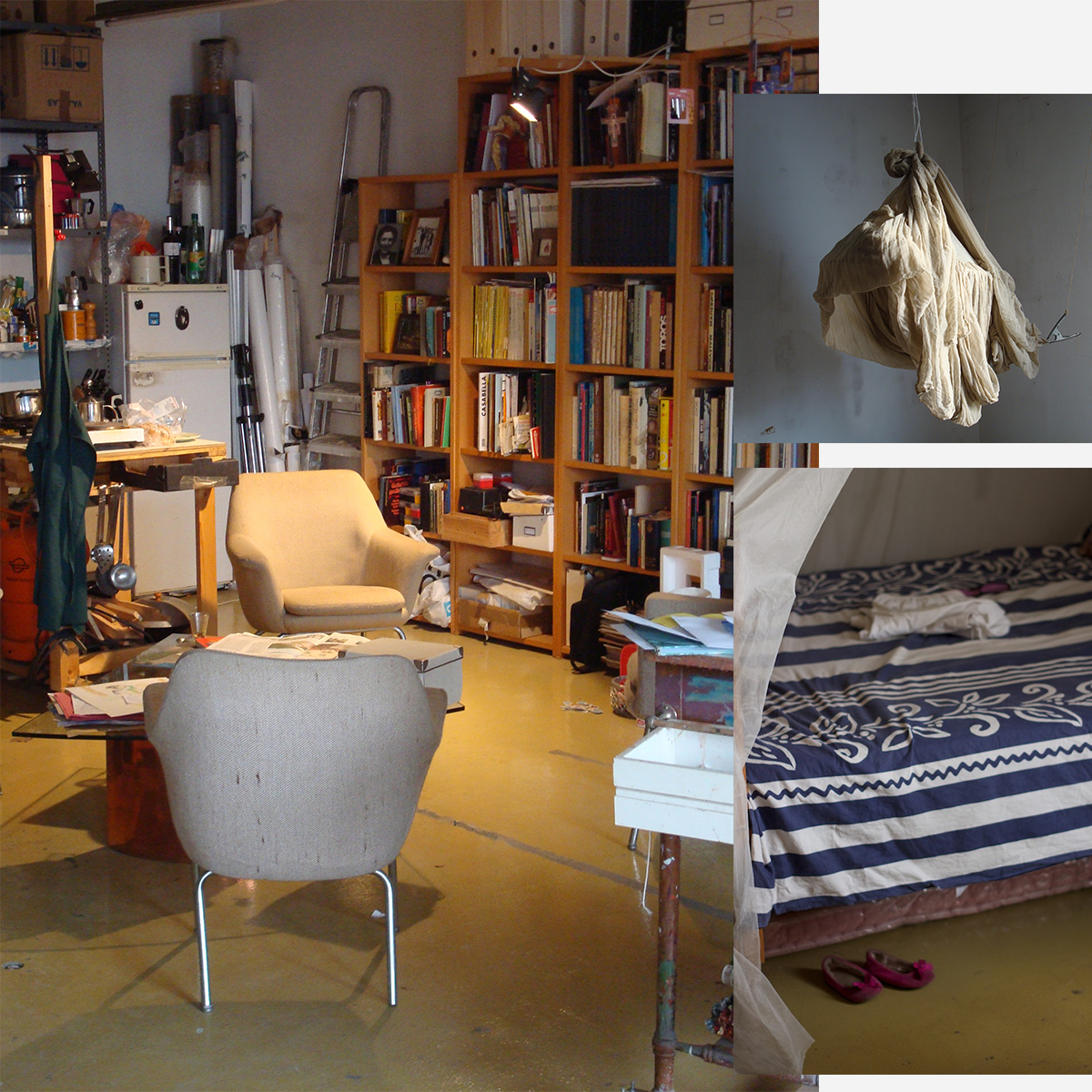
Hospitalet 2.
I returned to the center of Barcelona. I lived in the Born district for at least ten years. The apartment was beautiful, the neighborhood pleasant. There's the Santa Caterina market, the best ice cream parlor in Catalonia, right next to the house is the most beautiful square in the city, for pleasant aromas the Farmacia di Santa Maria Novella (the main branch I discovered while living in ‘La Mia Casa’) is just around the corner, the Santa Maria del Mar church is the most beautiful Gothic church in Catalonia, the best croissants are at Hoffman... what more could I want?
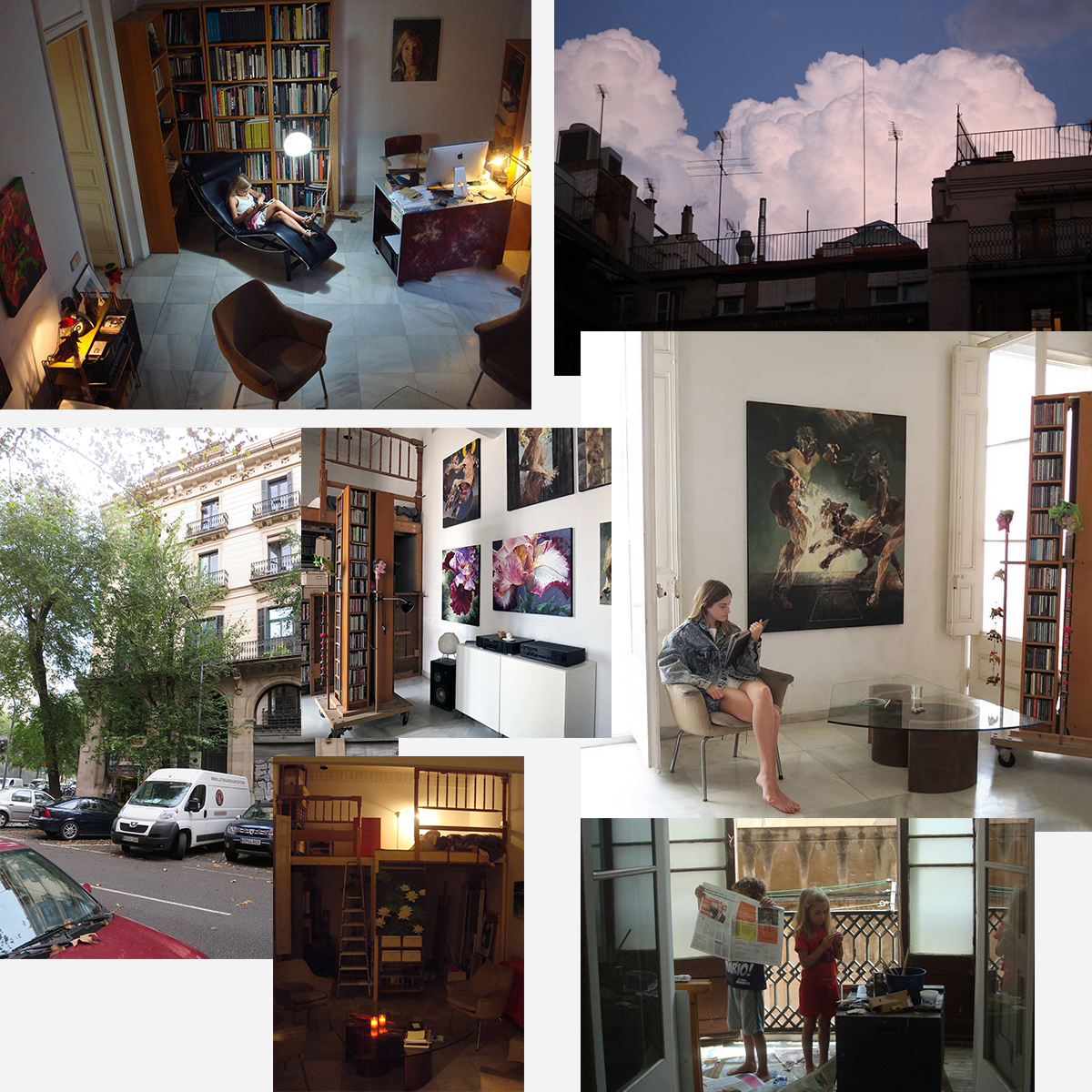
Carrer del Comerç, Barcelona.
Two minutes away is Ciutadella Park. What the Vondelpark is to Amsterdam or Central Park to New York, this park is to Barcelona. I found my first flowers to paint here (click on the gray word ‘flowers’ to go to one of the chapter on my site).
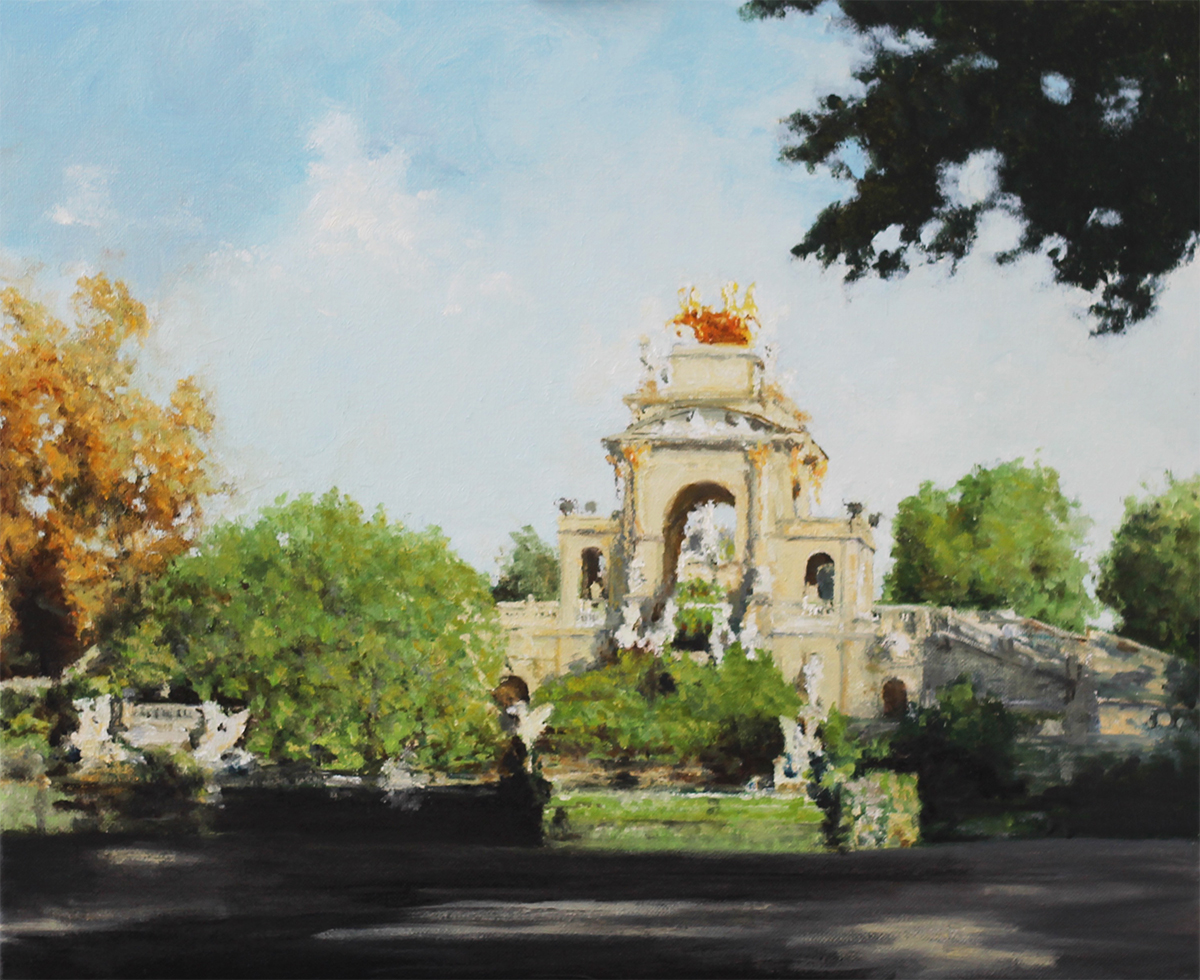
Oil sketch of the fountain in the park.
I've seen the city degenerate into an amusement park. Trampled by tourists, everyone taking pictures in front of that disgusting blunder of folkloric architecture. The Sagrada Familia is one of the saddest monuments I know. Poor Gaudì, he deserves better. Third-rate architects are still building it, all supposedly in the spirit of the great genius. I won't show a photo; the building is too painful to look at.
Everything in the city center has become expensive and the food is often terrible (let’s say of McDonald’s quality). There are at least three ice cream parlors on every street; the only remedy (if you want to live in Barcelona and feel good) is to move to neighborhoods like Sants or Nou Barris.
It's still too early to reminisce about the last ten years. Too many events are competing in my mind, some good and some not so good. I never really felt at home in the Born; the situation in that apartment was too uncomfortable. It contributed to me wanting to leave. What I will miss in the Netherlands is the food market (the fishmonger!), the always pleasant weather and the abundance of light.
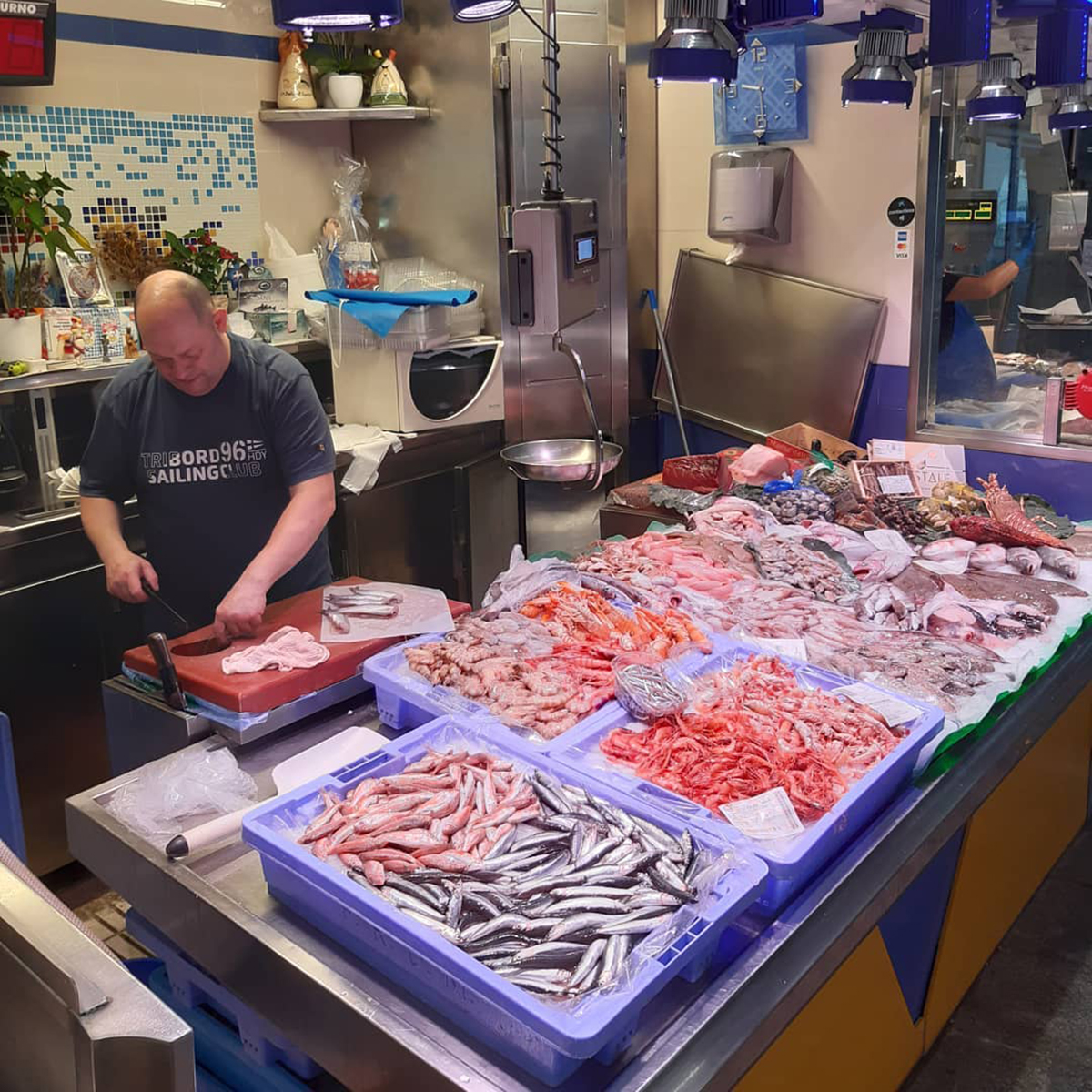
My fishmonger at the market, his stall NEVER stinks!
And now I'm sitting here… I'm excited, I have hope, I can paint, and I understand better what's going on around me. I'm not a nationalist, I'm not a proud Dutchman; I've seen too much madness (including from other nationalists) to fall for it. Every place, every ethnic group has its good and bad sides. But here everything sounds more familiar, and so things run more smoothly.
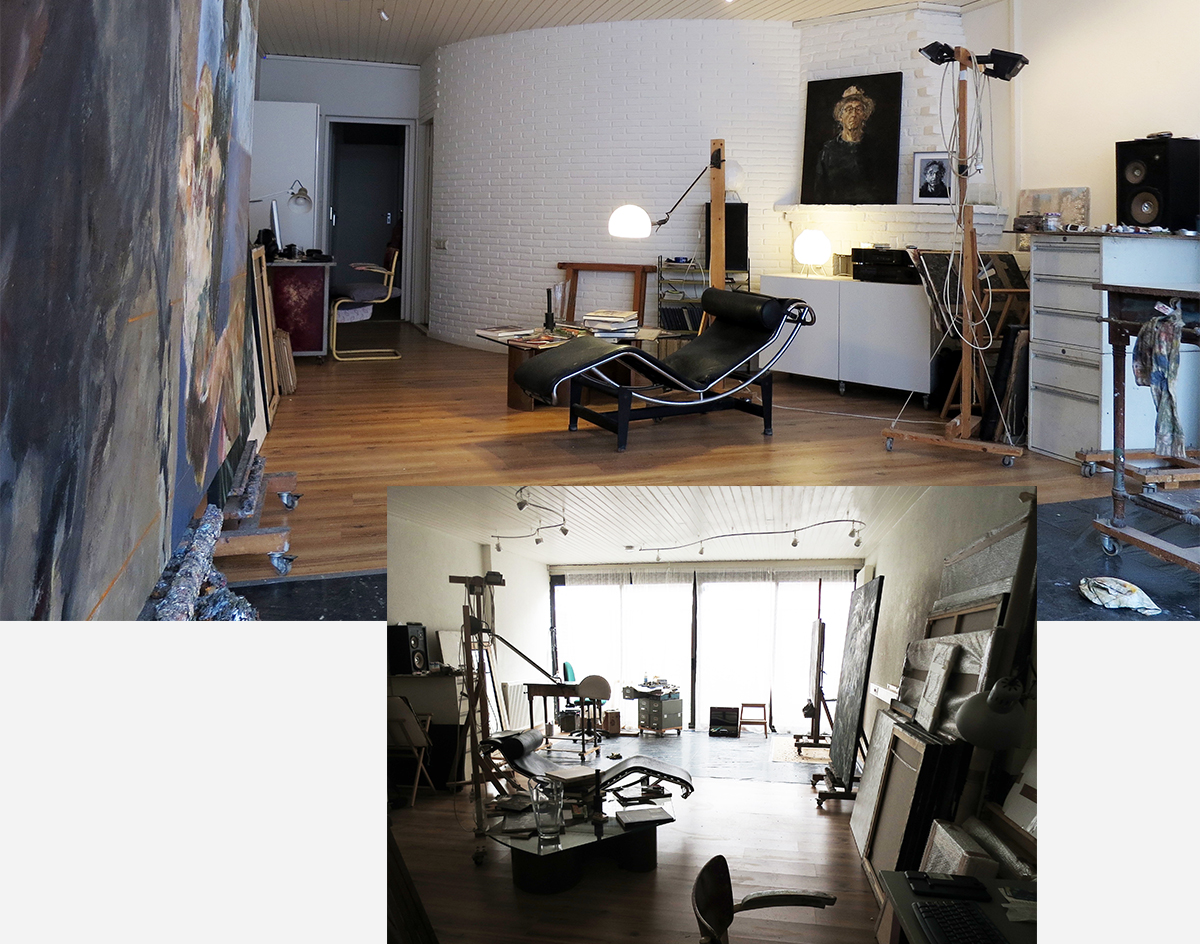
Studio in the Netherlands.
I feel rich. I don't have to go anywhere, my head is full. But how long I can stay here…
Of course; if I win the lottery, I'll immediately move to Italy, although... that Italy no longer exists. The Italy of half portions in restaurants, haggling at the market, walking around the back of the store because the front door is closed because for some mystical reason.
And I'm no longer the one who secretly puts up posters for Gianni's exhibition in the city center with Gianni and Mikolash at night, only to then enjoy a fiasco of Chianti and sausages at Mikolash's kitchen table.
My shared theory is that ones’ life (according to Schopenhauer and therefore also according to me), consists mainly of boredom and misery alternating with the occasional moment of happiness, dreams make ones’ life bearable.
I've always hated (and perhaps still do) the locals. The grass on the other side of the hill... nonsense, of course, so it's important to live in a place that isn't too uncomfortable and then cherish your dreams. In my case: Venice, but in a different era.

Venice.
If you ever see me daydreaming along a canal in Amsterdam, let me. I'll either jump in or keep on dreaming...
Netherlands, January 2021.