18-11-2025: Italy and the church
Italy… What is that, Italy and me? Why do I always get so sentimental?
I went to the consegration of the ‘Regina Pacis’ in Velletri for which I made the crucifix. It happened on the 9th of November.
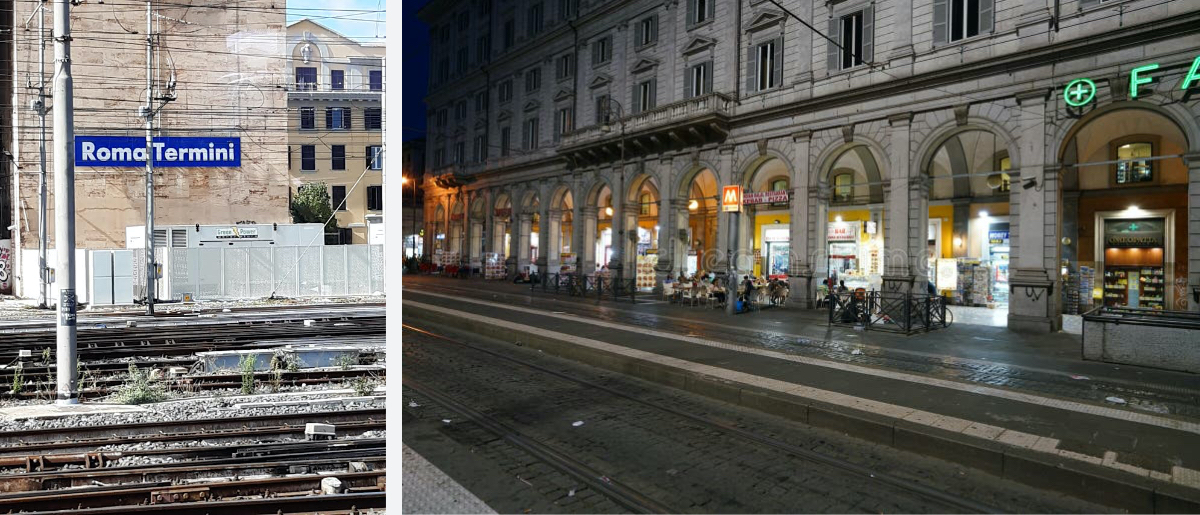
I flew into Rome and stayed one night near Termini Station, not the most charming neighborhood in Rome. Normally, I'd look for a place to sleep in neighbourhoods like Trastevere... but I didn't have much time; I was only staying until the next afternoon.
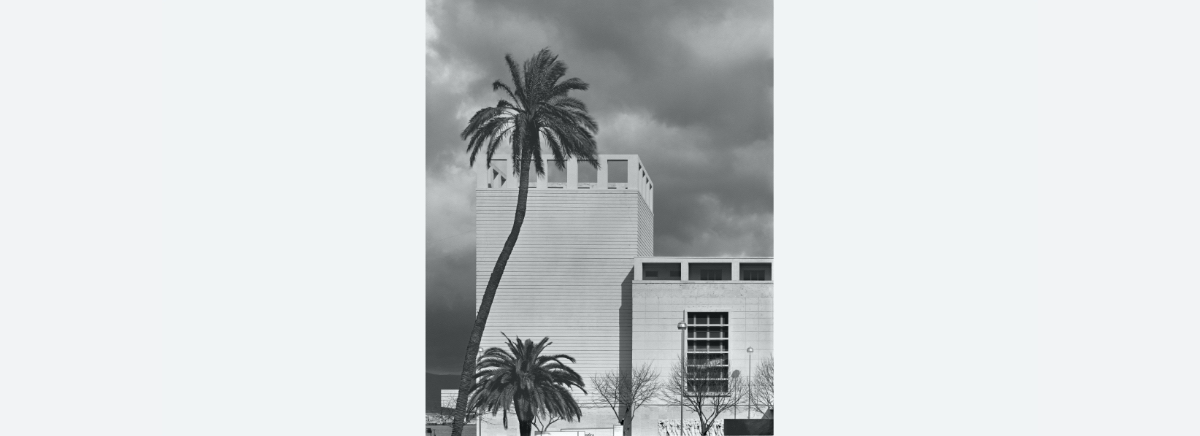
I took the opportunity to meet Alberto (click on his name to go to his site) in Rome. He was Mauro's (click on his name to go to his site) house photographer, documented all his buildings. I bought a photo from him, something I'd promised him years ago but, being a good bohemian, couldn't fulfill. Now that I'm a retired bohemian with a pension, I was finally able to fulfill that promise. I'm showing the photo here in small format, hoping he'll let me.
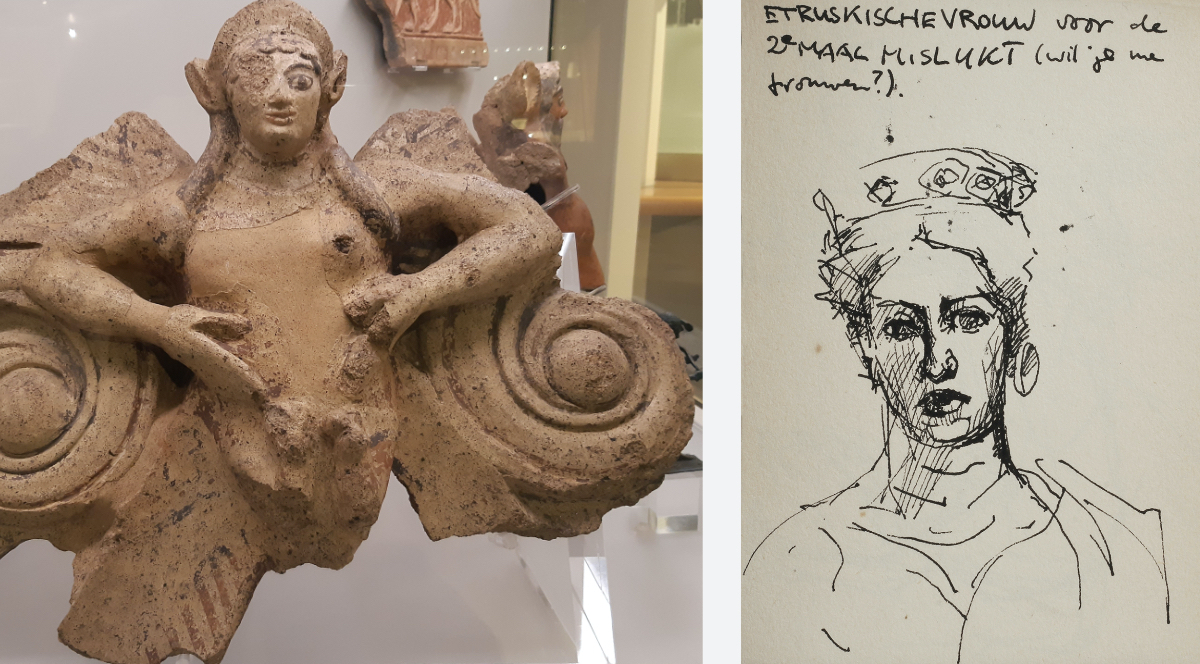
The morning before my appointment with Alberto, I visited the Palazzo Massimo (click on the name for information). There, I saw this archaic Etruscan statue from around the fifth century BC. In the late 1980s, I was fascinated by the expressive gaze of statues from that period and made a series of gouaches with a similar gaze (I steal where I can). I rummaged through my archives but couldn't find a single image, except for this failed sketch... I was simply too much in love with her surprised gaze to capture it properly.
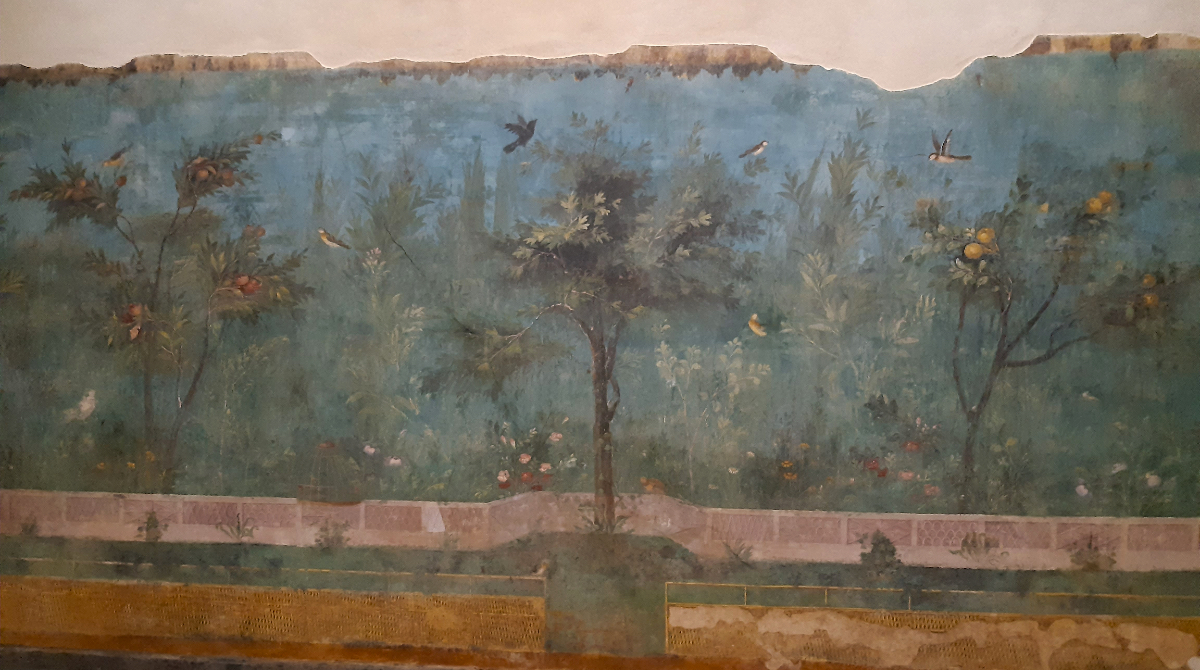
It must have been in 1987 that I saw the frescoes of Livia's room (wife of Emperor Augustus, click on the image to see the video), and I wanted to see them again. It was quite a climb up the stairs, and I was coming down with a bit of the flu. So when I filmed the video and forgot to mute the sound, it sounded like a rather tired old and cranky man walking through the room... SORRY!
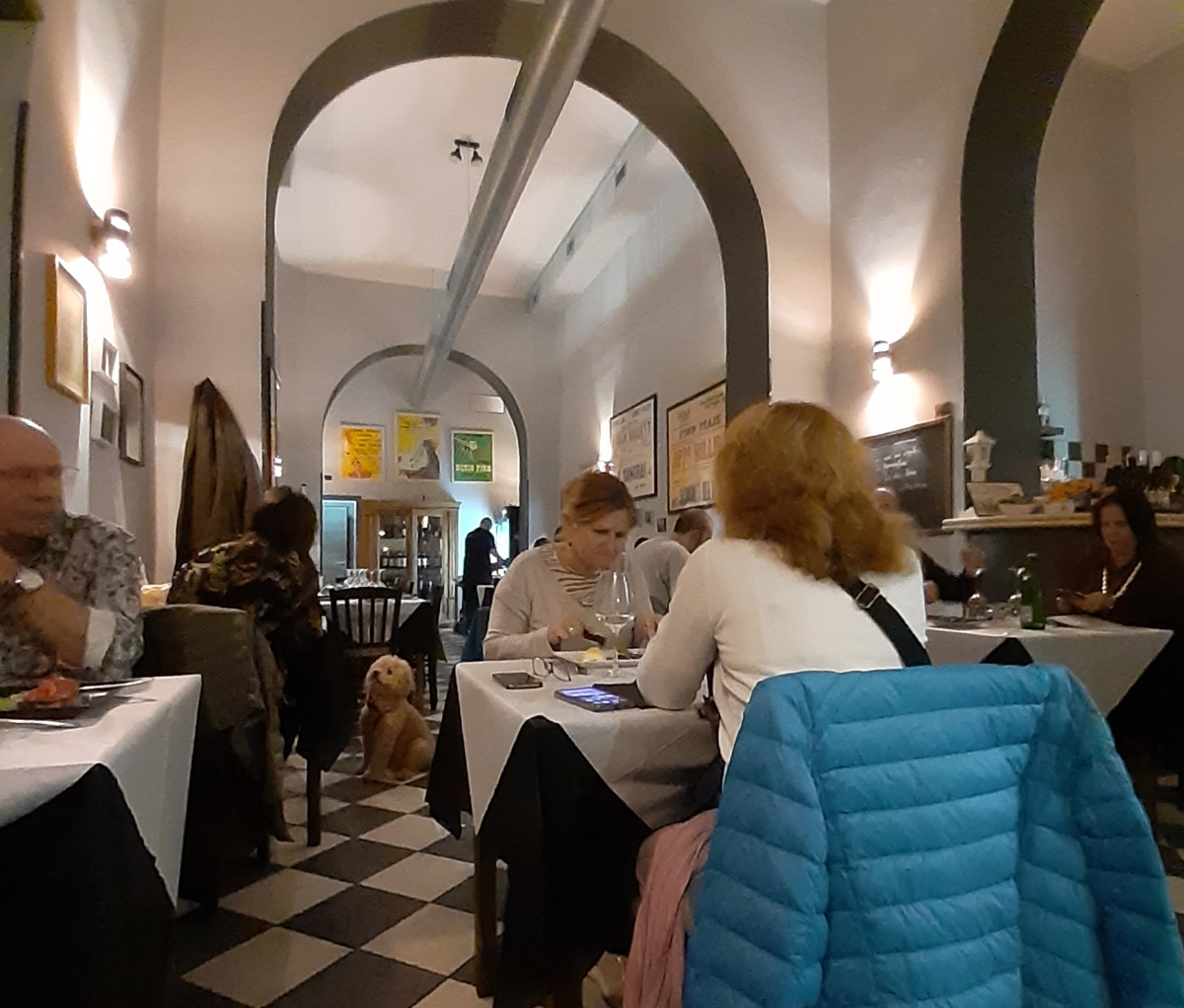
I found a good restaurant nearby the night before my departure. And it was near Termini, quite a stroke of luck.
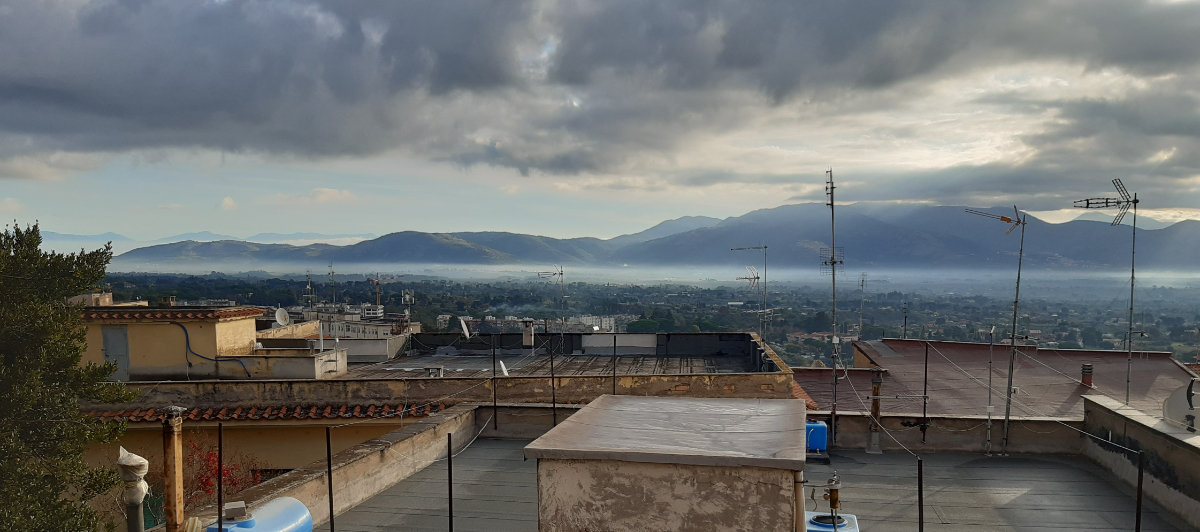
I rented a lovely apartment in Velletri. A very sweet and helpful hostess... the only 'problem' was that it was in the old town and that to get there, I had to climb a steep hill... even more panting…
I arrived a few days before the consegration. The crucifix had arrived two days earlier, and I thought I might have to assist with hanging the painting. It's hanging free from the walls by wires. Fortunately, it wasn't necessary; it was already on its spot.
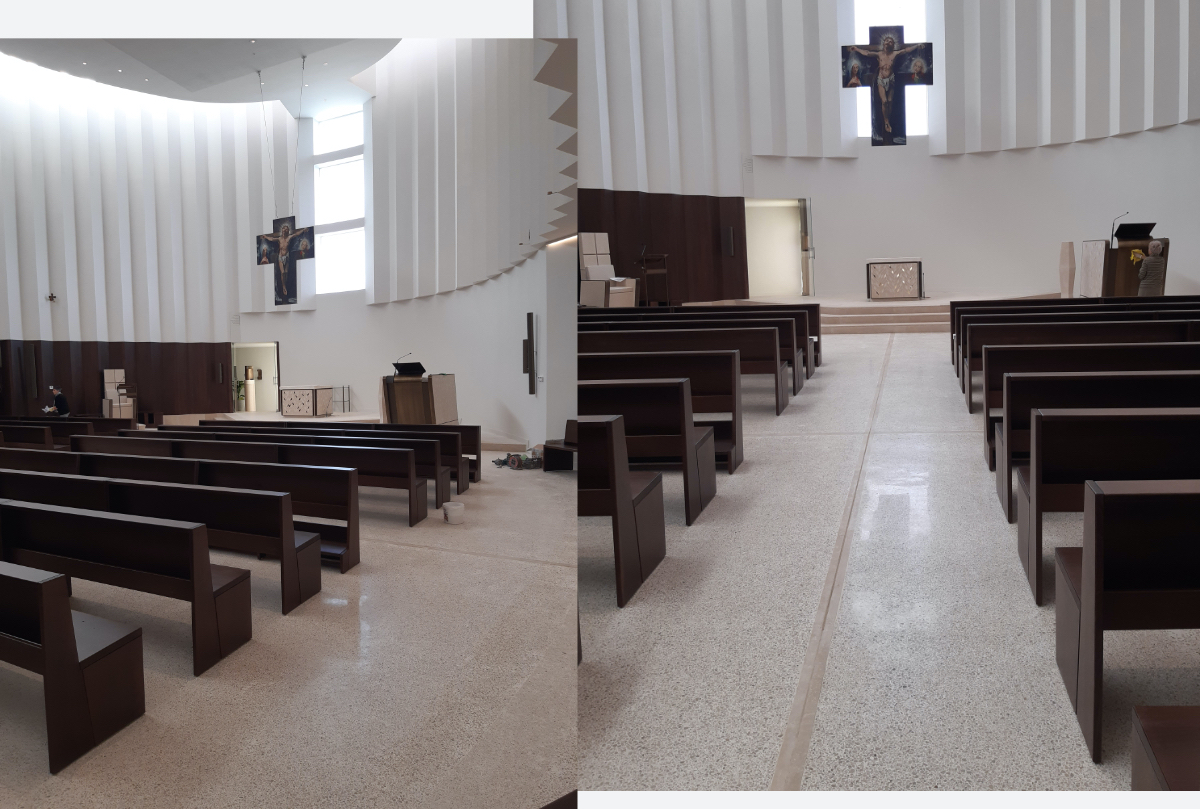
Some people were busy cleaning the space. And everyone was full of praise for the crucifix. I think I struck a deep chord with this work.
Unfortunately, I have little to report about Velletri. I spent most of my time in bed with a book (the flu...). I ate a lot of mozzarella, though.
I love having breakfast outdoors. A cappuccino with a cornetto. It's something almost everybody does. At one bar, the lady behind the counter turned the cappuccino into a work of art.
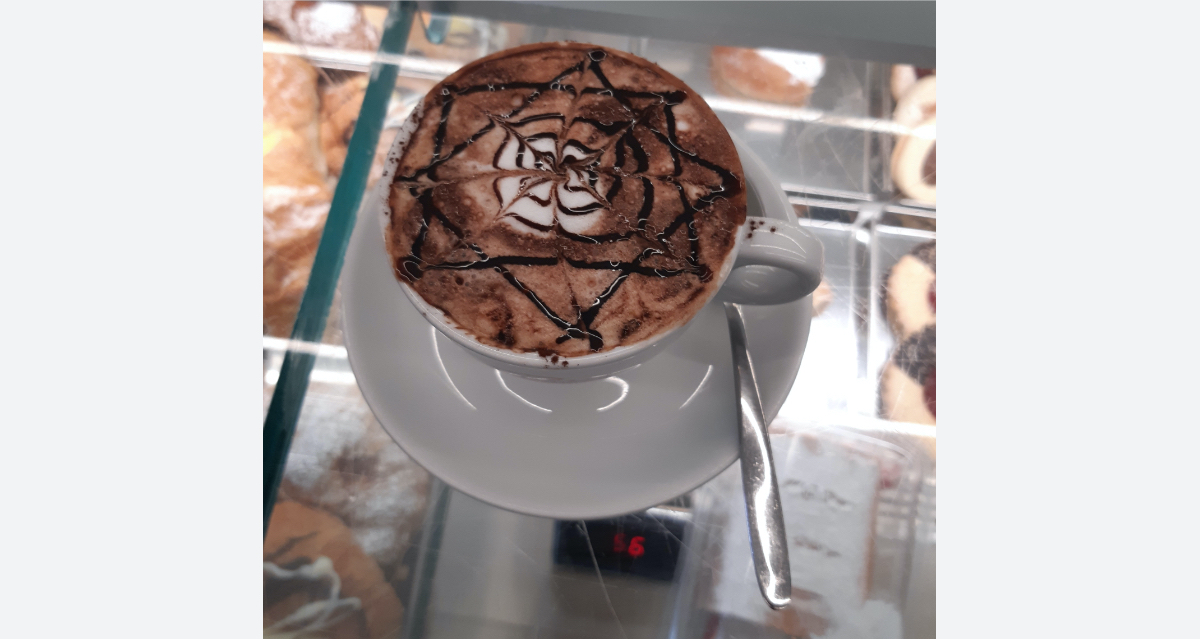
It was almost a shame to drink it…
On November 9th, the church was consecrated. Everybody was there: a choir, the mayor, the bishop, some military men with a lot of medals on their chests and the whole parish.
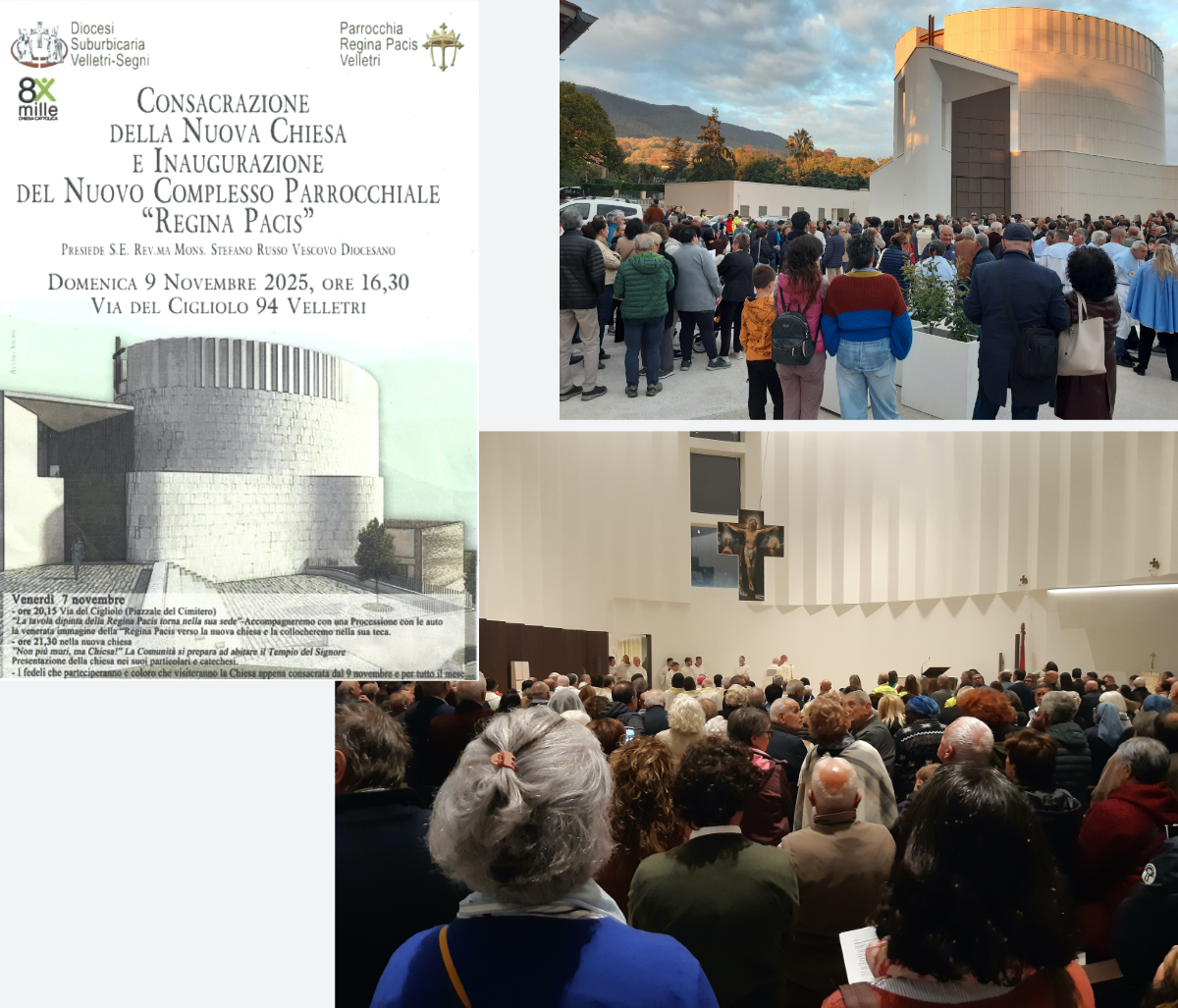
Click on the photo to see the entire process, from the making of the crucifix to the display in the church.
I went home feeling a better person.
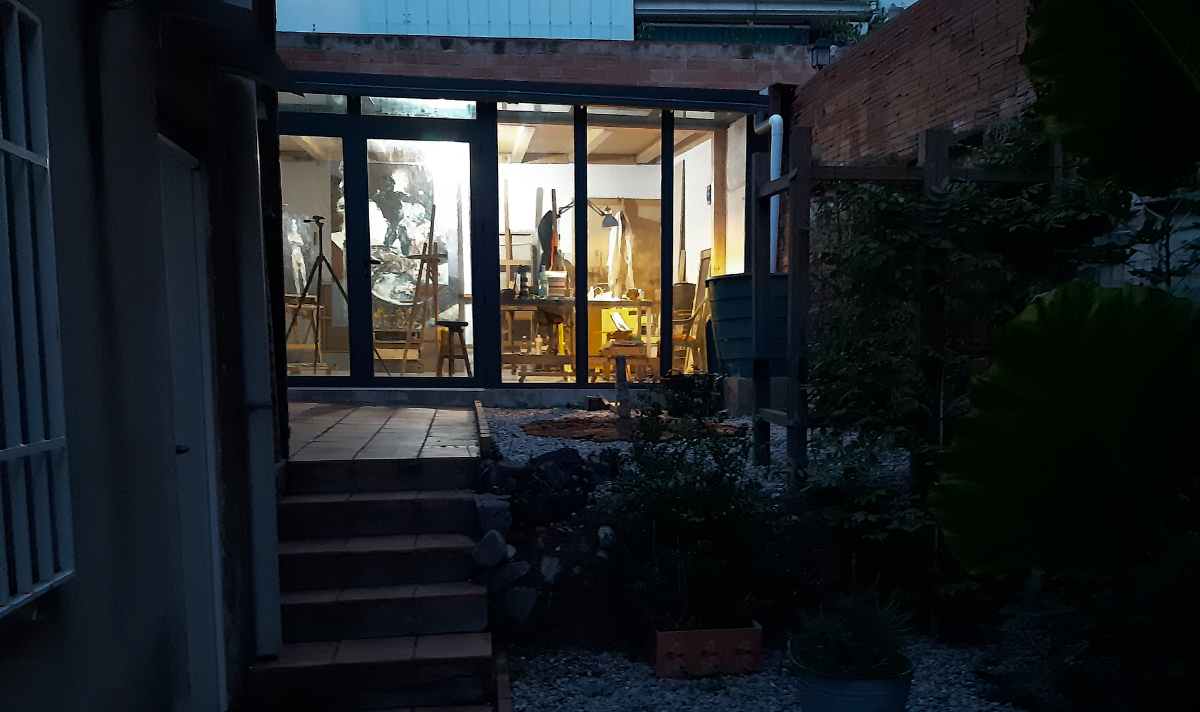
My life here in Barcelona is quite pleasant, I have a great house with a studio in a quiet neighborhood on the outskirts of the city, but those few days have made clear that I'll need to spend some time in Italy again in the near future.
Show comments (2)
Hide comments
Joke de Wilde,
19 Nov 2025, 16:26
Prachtig crucifix, Bert, maar mij ontroerde nog het meest het Lam Gods aan de achterkant! Bijzonder om zo'n moment van wijding mee te maken, notabene nadat jezelf dat wat gewijd wordt geschilderd hebt. Als je weer naar Italie gaat, dat je er zeer van mag genieten!
Alle goeds, Joke
Alle goeds, Joke
Joke de Wilde,
19 Nov 2025, 16:26
Prachtig crucifix, Bert, maar mij ontroerde nog het meest het Lam Gods aan de achterkant! Bijzonder om zo'n moment van wijding mee te maken, notabene nadat jezelf dat wat gewijd wordt geschilderd hebt. Als je weer naar Italie gaat, dat je er zeer van mag genieten!
Alle goeds, Joke
Alle goeds, Joke
04-10-2025: Madrid and flamenco
Last week I spent four days in Madrid and visited five museums.
It was great, almost too much (during my last museum visit, I had to drink two mojitos just to be able to wander around for another two hours).
The Prado, the Thyssen-Bornemisza Museum, the San Fernando Academy of Fine Arts, the Reina Sofia, and the Spanish Royal Family collection.
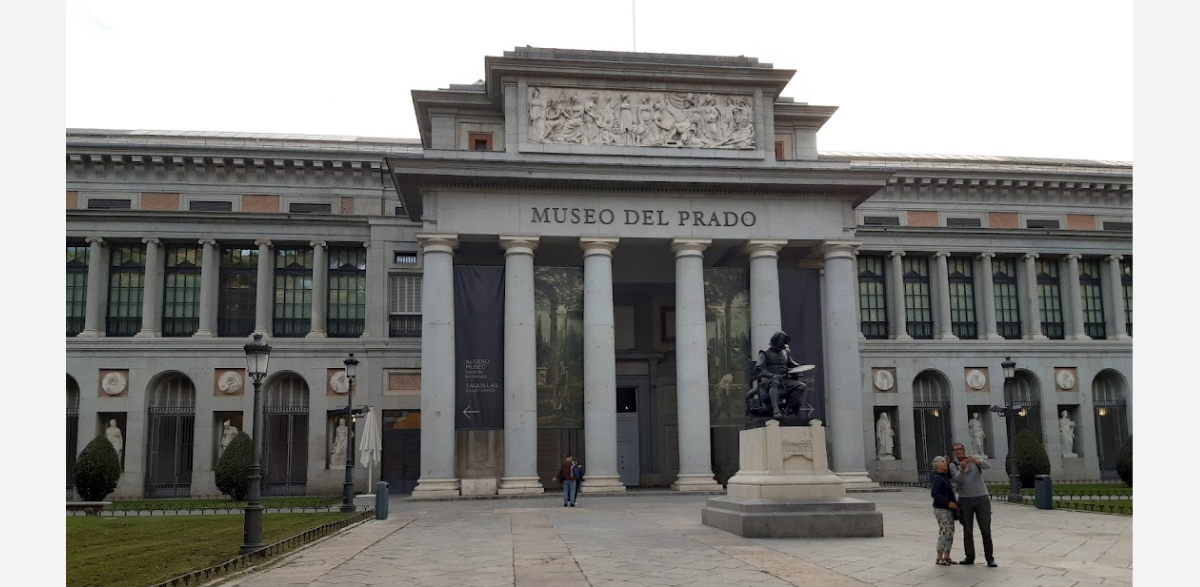
the Prado
Since there was so much beauty to admire, I'll keep quiet about it, otherwise this blog would descend into endless praise. But there is one painting and especially one detail I want to highlight.
Velázquez had a slave, whom he portrayed. That portrait hangs in the Metropolitan Museum of Art in New York. I admire the painting immensely; I've made several sketches after it to learn and see where the magic of the portrait lies.
The slave's name was Juan de Pareja. He was a painter too. I've always been curious about what he made. One of his paintings hangs in the Prado. In that canvas, ‘The Calling of Saint Matthew,’ he portrayed himself. I've finally been able to see and compare his self portrait to the one Velázquez made of him. Is it a wonder I prefer Velázquez's portrait?
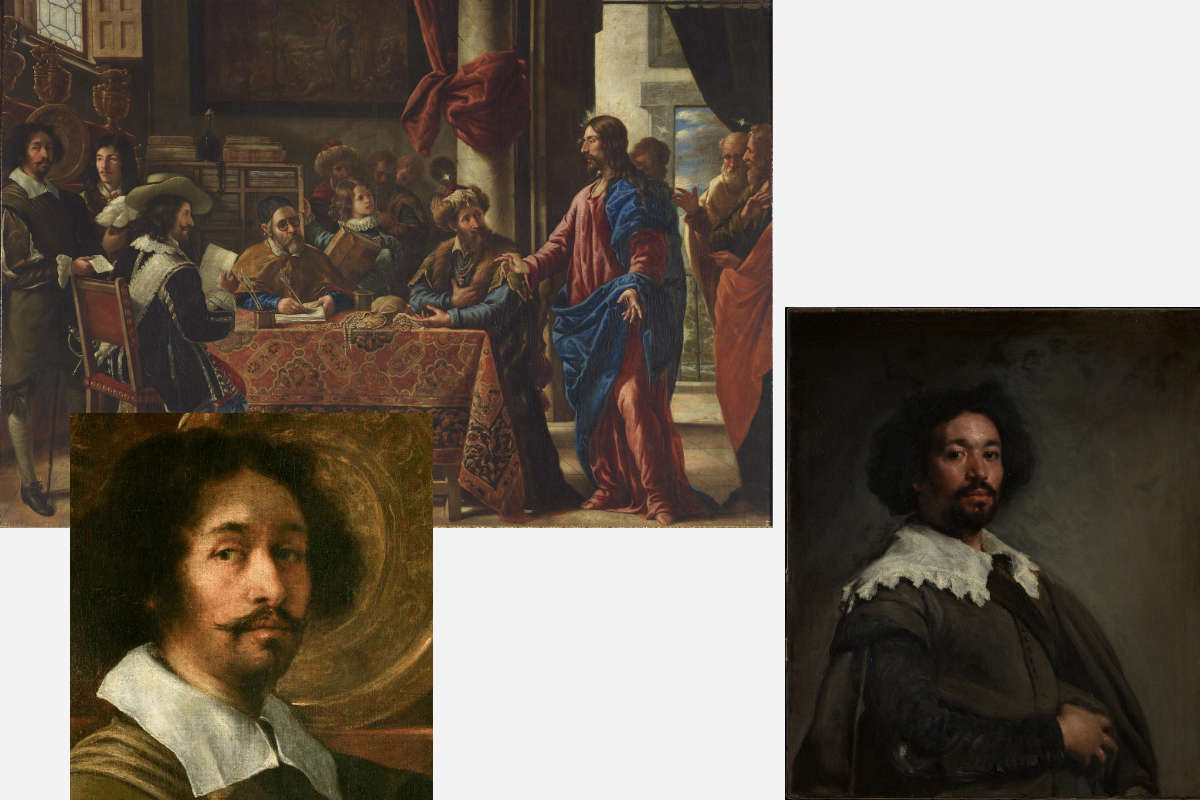
'The calling of saint Matthew', the detail showing the self-portrait and the portrait made by Velàzquez.
At the Reina Sofia, I was tickled by nostalgia. It reminded me of my visits to the Stedelijk Museum when I was around 16. The art in the Reina reminded me of what I used to see at the Stedelijk.
Back then, I watched everything with tingles of excitement, now I found much of it dated; a revolution from an earlier era with a thick layer of rust on it.
The many videos shown there were a joy to watch. I finally saw "Un Chien Andalou". Of course, there's the scene with the eye being sliced open with a razor (seen many, many times). I couldn't really get into the movie; the plot was too fragmented, like disjointed sand.
And a must was seeing the Guernica.
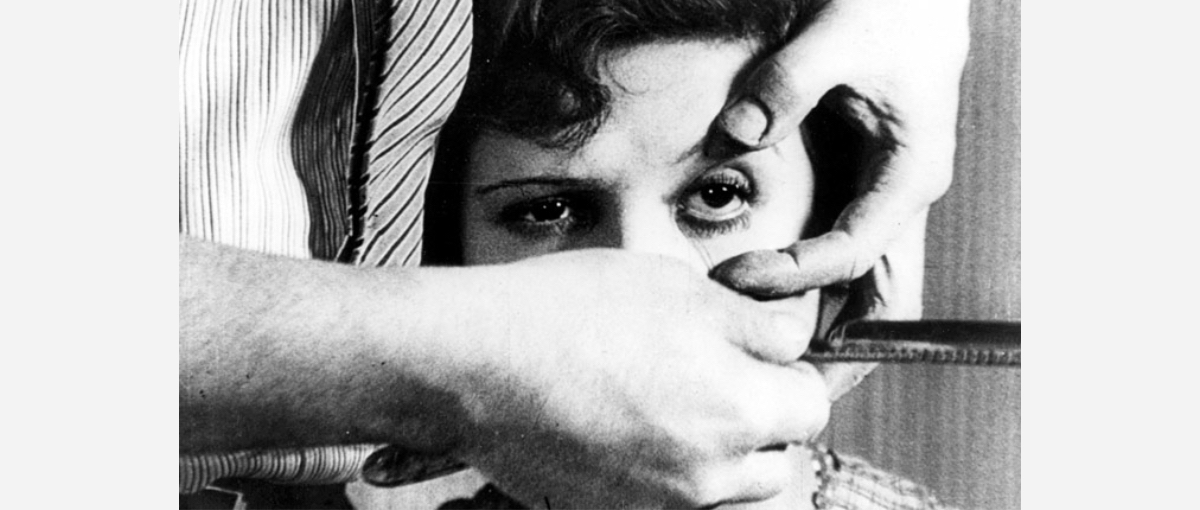
‘Un Chien Andalou’ (click on the image to see the scene with the eye).
I visited the Royal palace. Initially I had planned to visit the Escorial; I think I was right not to go. I wandered through the Royal palace, went from one opulently decorated room to another, but it didn't really do much for me.
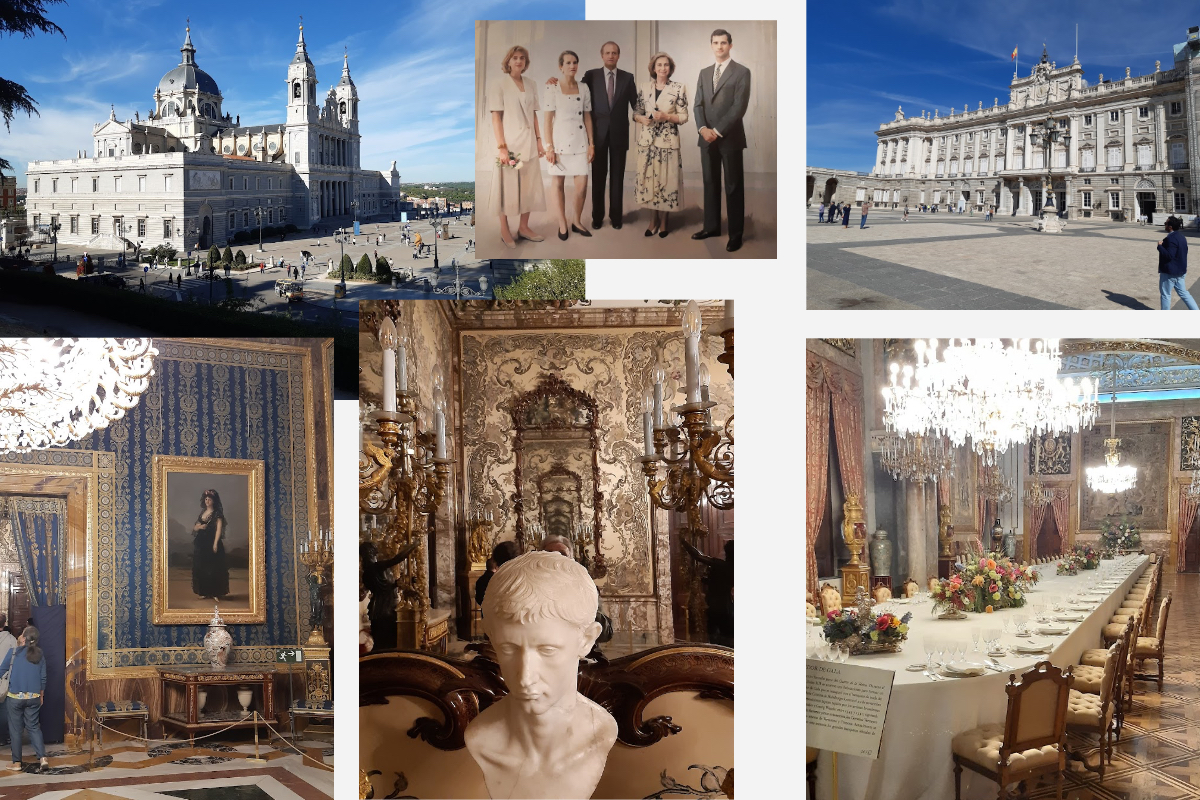
Royal palace
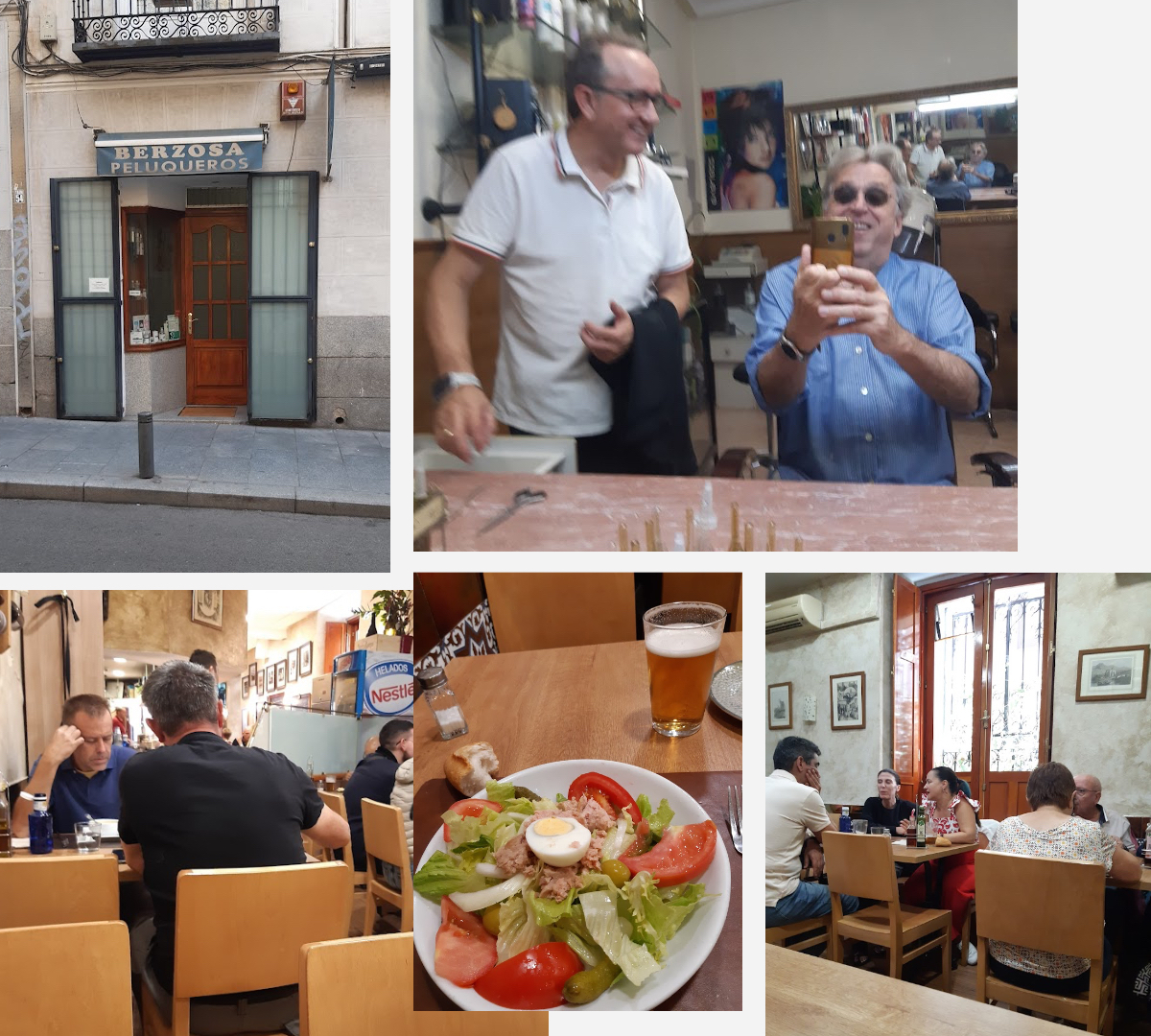
A real stroke of luck was finding a barber just a stone's throw from the palace. Barely a window, just the name above the door; that gave me hope, and once inside, I knew it was good. 14 euros… a bargain.
He also indicated me a good lunch spot, I sat among the locals.
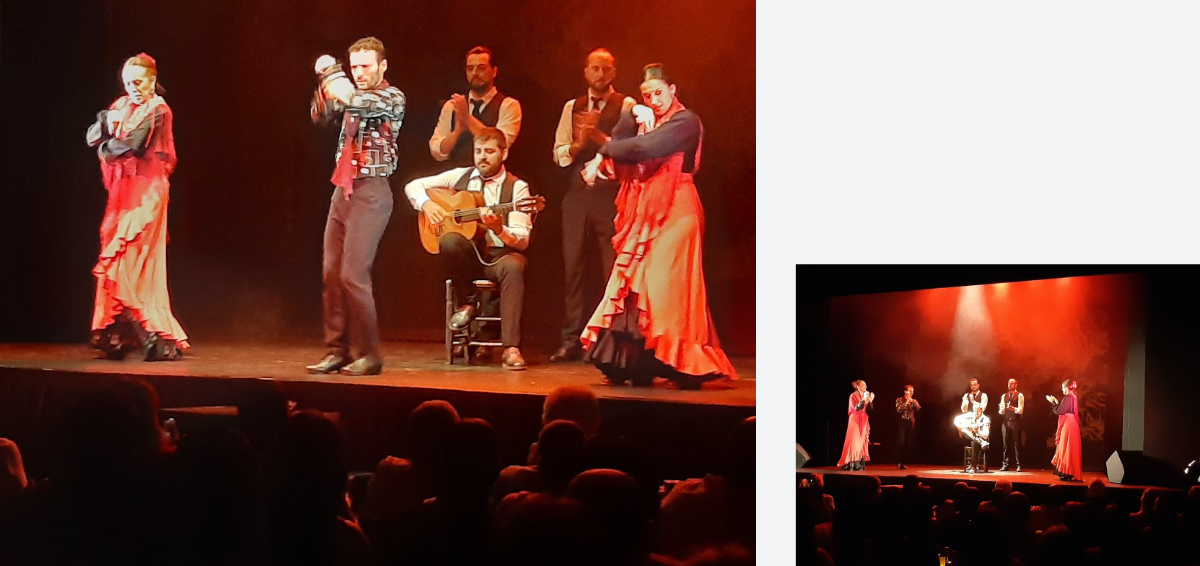
One evening I went to one of the many tablaos (all claim to be the oldest in Madrid). Sometimes I think flamenco has become too entrenched/drowned in tradition. It revolves around a few themes. And then… I've never seen a woman play guitar… especially in these times, I'd say something should be done about it…
There was endless applause, that's part of the event (the dancers sweated a lot). To me it seems difficult to sing and dance your heart out night after night, and do it in exactly 58 minutes (timed it).
Flamenco: I really like Diego el Cigala; click on the image below to enjoy a video. And yes, he's taken some wonderful side roads. (I want to buy a suit like his someday; maybe I can find one when I'l be back in Madrid.)
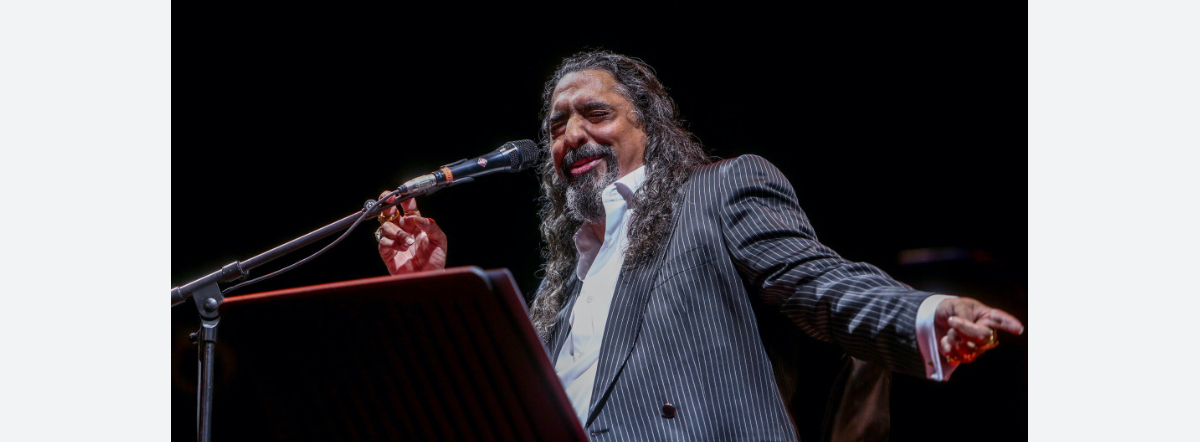
Diego el Cigala, click on the image to go to a video with Diego.
Still, it can also be done in the traditional way and be great (I must have seen this video a 100 times, but it still makes me extremely happy).
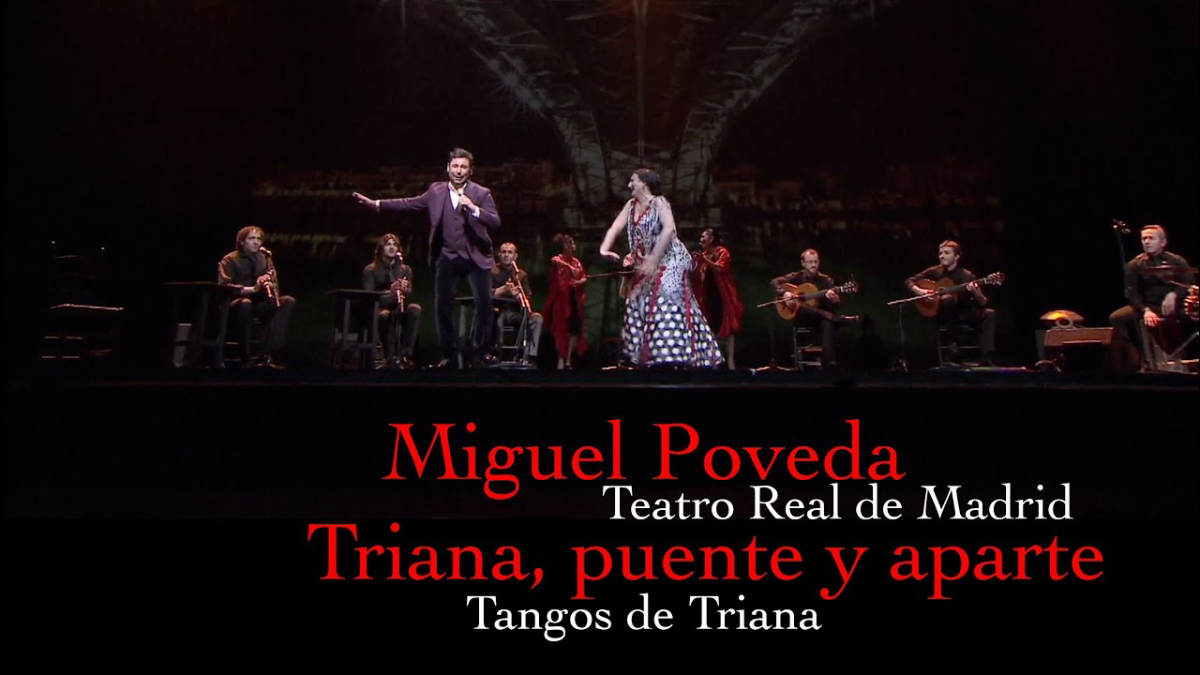
Click on the image to go to the video.
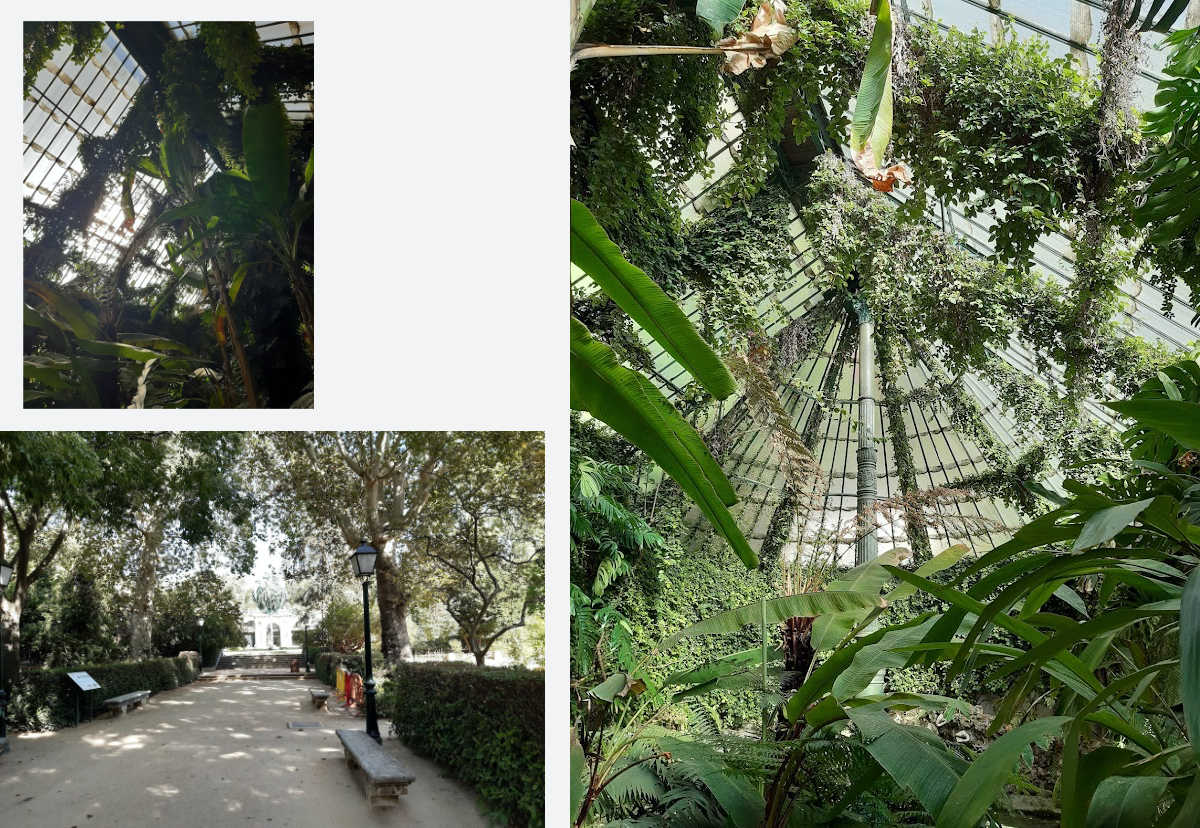
Besides all the art, I was able to relax in the botanical garden.
My Airbnb stay… a bit awkward… the owner of my rented room in question, is a true Andalusian and was former an agent of flamenco shows. Unfortunately we couldn't find common ground. She didn't really understand my passion for painting and, quite rightly, refused to recommend a tablao.
I have to thank my dear Gala for finding this young lady.

Click on the image for the video.
There is hope for the flamenco future! Normally I'd post an extra video below the blog, but for some reason I can't seem to find another one of Rosalia that I am allowed to show, the ones I'd like to post get blocked. So, here's this interview instead...
28-07-2025: The museum of Fine Arts in Ghent
I'm busy constructing the crucifix (a commission for a new church in Velletri, Italy) and the wooden frame around my bed. So, not much painting… I'm on the periphery of painting, nostalgically busy sawing, gluing, and sanding.
Hence this blog post about a museum I visited not so long ago. I made an ultra short (business) trip to Aalst, Belgium. I wasn't supposed to leave, but money breaks all laws. Travel will be only possible after the cross is done. I bought a couple into Dutch translated novels and visited the Museum of Fine Arts in Ghent.
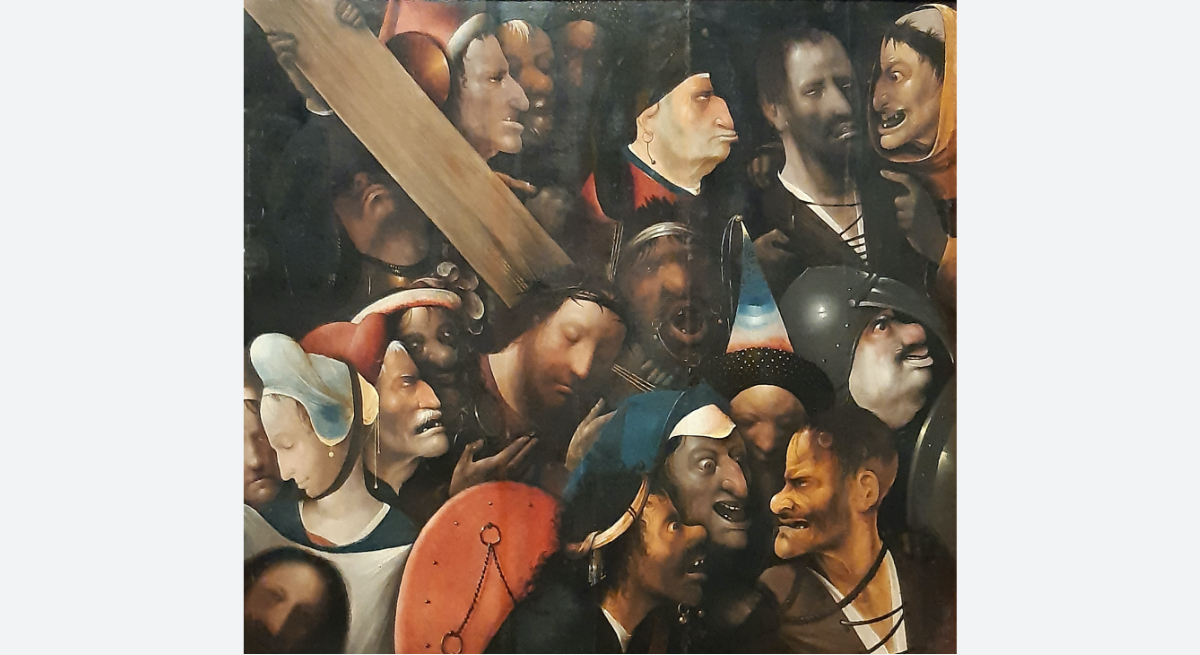
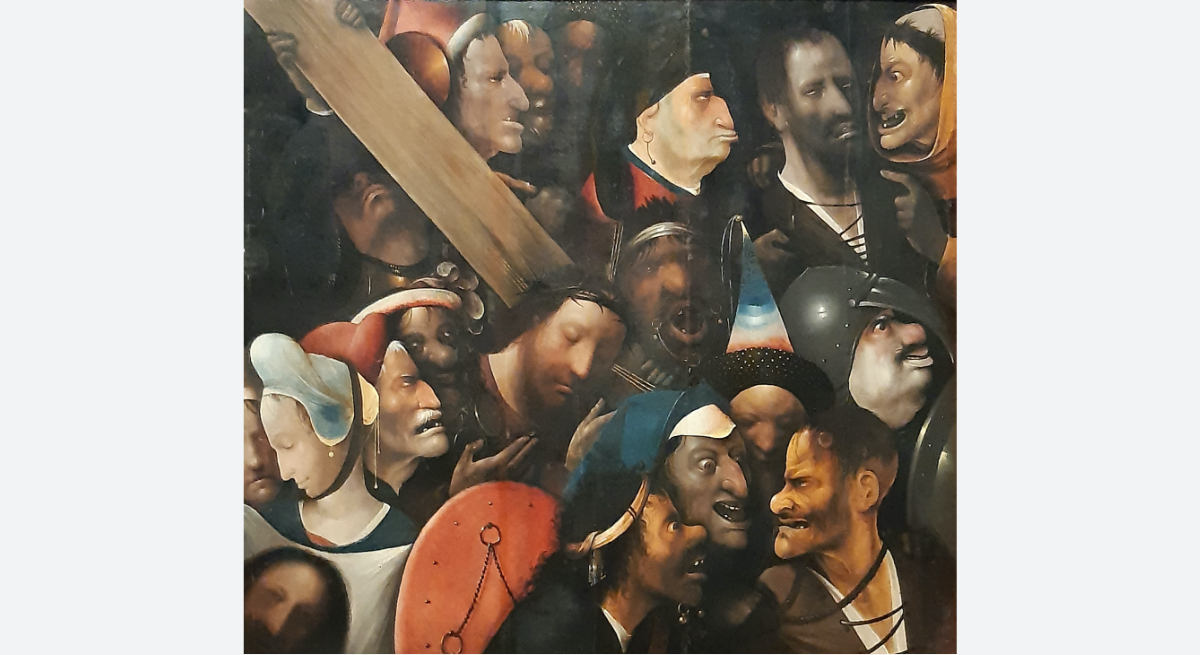
What a treat! The museum doesn't have the reputation of the National Gallery in London or the Rijksmuseum in Amsterdam. It doesn’t have the famous names, except perhaps for Hieronymus Bosch's ‘The Way of the Cross’ and a few French paintings from just before Impressionism.
I once had a reproduction of Bosch's painting hanging in my room. I must have been 14 years old.
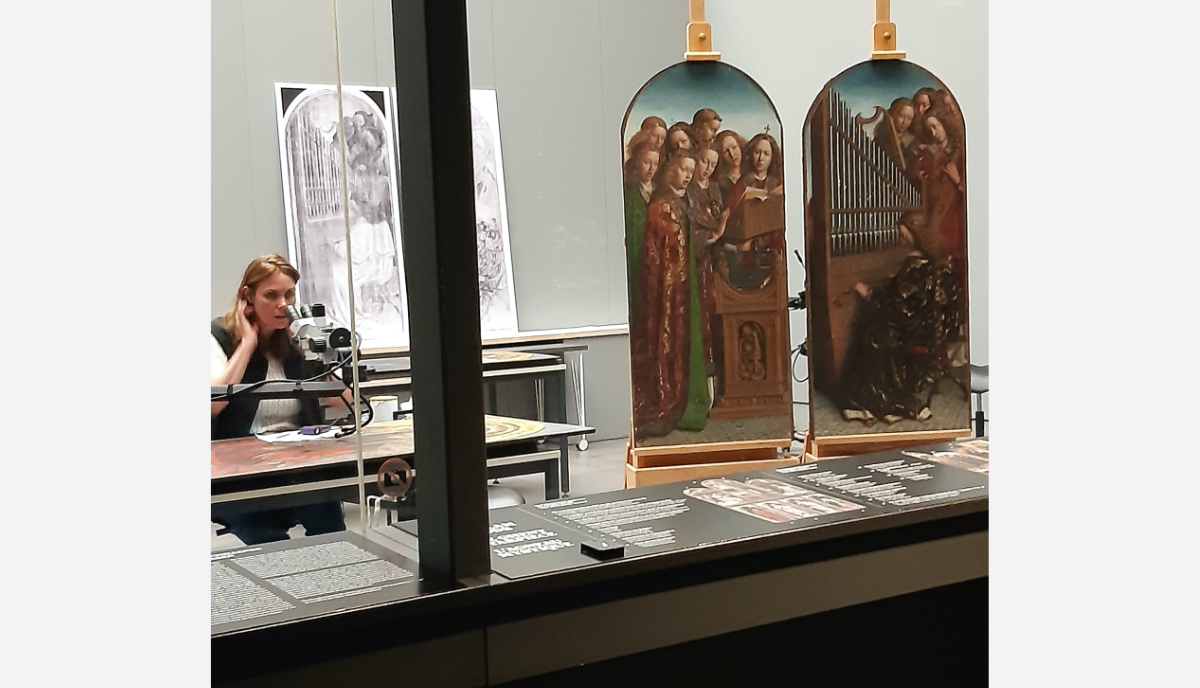
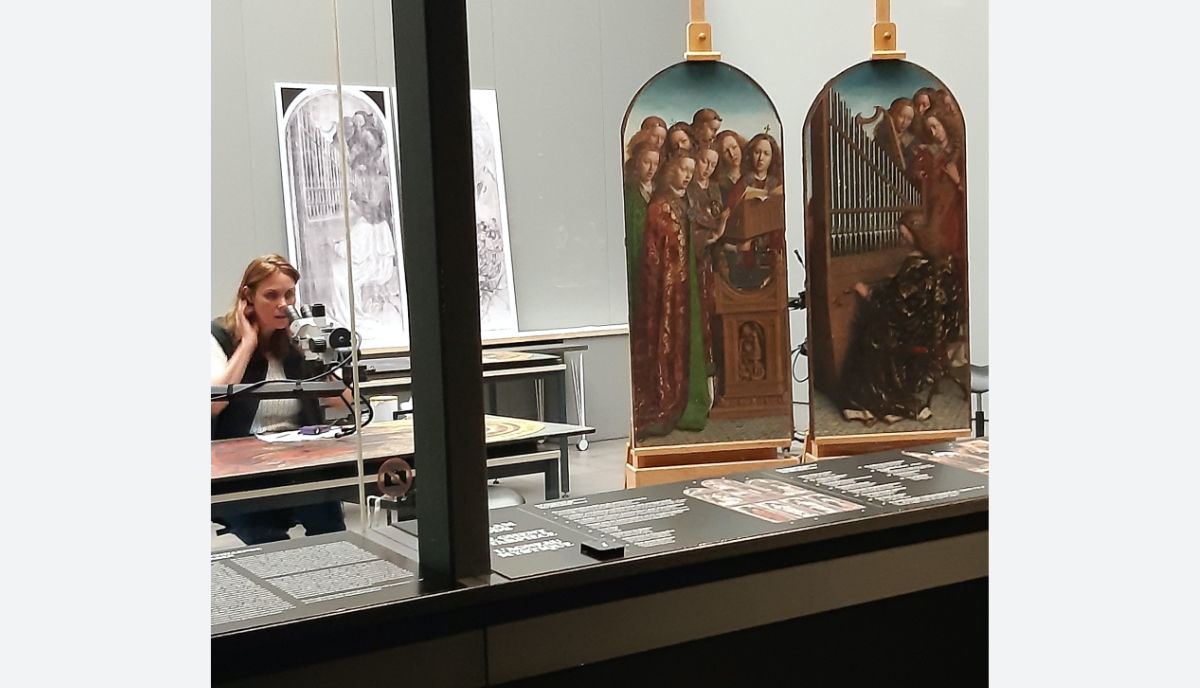
Speaking of ancient art, the museum is currently restoring ‘The Ghent Altarpiece (Adoration of the Mystic Lamb)’ by Hubertus and Jan van Eyck. It's fortunate I was able to admire that work a few years ago. Now I will have to wait a year and then I'll make the pilgrimage; it's one of the most beautiful altarpieces ever created.
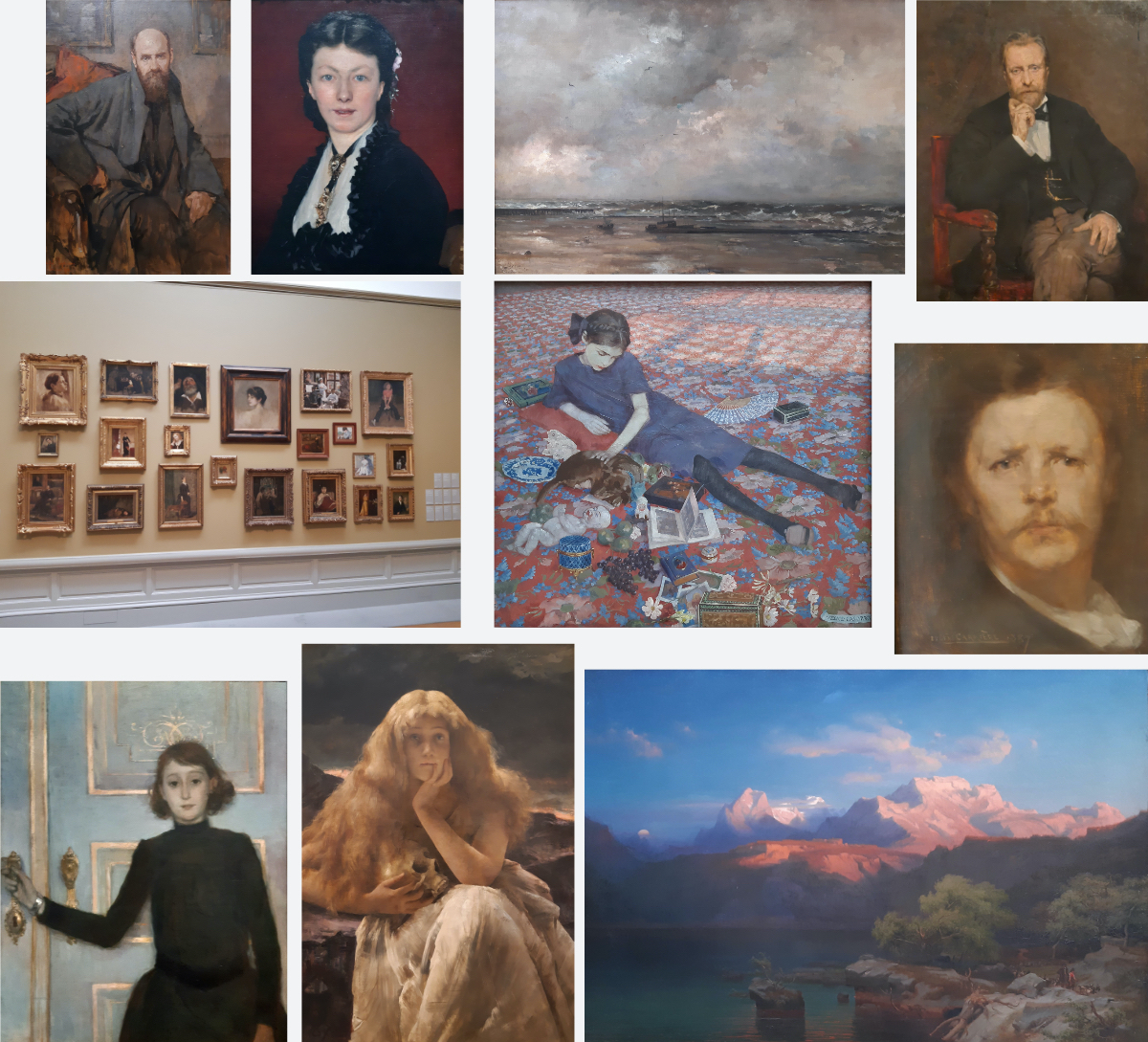
And what else was there to see… as I said, many names of lesser repute; magnificent works by Alfred Stevens, Emile Auguste Carolus Duran, Henri Fontin-Latour (though more well-known), André Cluysenaar, Frans van Holder, Felice Casorati (what's he doing here?) and Theo van Rysselberghe. Many of them lived around the same time.
Among the sculptors, there's a head made by Rodin in plaster and bronze, and a head of a girl by Rik Wouters.
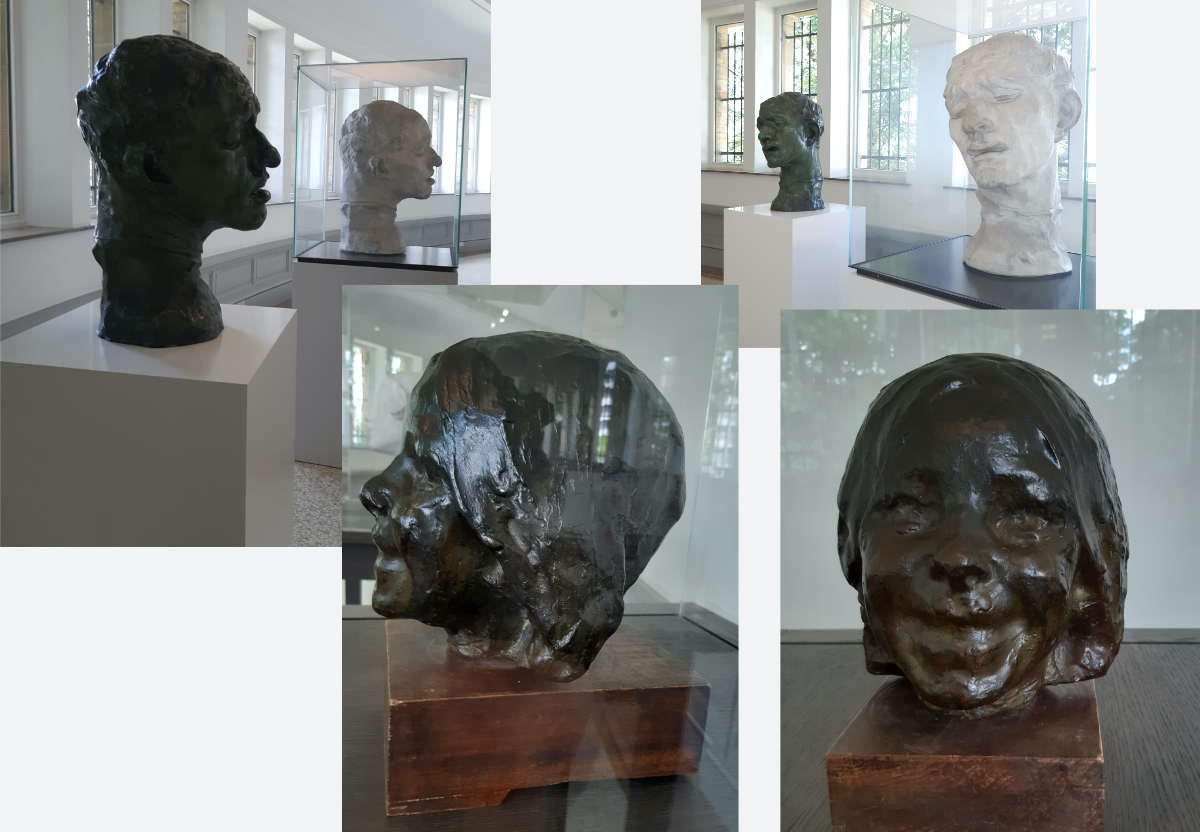
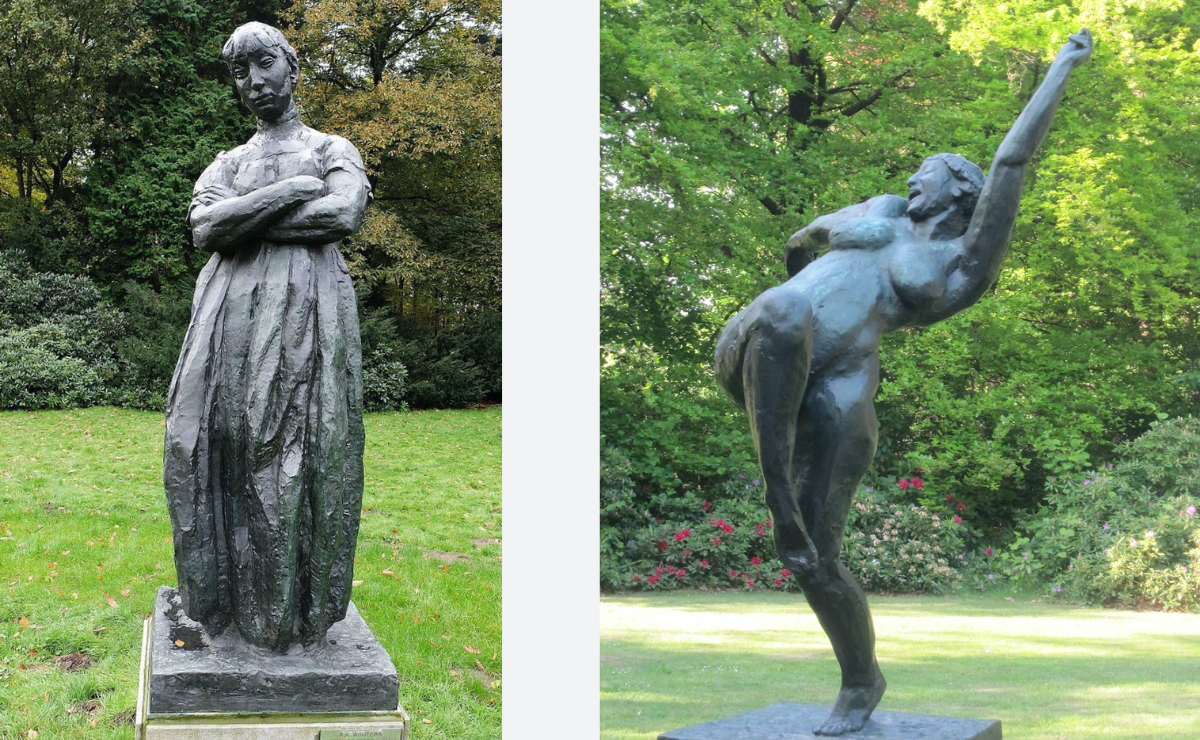
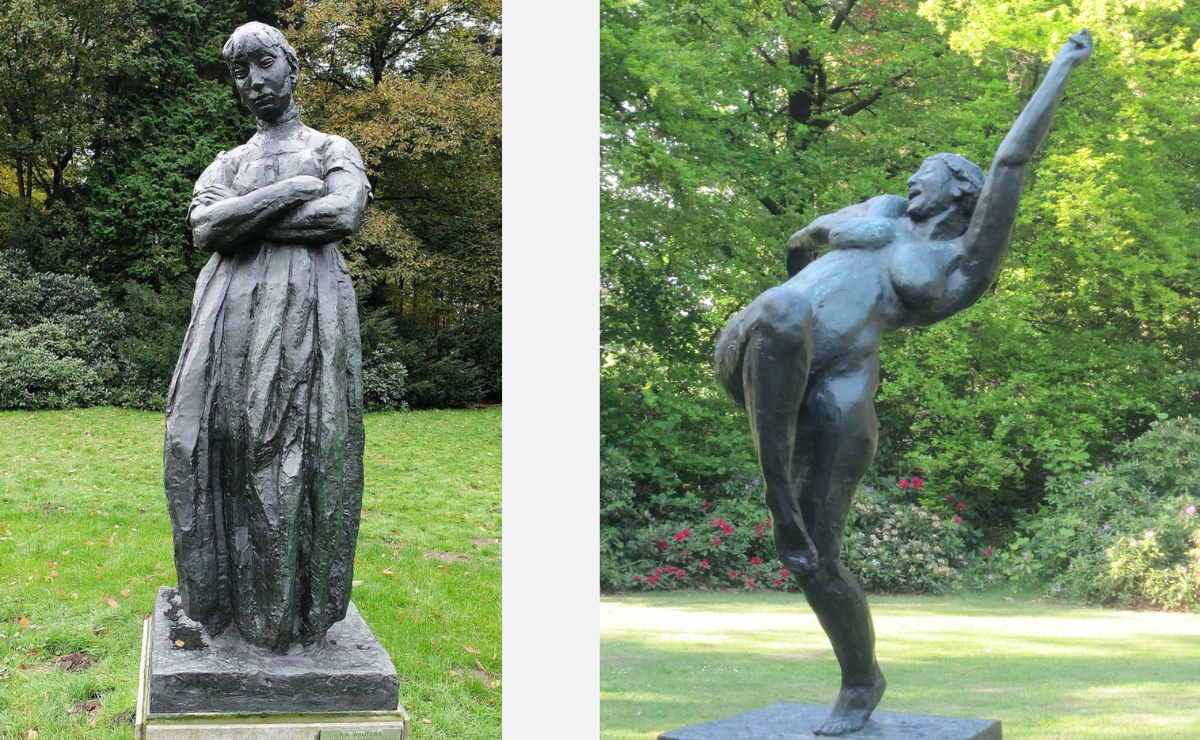
There aren't many works by Wouters around; he died at the age of 33. There's a ‘Nel’ in the stairwell of the Kunstmuseum in The Hague (it once stood next to the entrance of the Stedelijk Museum in Amsterdam. It's probably not ‘contemporary’ enough...), I saw ‘Het zotte geweld’ (The Crazy Violence) in Middelheim and a few paintings here and there. When I stayed at Nat’s in Brussels, I often caressed Wouters's bronze self-portrait before going into town. I have a soft spot for his work. Information about him on Wikipedia: click on one of the two images below.
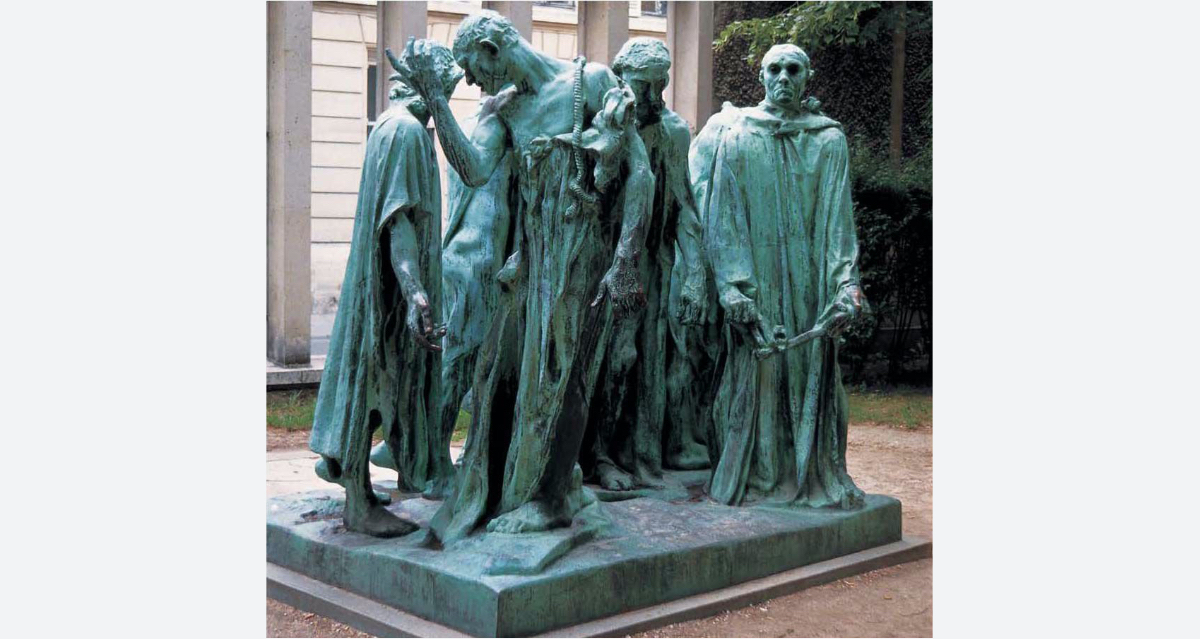
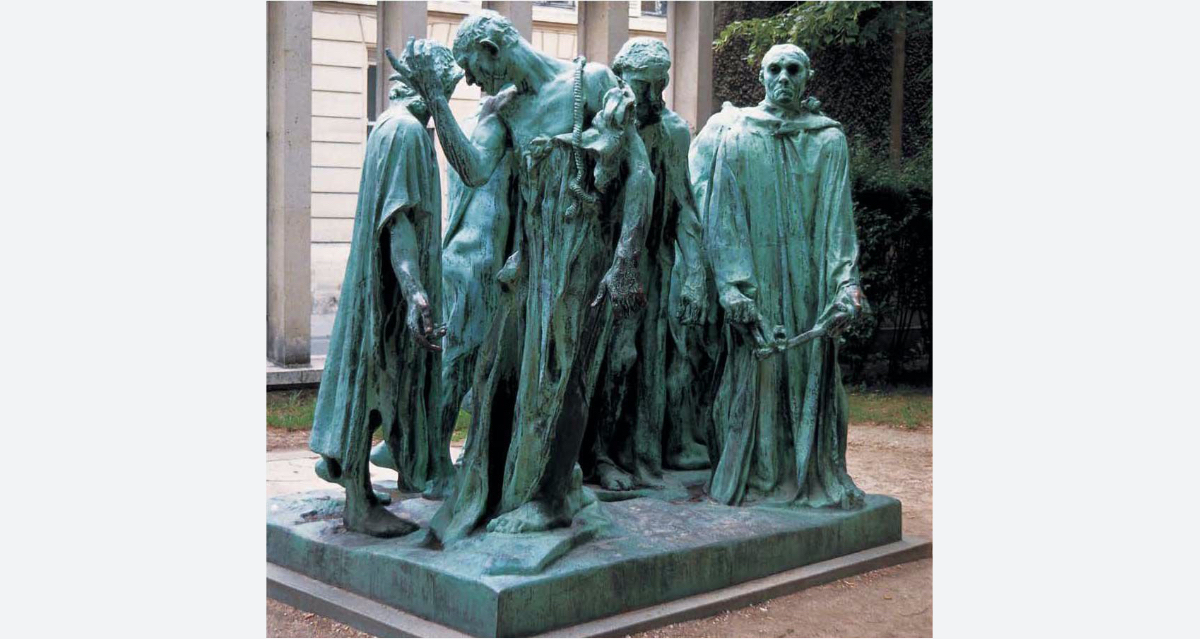
Rodin's head was a study for the sculpture group ‘The Burghers of Calais’. Initially, the city wanted to buy a copy of that sculpture group, but it was too expensive. Therefore, they decided on a study of a head of that group in plaster and bronze.
This museum deserves a wider audience; it was wonderfully quiet. Perhaps this blog post is a ‘mistake’; it's so wonderful to wander the rooms without visitors taking selfies and making the most absurd comments…
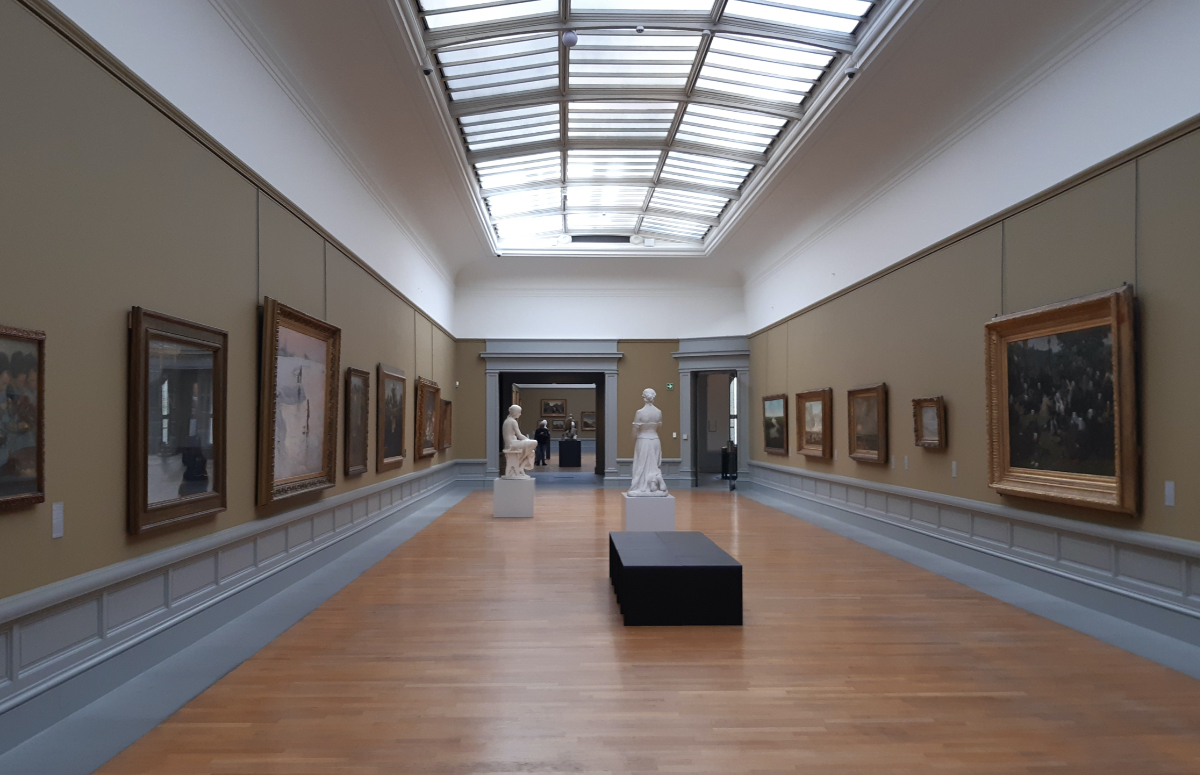
I'm showing some of that beauty (there's so much more!) in the video below, and this time I'm not revealing who created what. I'd like to see all the nameplates removed from museums one day a week, so you can enjoy everything without prejudice. Not knowing if they were created by one of those geniuses and so you pause to look at them because they are beautiful, not in utter adoration, because created by a great master...
I don't care about reputations. Even by ‘gods’ like Rembrandt or Goya there exist works I find hideous. While ‘lesser’ artists sometimes create something that glows in the dark. It's about the painting itself, not who created it or when.
There was so much to see here, created with such tenderness, subtlety, and knowing cleverness...
To give an example: once at the Gare d'Orsay I thought to see a ‘Manet’ gleaming from afar. It was a painting by Eva Gonzales... I was delighted to discover a new ‘goddess’...
Besides all these beautiful things made by deceased artists, there's the ‘Cigar Box’... In this space, Patrick van Caeckenbergh has created a small, quirky parallel world. I approached two attendants and was allowed to go inside.
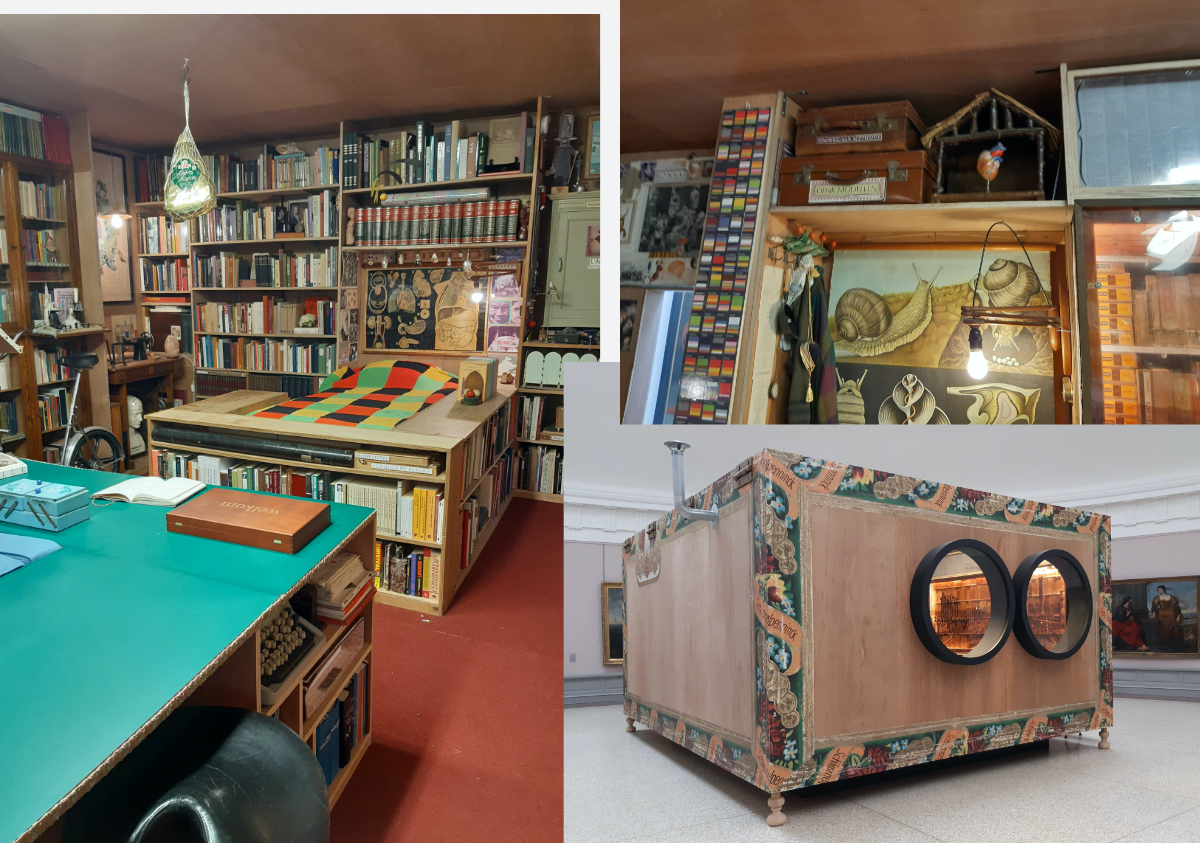
I had to tell them what a special place it is where they work... we agreed to meet again on my next visit...
Enjoy the video!
25-07-2025: Het Museum van Schone Kunsten in Gent
Ik ben bezig met de constructie van de crucifix (opdracht voor een nieuwe kerk in Velletri, Italië) en de houten omtrek om mijn bed. Weinig schilderen dus… ik zit in de periferie van verf, ben ‘nostalgisch’ bezig met zagen, lijmen en schuren.
Vandaar deze blog over een museum dat ik niet zo gek lang geleden bezocht heb. Ik bracht een bliksem (zaken)bezoek aan Aalst in België. Eigenlijk mocht ik niet weg, maar geld breekt wetten. Reizen kan pas na het kruis. Ik kocht een paar in het Nederlands vertaalde romans en bezocht het museum voor Schone Kunsten in Gent.
Wat een feest! Het museum heeft niet de reputatie van de National Gallery in Londen of het Rijksmuseum in Amsterdam. Het hangt niet vol met de beroemde namen, behalve misschien ‘De Kruisweg’ van Jeroen Bosch en een paar Fransen van vlak voor het impressionisme.
Van het schilderij van Bosch had ik ooit een reproductie in mijn kamer hangen. Ik zal 14 jaar zijn geweest.
Nu we het toch over oude kunst hebben, in het museum wordt ‘Het Lam Gods’ van Hubertus en Jan van Eyck gerestaureerd. Nog een geluk dat ik dat werk een paar jaar geleden heb kunnen bewonderen. Nu nog een jaar wachten en dan ga ik op bedevaart, het werk is een van de allermooiste altaarstukken ooit gemaakt.
En wat was er nog meer te zien… zoals ik al zei, veel namen met een beperktere reputatie; prachtig werk van Alfred Stevens, Emile Auguste Carolus Duran, Henri Fontin-Latour (wel meer bekend), André Cluysenaar, Frans van Holder, Felice Casorati (wat doet die daar?) en Theo van Rysselberghe. Velen levend in ongeveer dezelfde tijd.
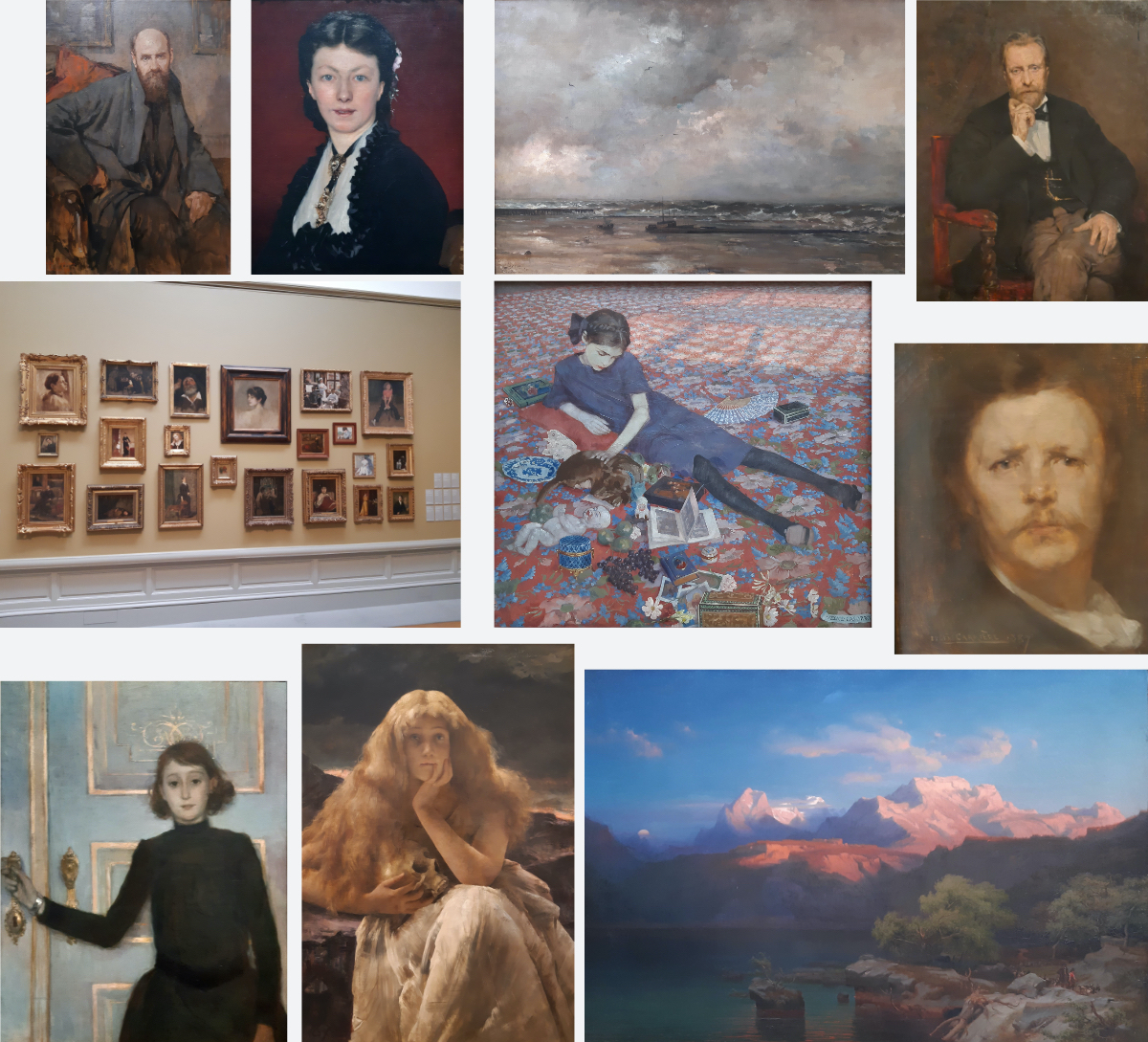
Van de beeldhouwers is er een kop gemaakt door Rodin in gips en brons en een kop van een meisje door Rik Wouters.
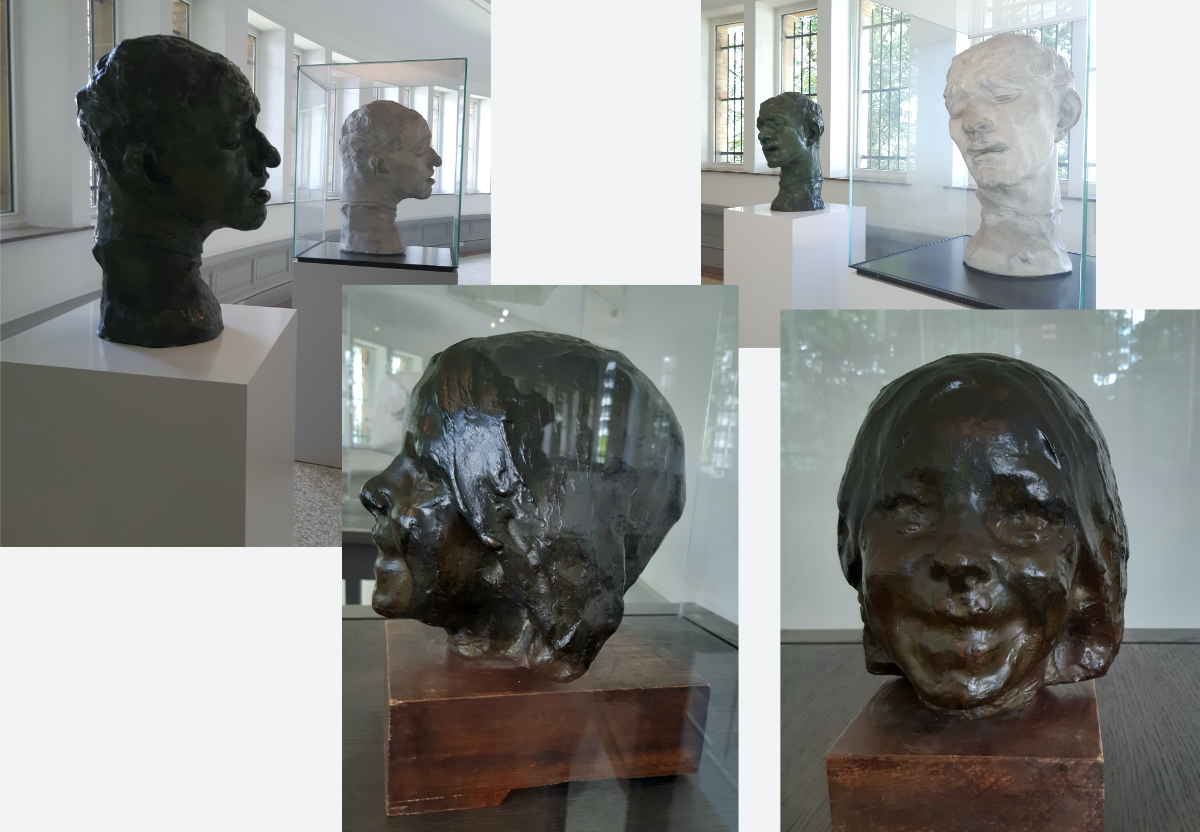
Van Wouters bestaat niet veel werk, hij stierf voor zijn 34ste jaar. In het trappenhuis van het Kunstmuseum in Den Haag staat een ‘Nel’ (ooit stond ‘Nel’ schuin naast de ingang van het Stedelijk Museum in Amsterdam. Het zal niet ‘contemporain’ genoeg zijn...), ik heb ‘Het zotte geweld’ in Middelheim gezien en een paar schilderijen hier en daar. Als ik bij Nat in Brussel logeerde streek ik vaak over Wouters’ zelfportret in brons voor ik de stad inging. Ik heb een zwak voor zijn werk. Informatie over hem op Wikipedia: klik op de afbeeldingen hieronder.
De kop van Rodin was een studie voor de beeldengroep ‘De burgers van Calais’. Aanvankelijk wilde de stad een kopie van die beeldengroep kopen, maar het was te duur. Vandaar dat ze uitkwamen op een kop van die groep in gips en brons.
Dit museum verdient meer publiek; het was er weldadig stil. Misschien is deze blog een ‘vergissing’, het is zo heerlijk door de zalen te dwalen zonder bezoekers die selfies maken en de meest onzinnige commentaren geven…
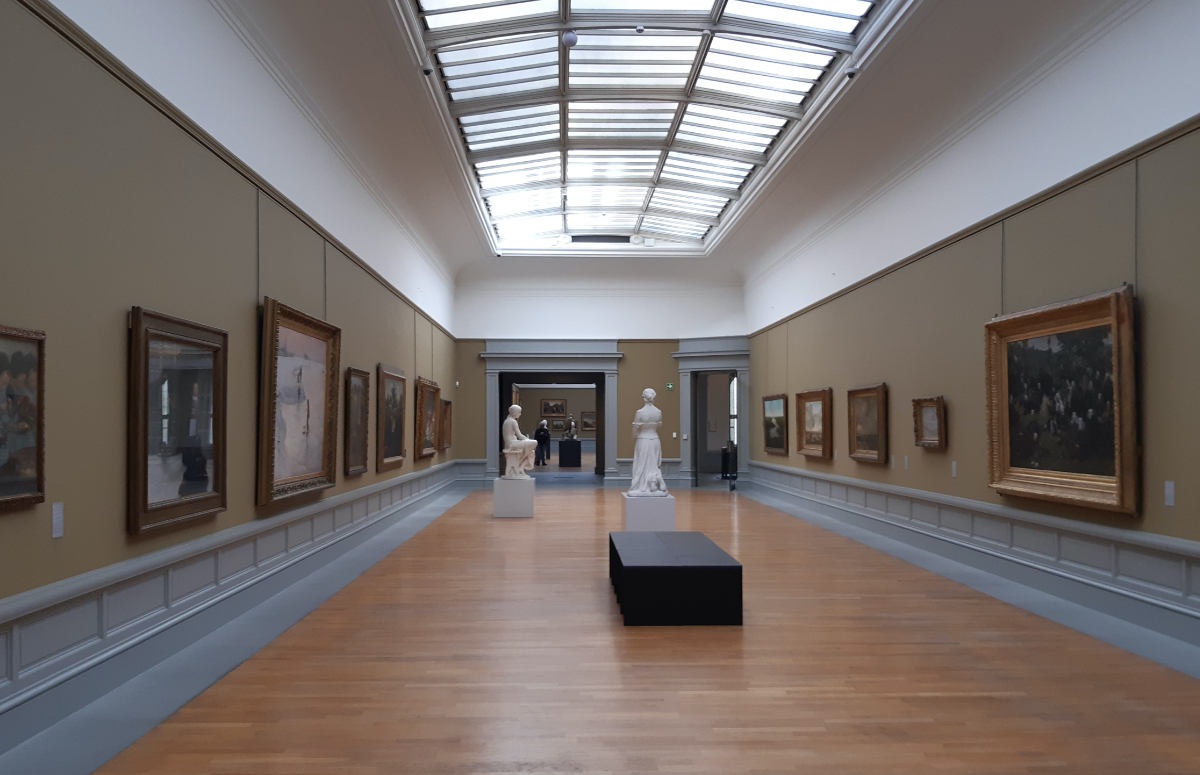
Ik toon een deel (er is zo veel meer!) van al dat moois in de onderstaande video en deze keer geef ik niet weer wie wat gemaakt heeft. Een idee van mij is dat in een museum eens in de week alle naambordjes verwijderd moeten worden, zodat je van alles genieten kan zonder vooroordeel. Niet wetende dat iets gemaakt is door een van die genieën en je dus stil blijft staan kijken omdat het een prachtig schilderij is en niet in opperste aanbidding, want gemaakt door een grote meester...
Ik geef niet om reputaties. Zelfs van ‘goden’ als Rembrandt of Goya vind ik sommige werken om te schreeuwen zo lelijk. Terwijl ‘kleinere’ kunstenaars soms iets maken dat gloeit in het duister. Het gaat om het schilderij, niet door wie het gemaakt is en wanneer.
Hier was zoveel te zien dat zo teder, subtiel en wetend slim is gemaakt...
Om een voorbeeld te geven: ooit was ik met Rufus in het Gare d’Orsay en dacht een ‘Manet’ van verre te zien glimmen. Het bleek een schilderij van Eva Gonzales… Ik was blij met de ontdekking van een nieuwe ‘godin’…
Behalve al dit moois gemaakt door dode kunstenaars is er de ‘Sigarendoos’... In deze ruimte heeft Patrick van Caeckenbergh een kleine eigenzinnige parallelle wereld geschapen. Ik schoot twee suppoosten aan en mocht naar binnen.
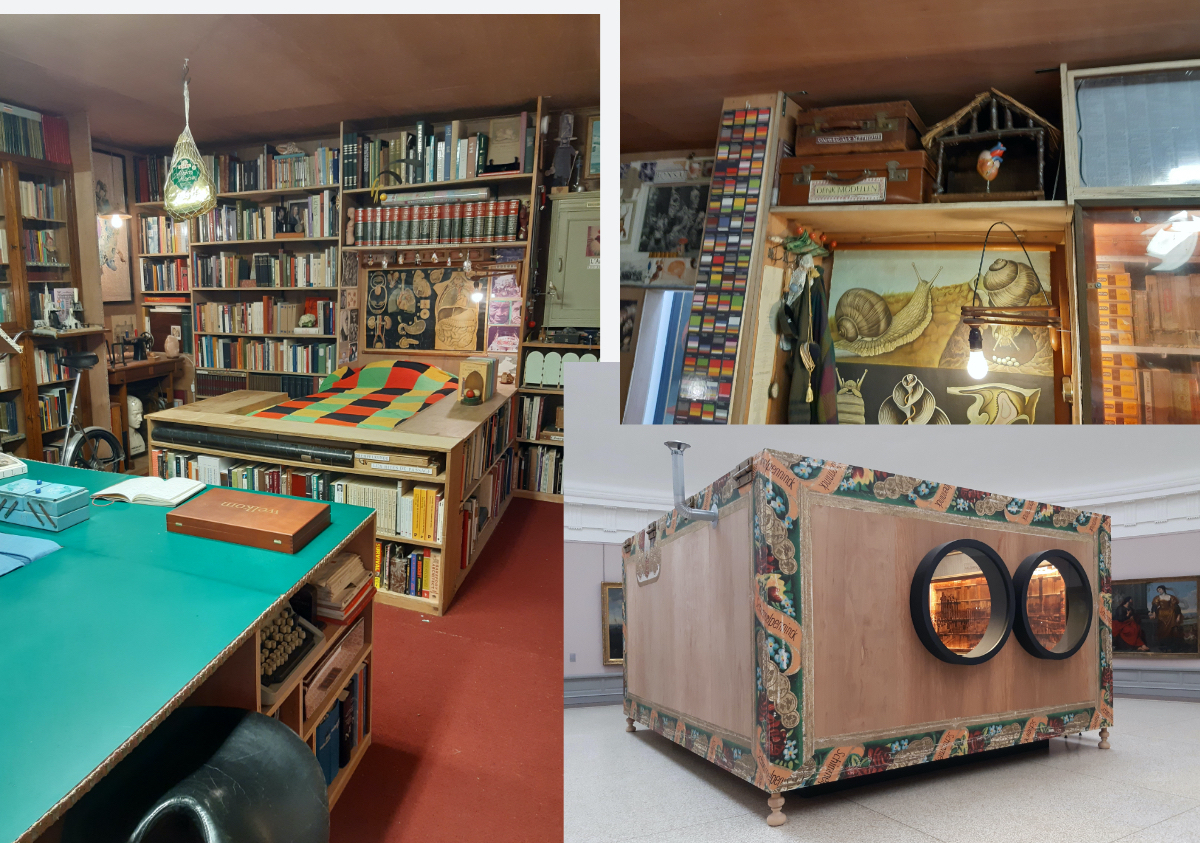
Daarna moest ik ze vertellen in wat voor een bijzondere plek ze werken… we spraken af elkaar tijdens mijn volgende bezoek weer te treffen...
Geniet van de video hieronder!
01-07-2025: The recent works: Bull 074, Fiesta 004 and 005
‘One does not become enlightened by imaging figures of light but by making darkness conscious.’
‘The most terrifying thing is to accept oneself completely.’
‘Knowing your own darkness is the best method for dealing with the darkness of other people.’
Three quotes of Carl Jung. I can be a not so nice person, I know that. But what does one do with such knowledge…
Sometimes I think that if I would not have my painting, I’d be an alcoholic or even worse. I have my very dark sides. Fortunately I have this channel that gives me the liberty to express the darker me and stay human.
We all ‘know better’. In the world there are many black places, things are happening that I totally disagree with. It is easy to criticize or to turn your back to all this darkness. Are we heading for a (western) world where only violence pays off, where the ultimate truth is money/power? I fear so.
And then I look at Goya and Francis Bacon. They maybe did not change the world around them, they did not practise politics and (in Goyas last paintings) did not refer to their present events. They just showed the horror, the ignorance.
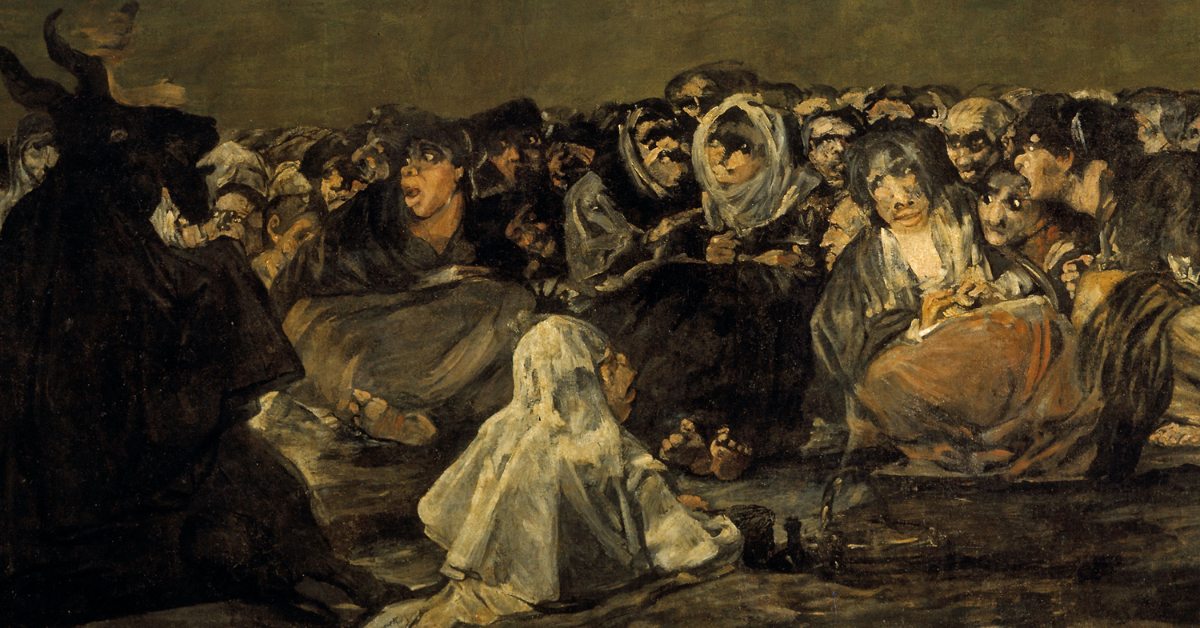
(Goya)
Audience listening to a speech from the ‘enlightened’ ruler of the 'Free West'?
I have always been fascinated by especially Francis Bacon, this might be because I see the dark forces behind the everyday sweet facades.
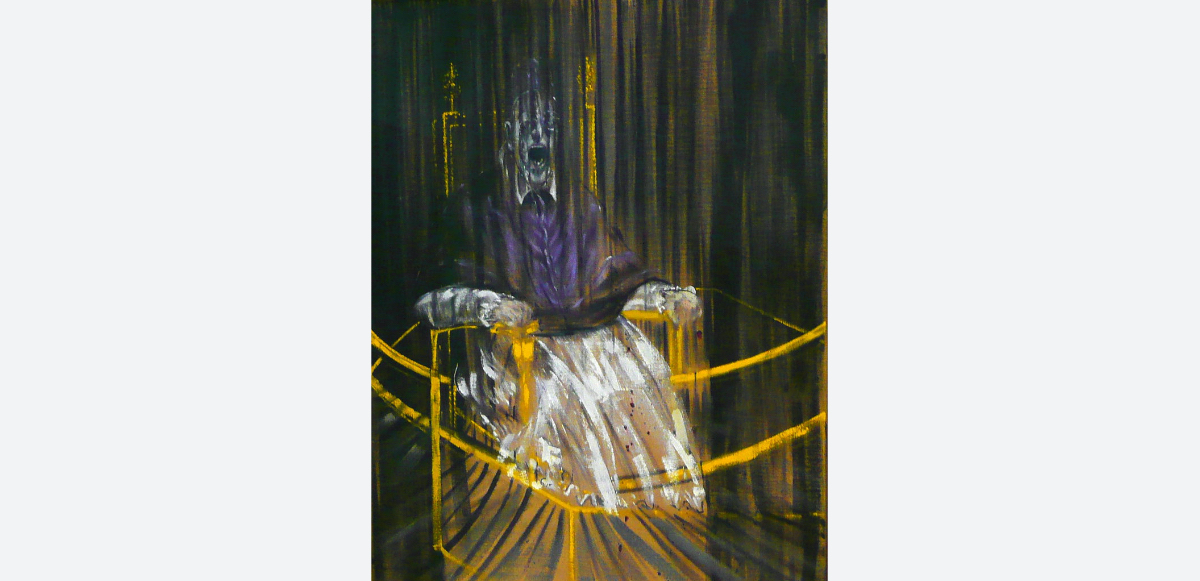
(Bacon)
Compassionate leader of the 'Free West'?
Around 1990 I found ‘my language’. I gave voice to my demons.
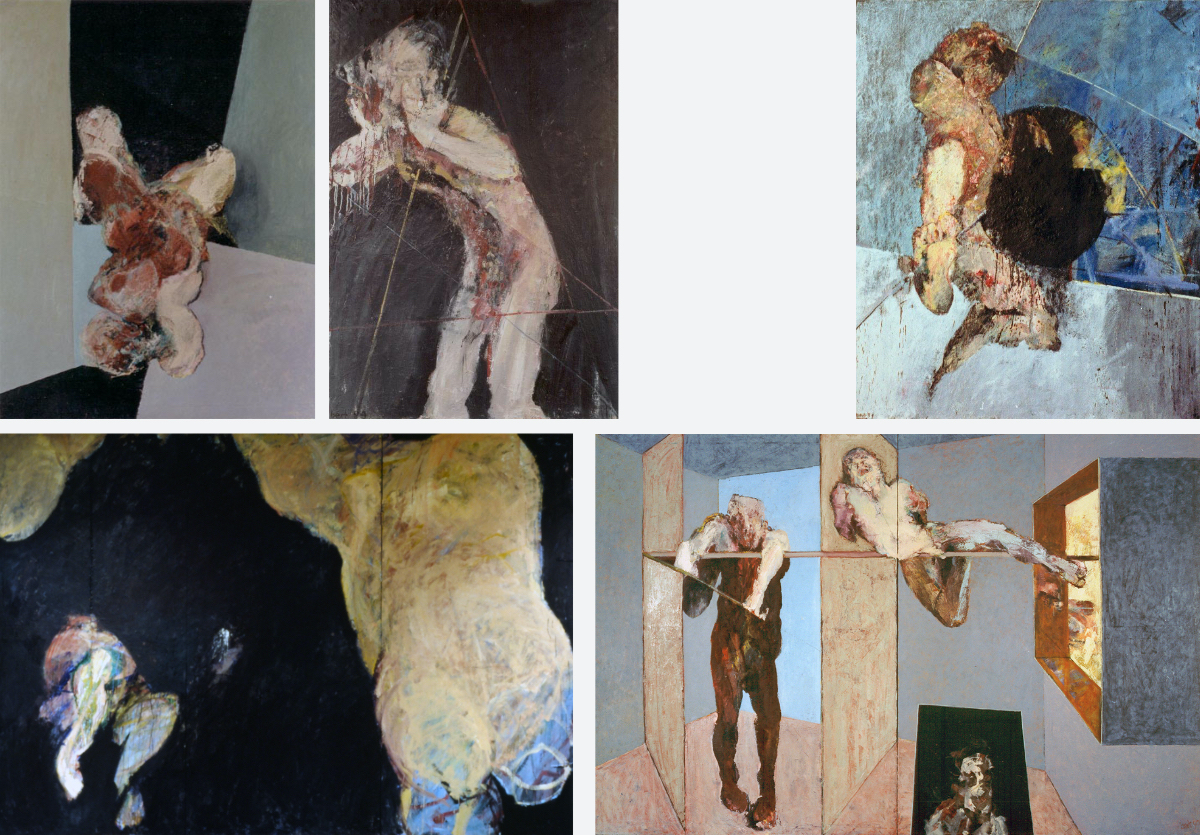
paintings from 1989 and 1990
Ever since this way of representing my view on life has accompanied me.
The move to Barcelona gave me the ‘BULLS and BULLFIGHTS’. And the ‘VOLCANOS’ reappeared.
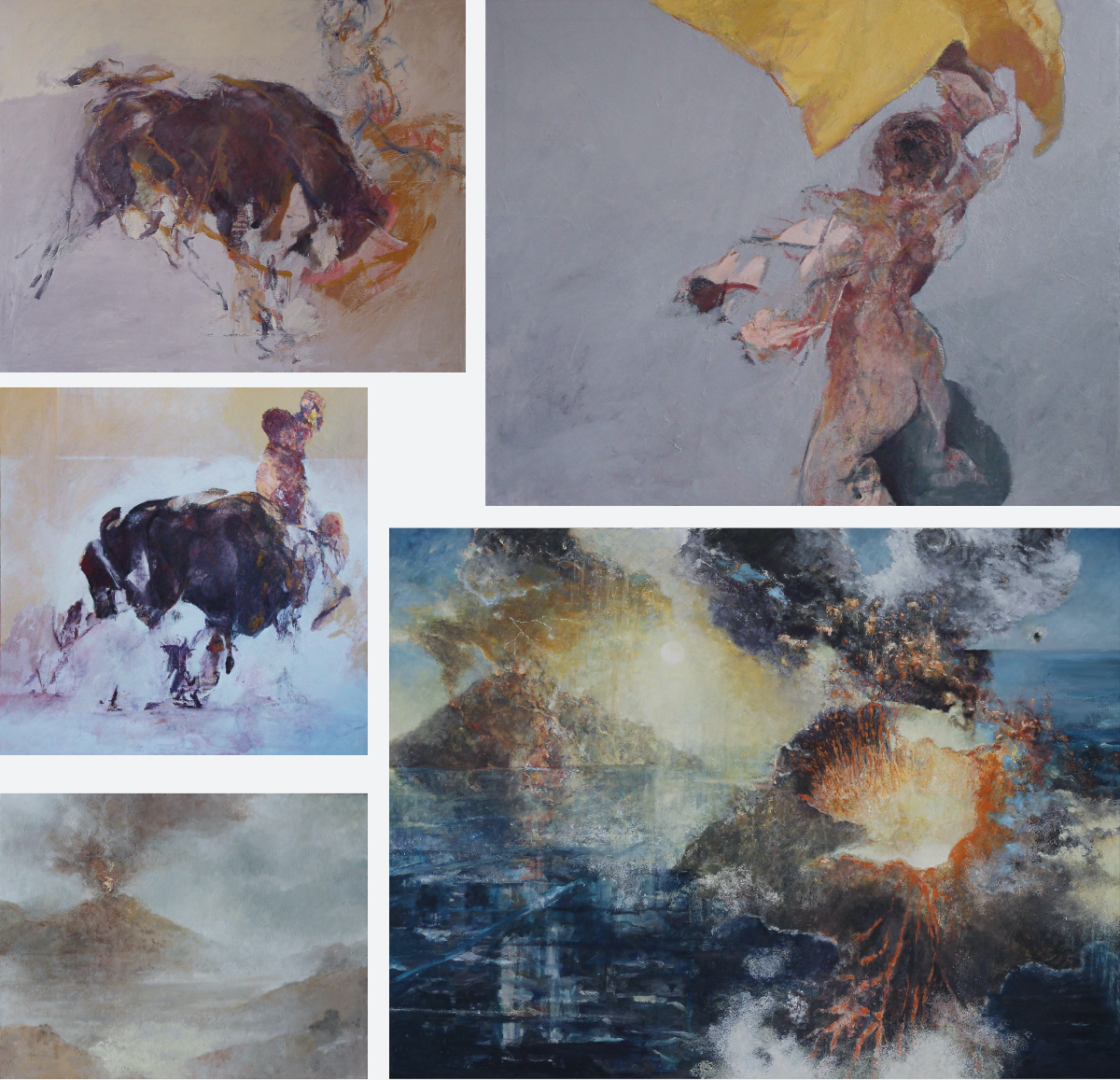
bulls, bullfights and volcanos
Nature… I have two ‘very sweet cats’, but if they could they would kill ‘sweet little birds’. I didn’t turn them into vegan animals (a totally ridiculous thing to do; who says a nut doesn’t have a will or desire to become a tree?). And for me an ultimate is the volcano. We can be busy bombing nuclear power-plants, but if a tsunami hits or a volcano erupts, we are nowhere.
Ok, let’s get back to my comments on the very limited human life. The latest ‘BULL 074’ is done (we seduce animal gods into dancing the dance of life and death with us) and there are FIESTA 004 and 005.
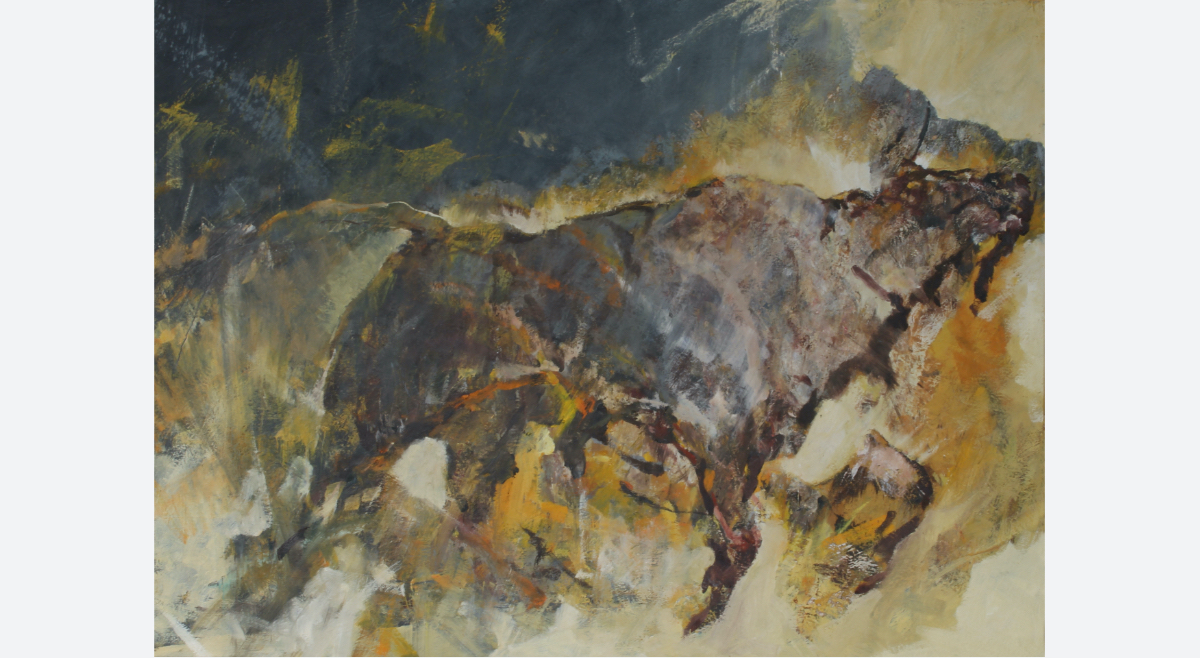
bull 074 (91 x 121,5 cm)
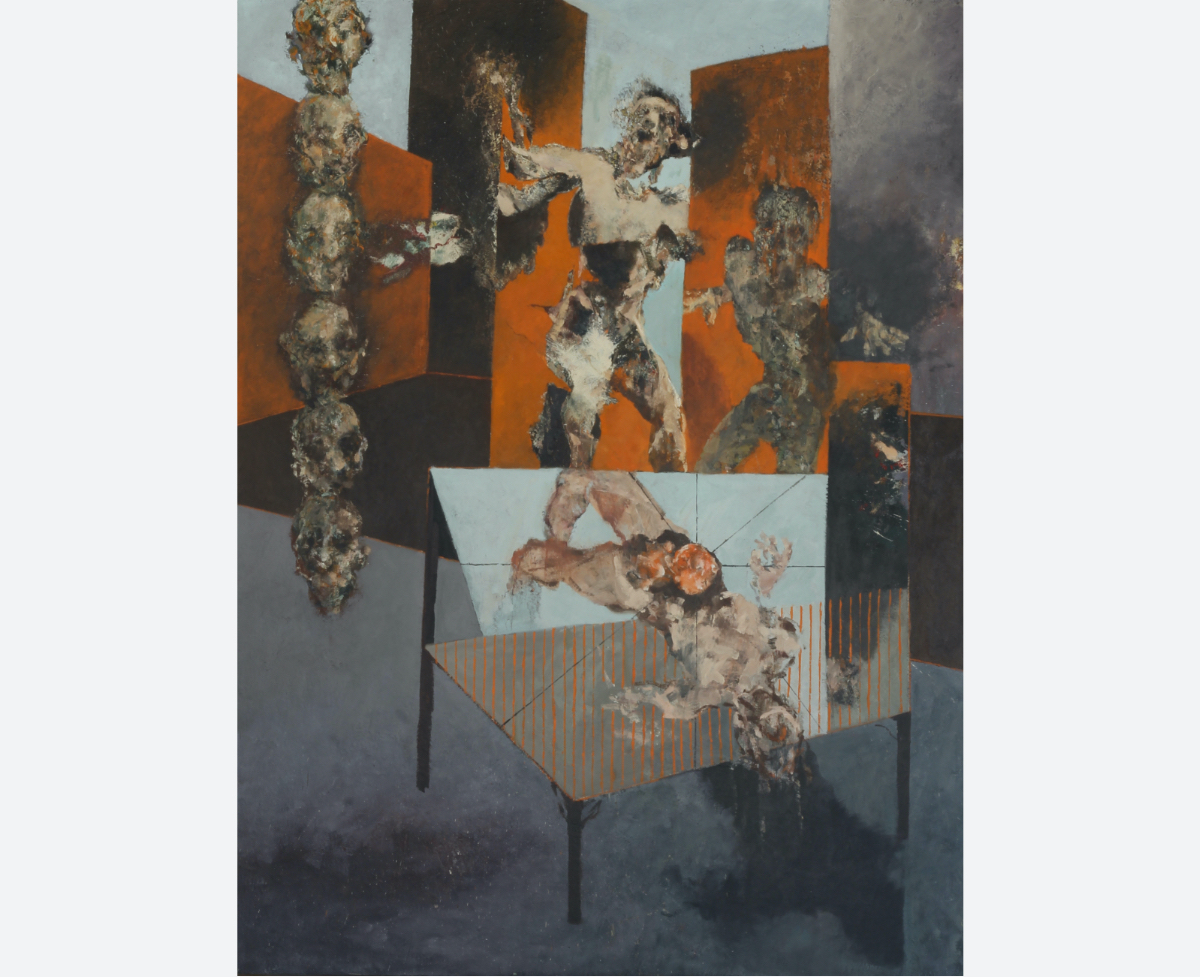
fiesta 004 (200 x250 cm)
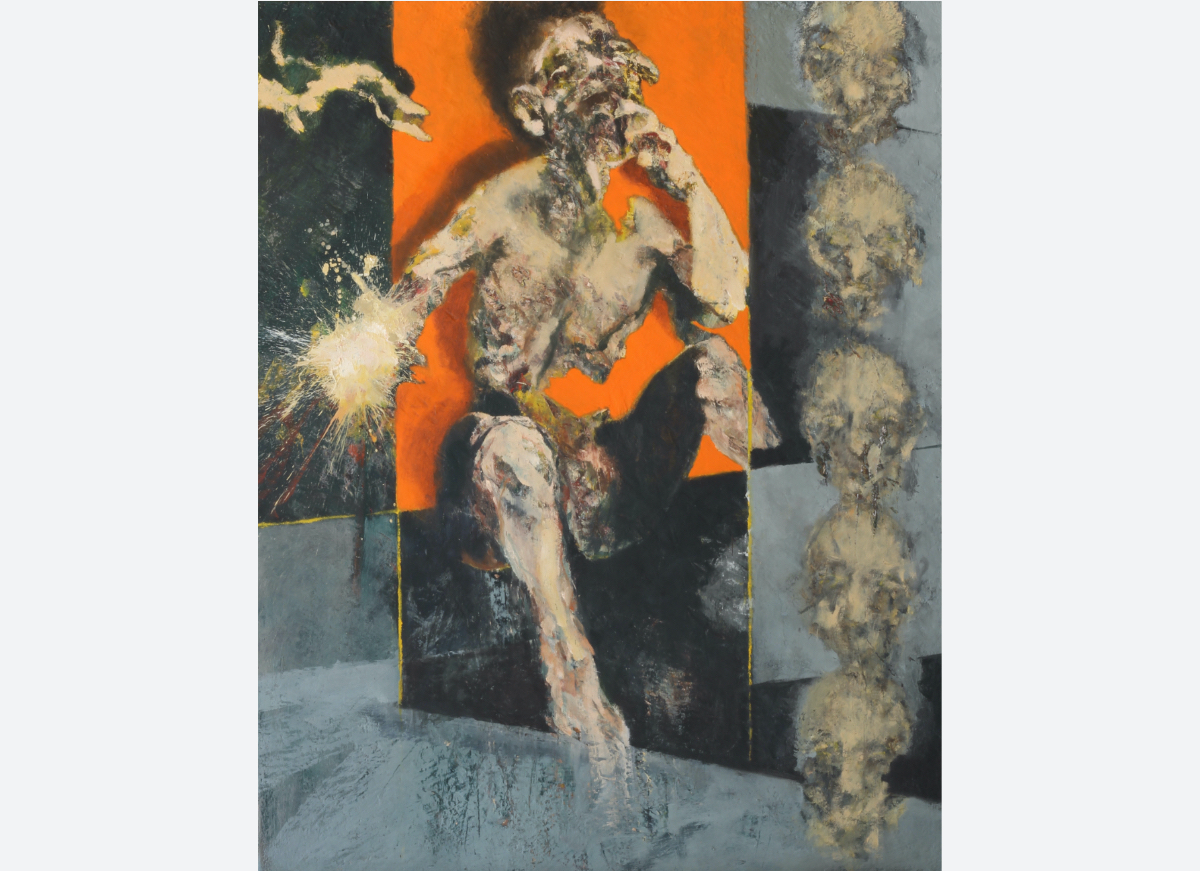
fiesta 005 (92 x 73 cm)
I felt the need to make them.
In the video at the end of the blog you see the development, the studio, the artists that inspire me, from whom I steal.
Apart from the two mentioned above, I find in Michelangelo this force that wants to break through the surface. He changed the anatomy to make his images stronger than life.
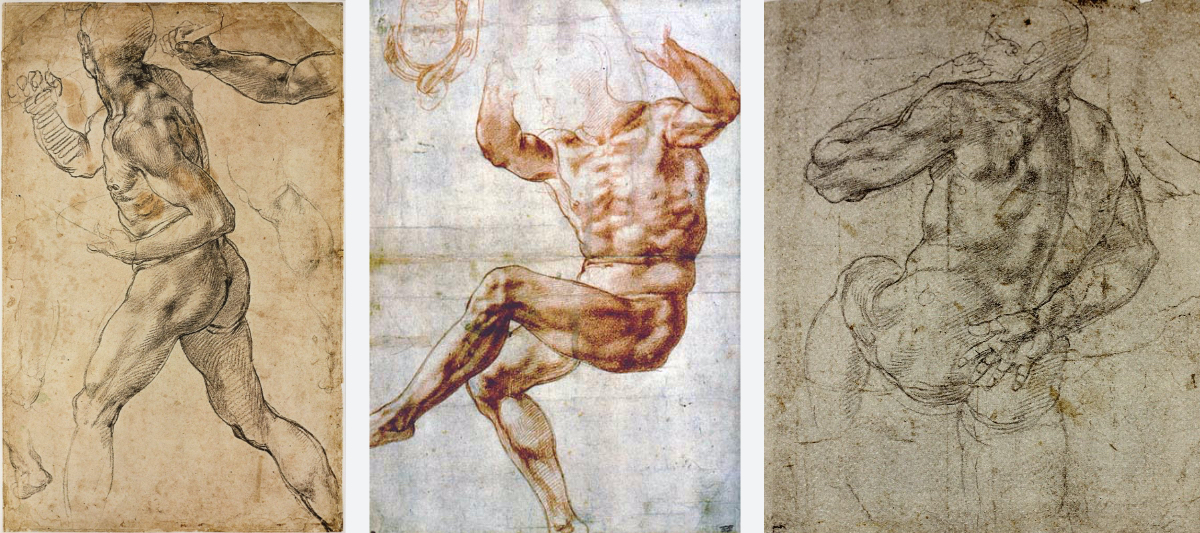
Michelangelo sketches
When I look at his work and that of Raffael and Da Vinci, I wonder. They worked for the most sadistic rulers. Da Vinci even made war machines. How do you combine that with let’s say his Madonnas?
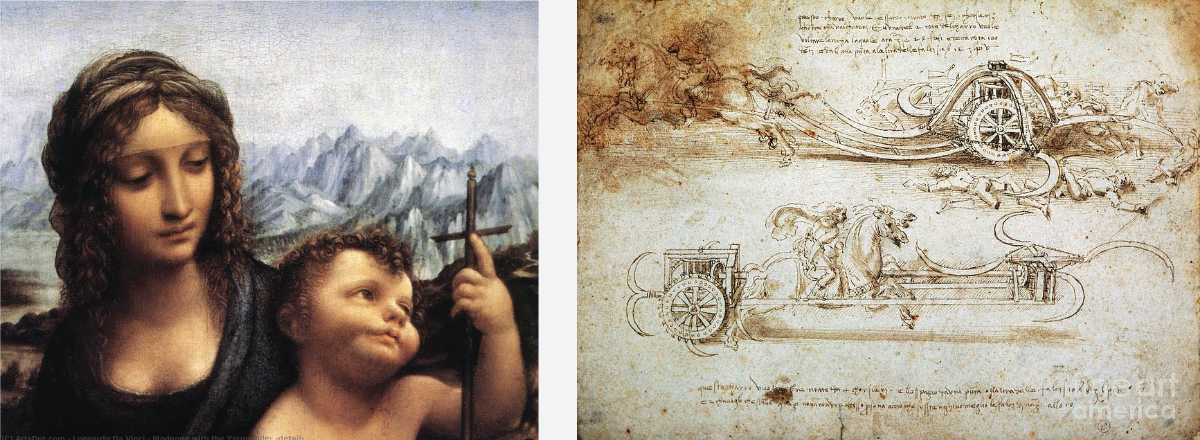
Da Vinci
detail madonna and child and war machine
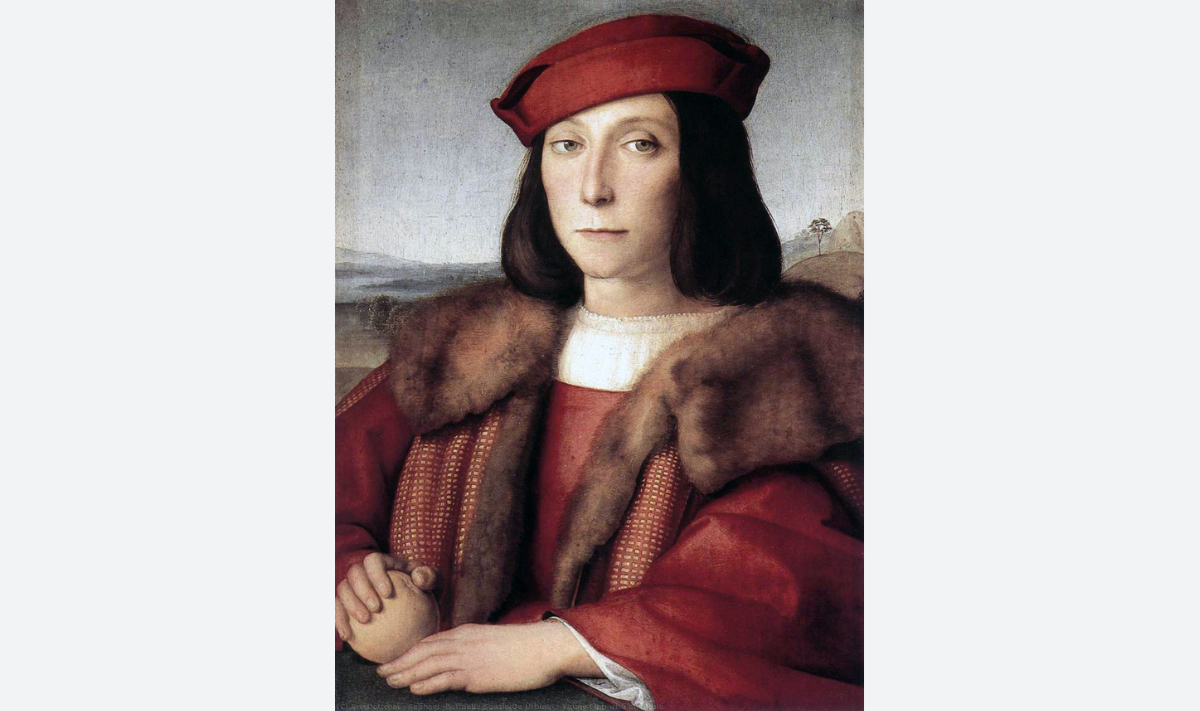
Raffaello Sanzio
I always thought that this was quite an evil person…
I have the commission for a crucifix for a church near Rome… Luckily they did not ask me to invent new weaponry…
Enjoy the video. Don’t worry, they are only paintings... And of course you can go to my site (click on the grey word to go to the site) and see the paintings and details.
30-11-2024: FRANCIS BACON IN THE NATIONAL PORTRAIT GALLERY
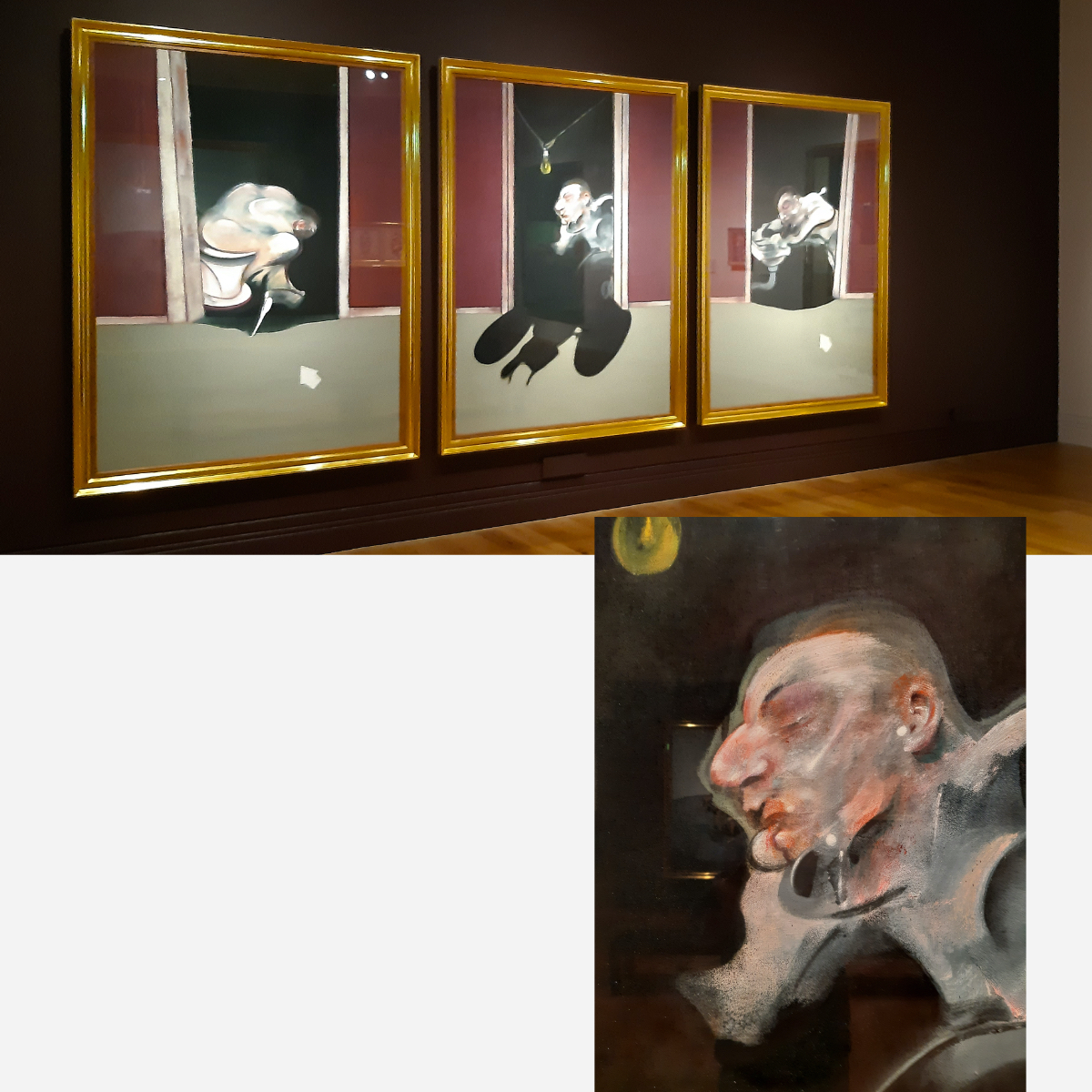
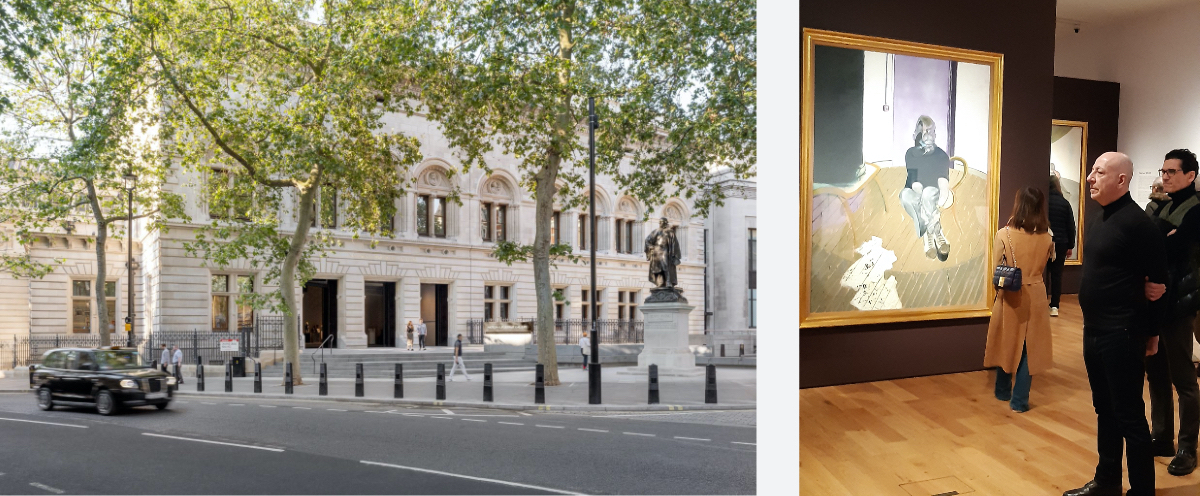
For many years, Francis Bacon was a painter who showed me the way and I still consult him often. That's why I had to see the exhibition 'FRANCIS BACON: THE HUMAN PRESENCE'. It was the third time I visited a retrospective of his work. (click on the title to go to the National Portrait Gallery site)
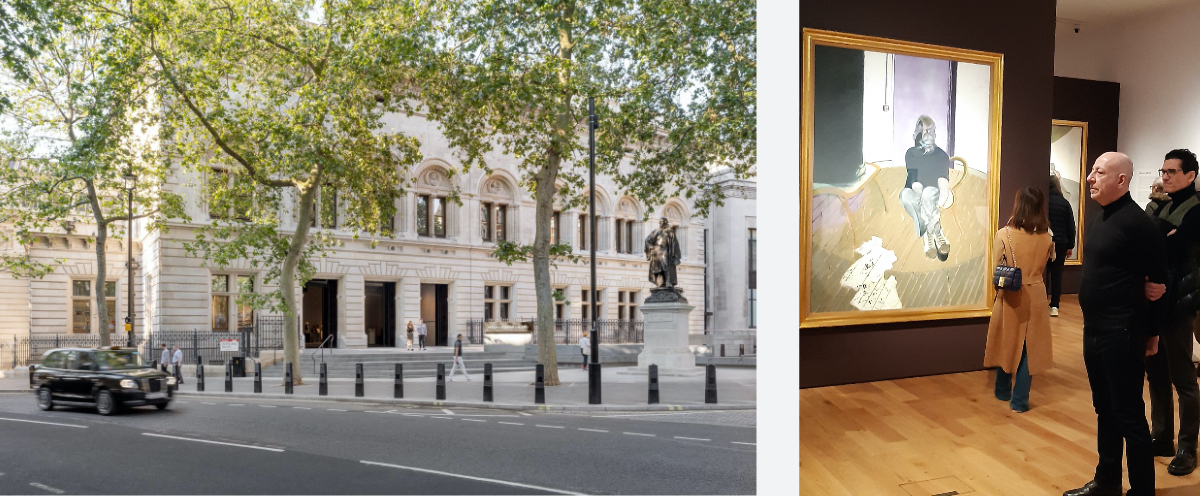
I think I can say that after all these years of leafing through books about him (I have eight; one is the extensive biography and then there are two in which he himself frequently speaks, the rest is mainly filled with images) and having often seen his work in real life, I have a clear picture of what his work entails.
Born just before the First World War and made famous just after the Second World War, naturally you will find the resonance of those events in his work, even though he will have denied it. In a way rightly so, his work is not so much about the wars as about a state of being, standing in the world. This fitted well with his character (a somewhat tormented sadomasochist) and unfortunate upbringing. You could say, the man with the right character appears at the right time and the right place.
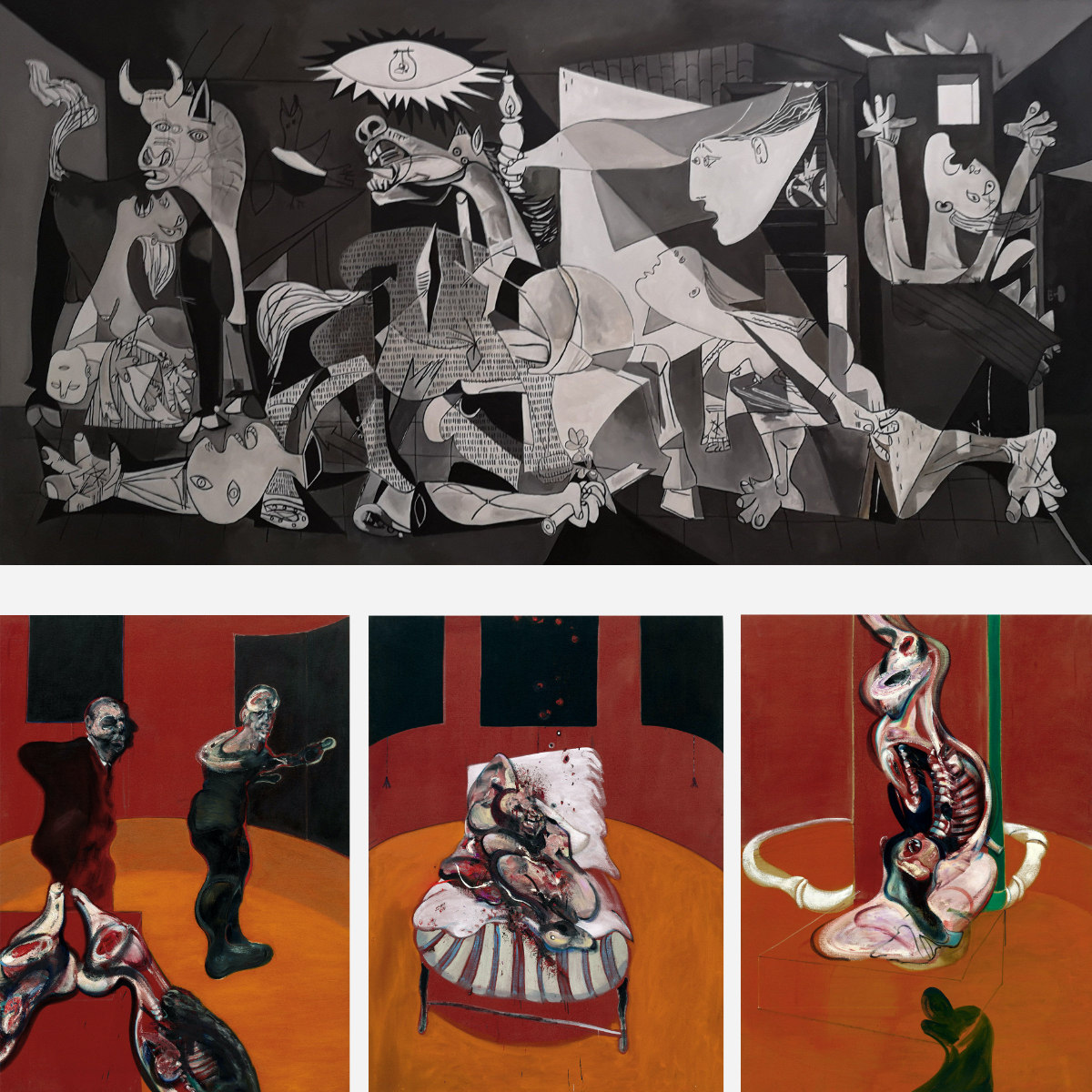
What makes him so valuable to me is the keynote of carnality. Whereas in Picasso's works the tormented physical presence is not so heavily present, not even in his 'GUENICA', it reverberates through almost all of Bacon's works. His breaking of the realistic image has to do with this too, is a meaningful distortion.
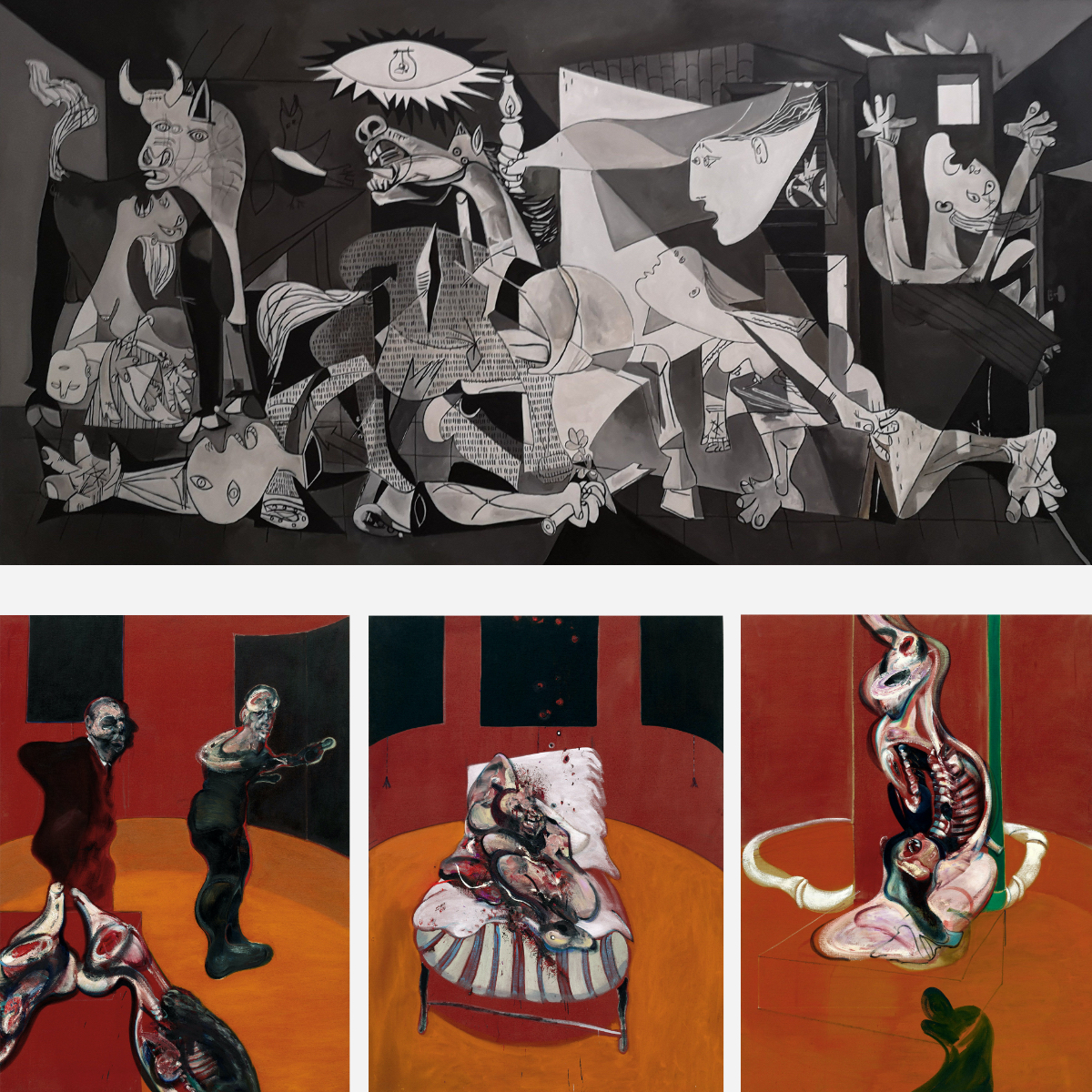
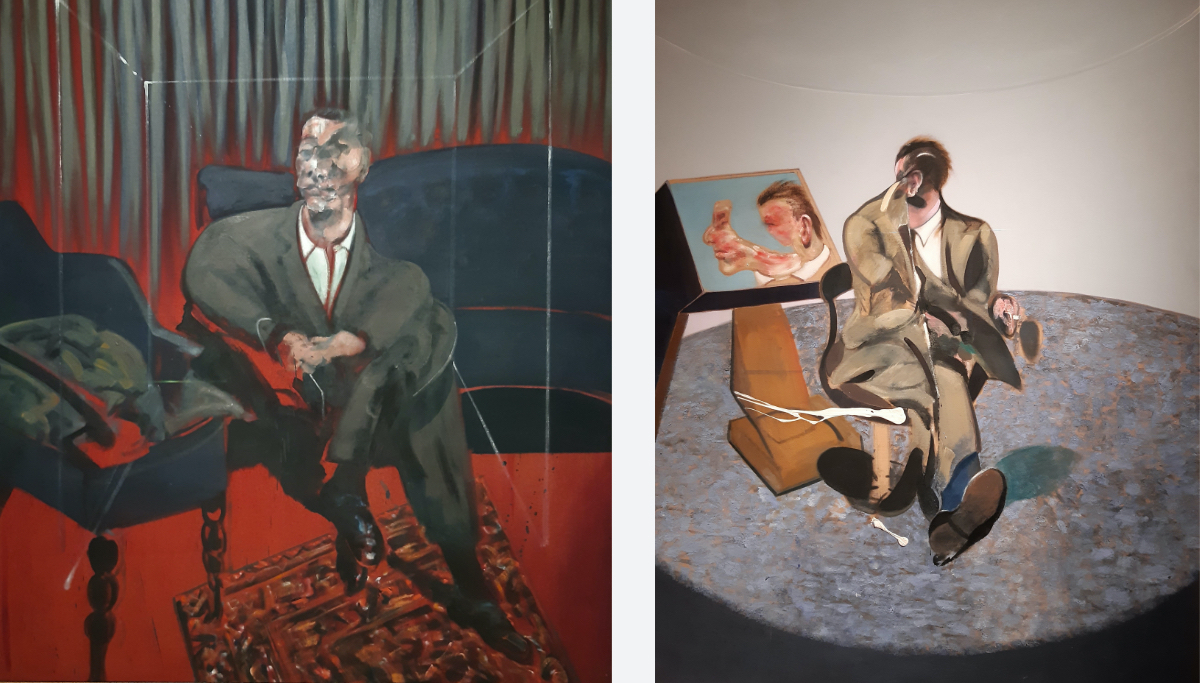
He never had a thorough training in painting from nature. This makes that in the parts that are not really important, his solutions can become quite banal. In the fifties he often gives the background a lively role, it plays along, after that all often becomes a kind of jigsawing.
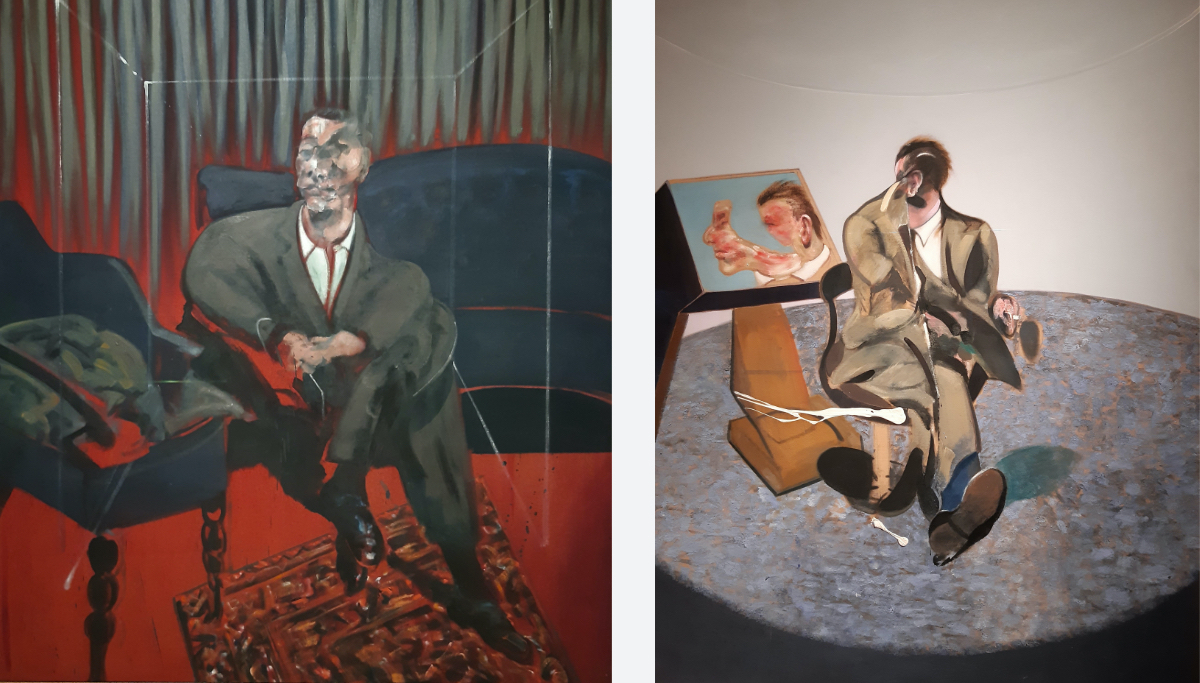
I'm smuggling/lying a little here, because I wanted to show these two, it doesn't really cover the load, but well... that shoe in the right canvas, as how it jumps forward...
His way of working is very direct, there is little layering and therefore little possibility for correction. It is often a single layer of paint over a surface. Only in the faces does he sometimes continue working. What is striking (for this the work must be seen in real life) is that his figures are not only often in a closed space (sometimes as in a glass cube) but are also closed off from that space, as it were, because the background, the space in which they are located, does not continue behind them. Hence my comment about jigsawing. They are, as it were, sawn out, outlined by the untreated canvas or often outlined in red or green.
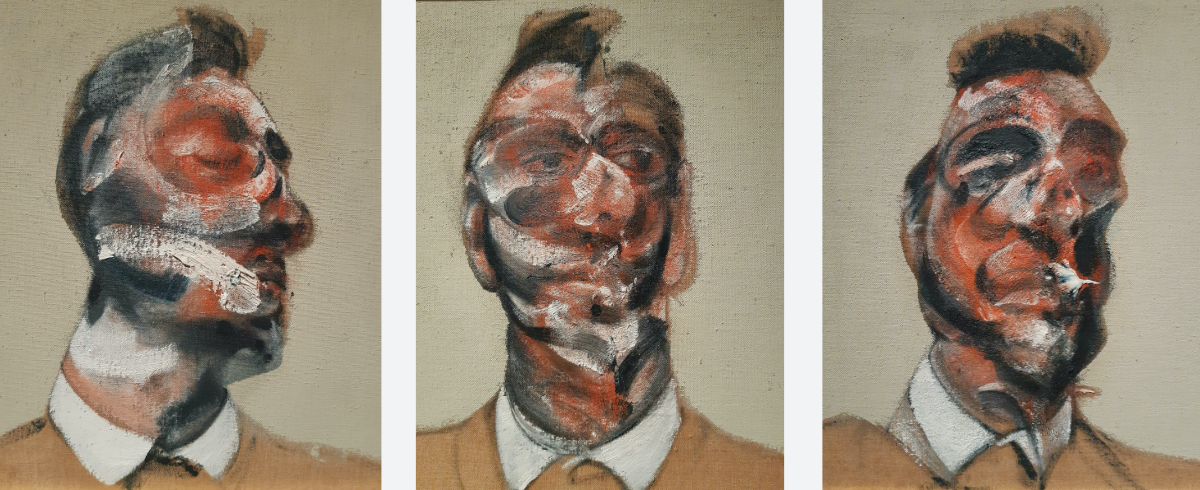
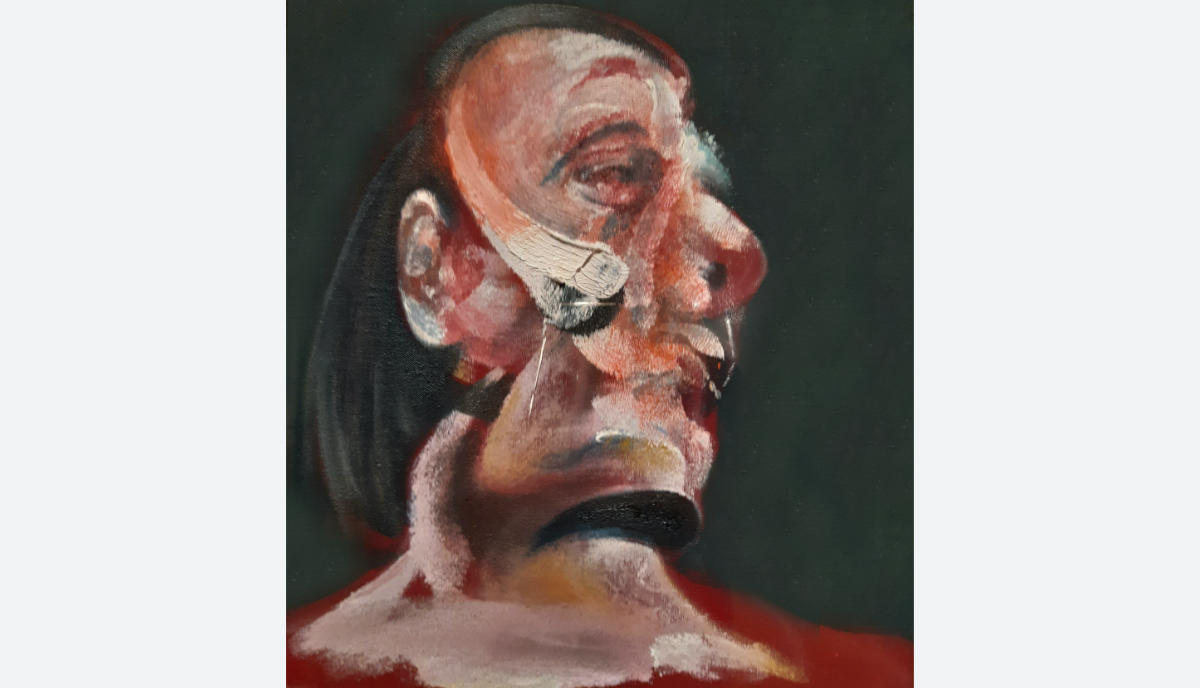
Green which is to some extent the inverted color of human skin. Almost all human figures are painted in the normal skin colour. What he beautifully plays with are the heavy shadows. Deep shadows that act as holes in which the shape continues. Sometimes it seems as if the person is trapped in his own shell.
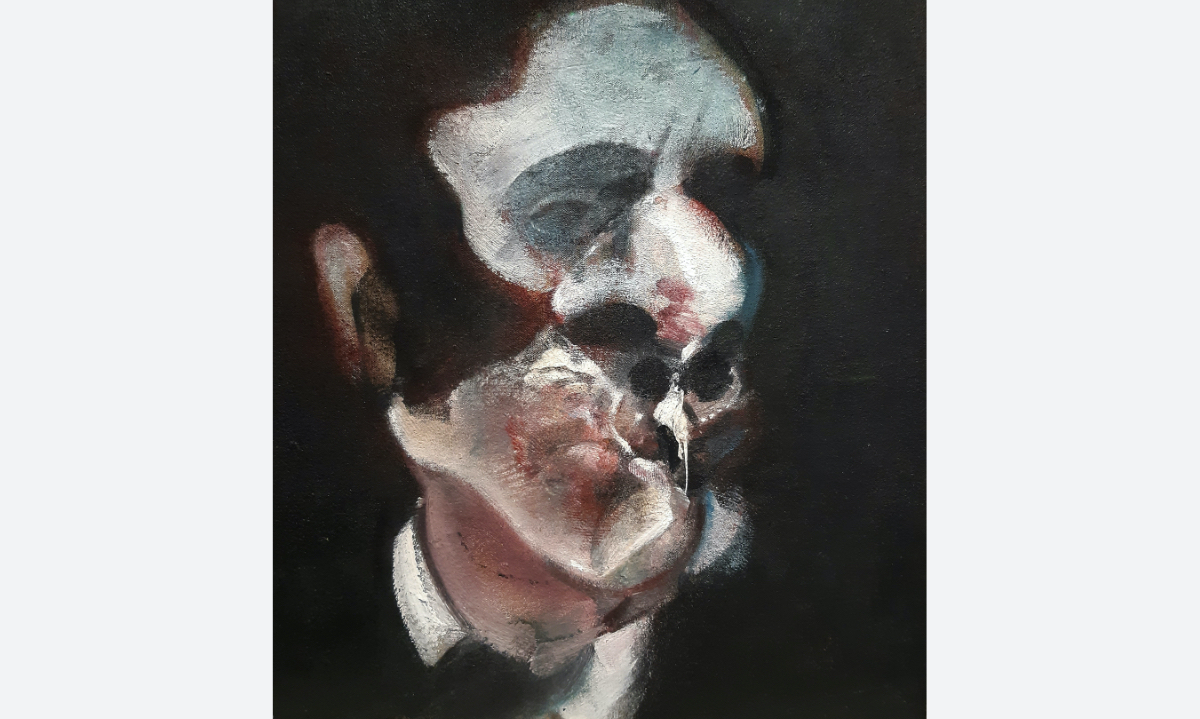
Is his fame so great because we still feel so clearly the 'Zeitgeist' of the two world wars? Will he, like Lourens Alma Tadema, for example, tumble from his throne after some time? I think that moment will certainly come. Just as it will count for Picasso and Matisse. The invention of photography and the associated evolution in painting may have already faded to some extent. Does it really make sense to paint cubist?
At first it was a revolution, a new way of showing the world set against the photograph, now it is often a hollow cry, uttered because of the ability to depict something adequately is lacking. And sometimes Bacon gets off track here too. Instead of painting a secondary part 'carefully vague', painting something by suggesting, but not heavily defined, he is sometimes quite lazy and banal. Too often no good 'sprezzatura'.
An exception is this painting. Everything is right for me here.
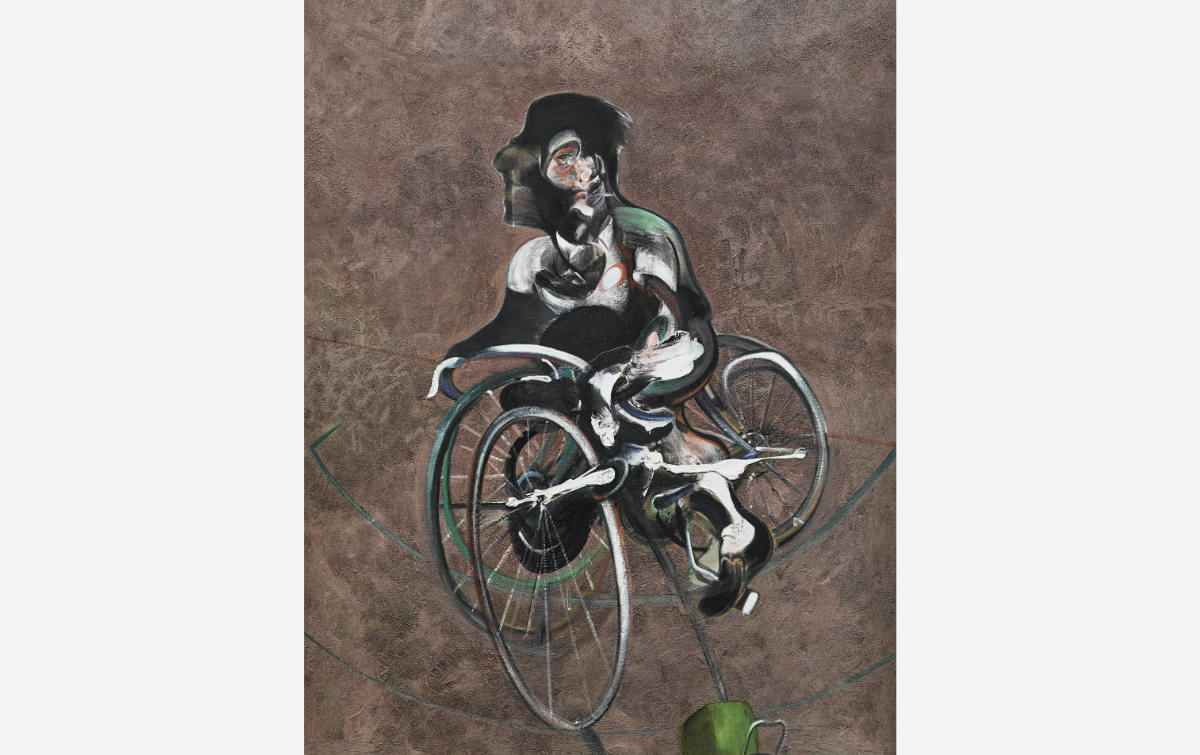
And where should we go? We have passed Rothko's black canvasses and now what? I have often talked about it in other texts; there is still 'progress' in what some artists are making now. I have to check Wittgenstein again; after his Tractatus Logicus-Philosophicus, he talked about language games... Once you have found the edges in which everything can be defined, you have to wander around and enjoy. And don't keep on hanging on the edges.
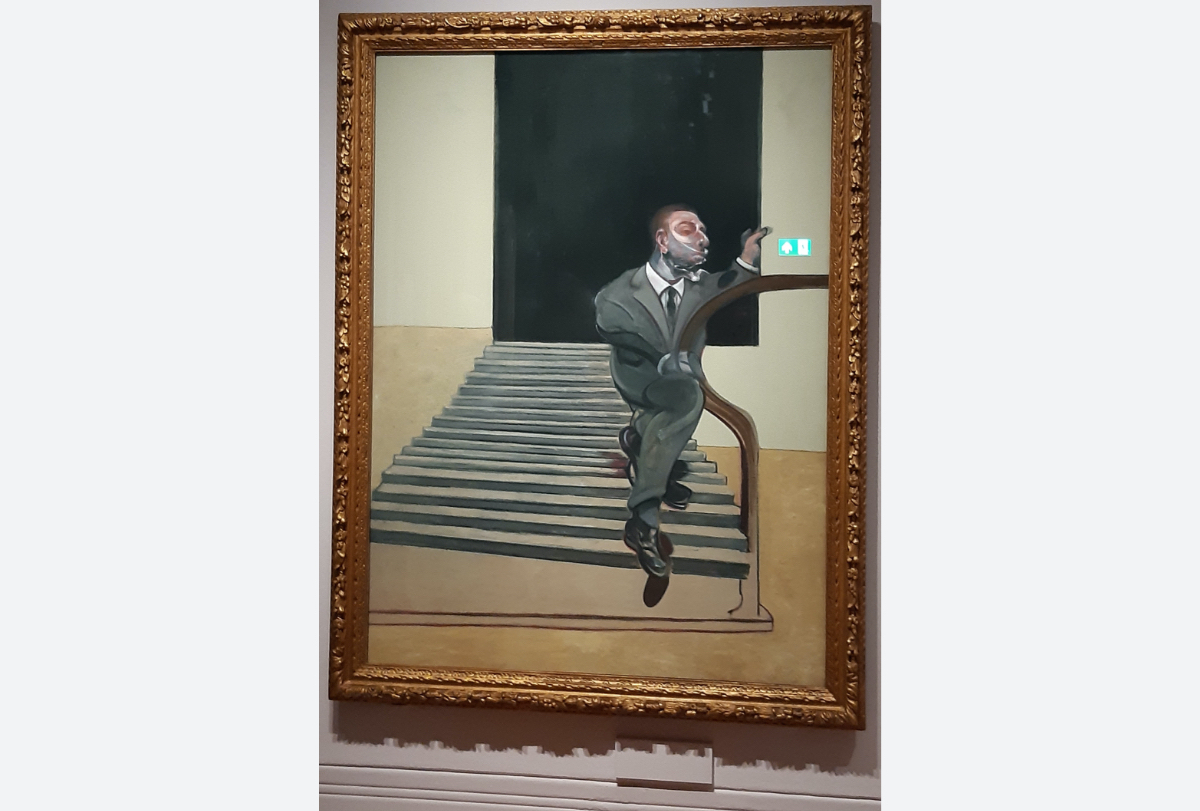
Why did Bacon want to hide all his work behind glass? It creates distance. Of course, since he worked on unprepared canvas, his work is fragile, but was that the reason for him? During my visit to the exhibition, it bothered me considerably. Ok, this makes you more aware of your own presence as well as the surrounding environment. That may have been a reason, there is the work and you are clearly present... But the reflection of the light from the emergency exit did play a very striking role in this painting…
He was an admirer of Rembrandt, Van Gogh and Velazquez. He made a series of works inspired by the latter two. The striking thing is that he never saw the portrait of the pope Innocenzo X. Again that distance like the glass? Is it the fear of the ultimate confrontation?
I read jealousy in his comments about Michelangelo. The tormented spirit, the energy captured in the images did appeal to him enormously. The bodies in Bacon's paintings come off sparsely. They are often depicted in no more than twisted strokes. The bodies often remain flat and clumsy. A real expression of tension lacks many of them. He does not come close to Michelangelo.
Here too, it is striking that the bodies are often painted in a closed position. Many hands in the lap or arms wrapped around the legs. Often little attention is paid to the elaboration, detailing of the body. In Michelangelo's work, the body is very present. Thunderously present.
The sparsest are the spaces that Bacon paints. Walls and floors painted in only one uniform color.
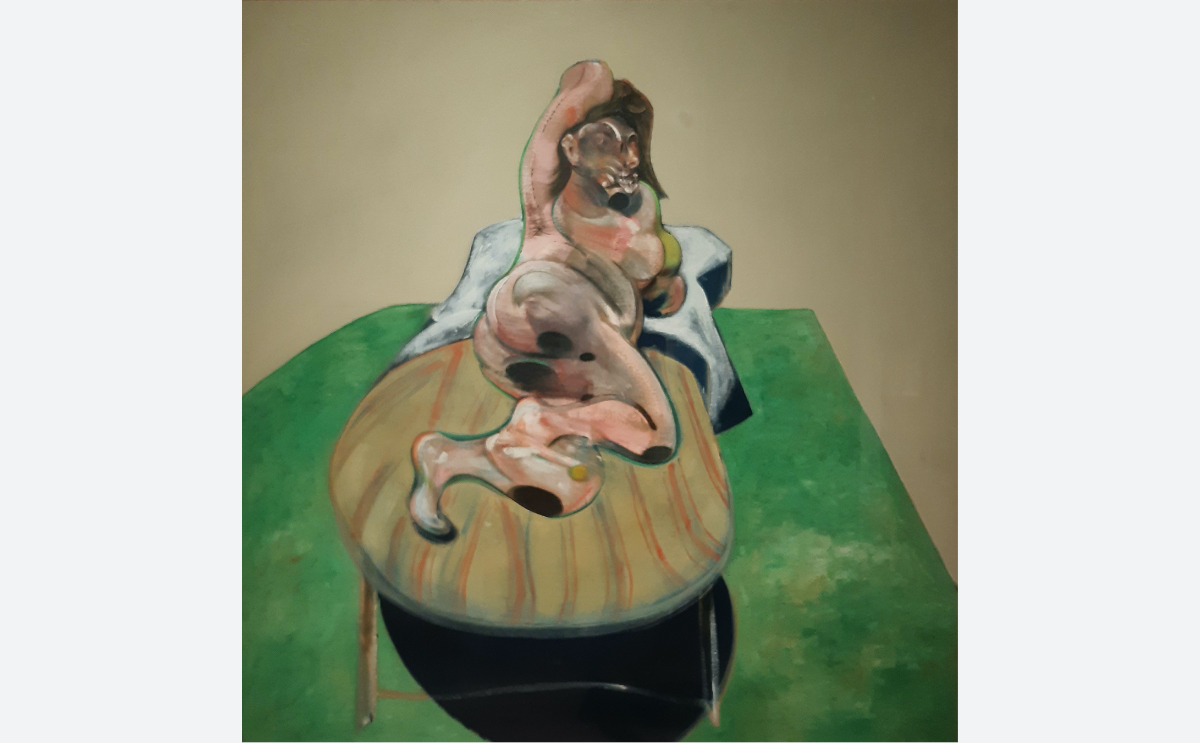
Initially, the characters on his canvases are anonymous, later he starts portraying friends and acquaintances. He does not (yet) succeed in pinning down Lucien Freud or Frank Auerbach.
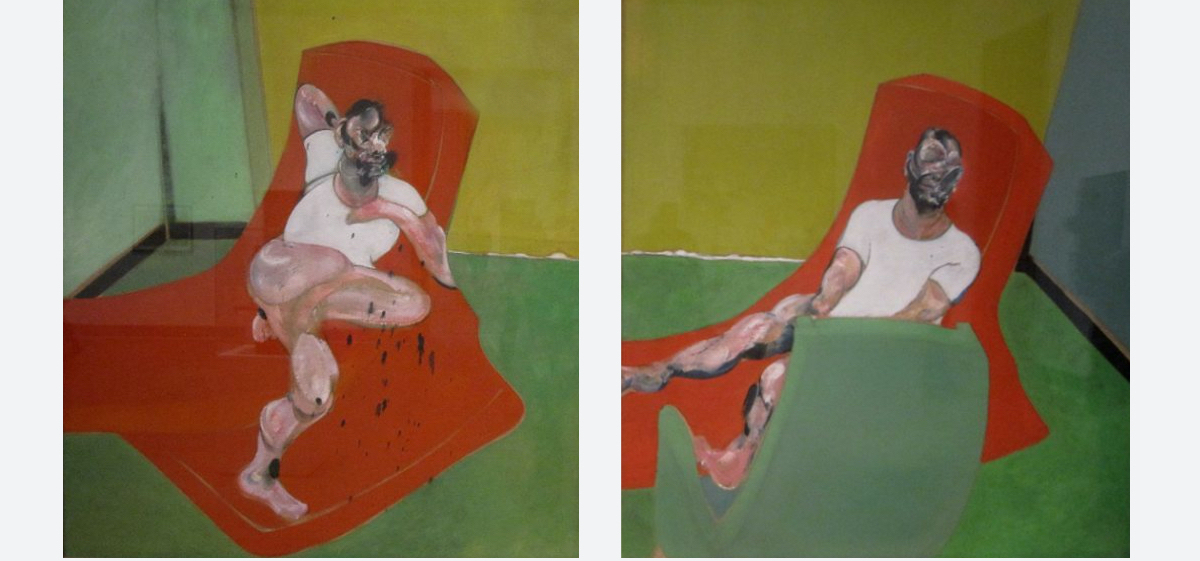
Later on he manages it better with Muriel Belcher, Henrietta Moraes, Isabel Rawsthorne and most of all with George Dyer. In itself with all the distortion is a huge achievement.
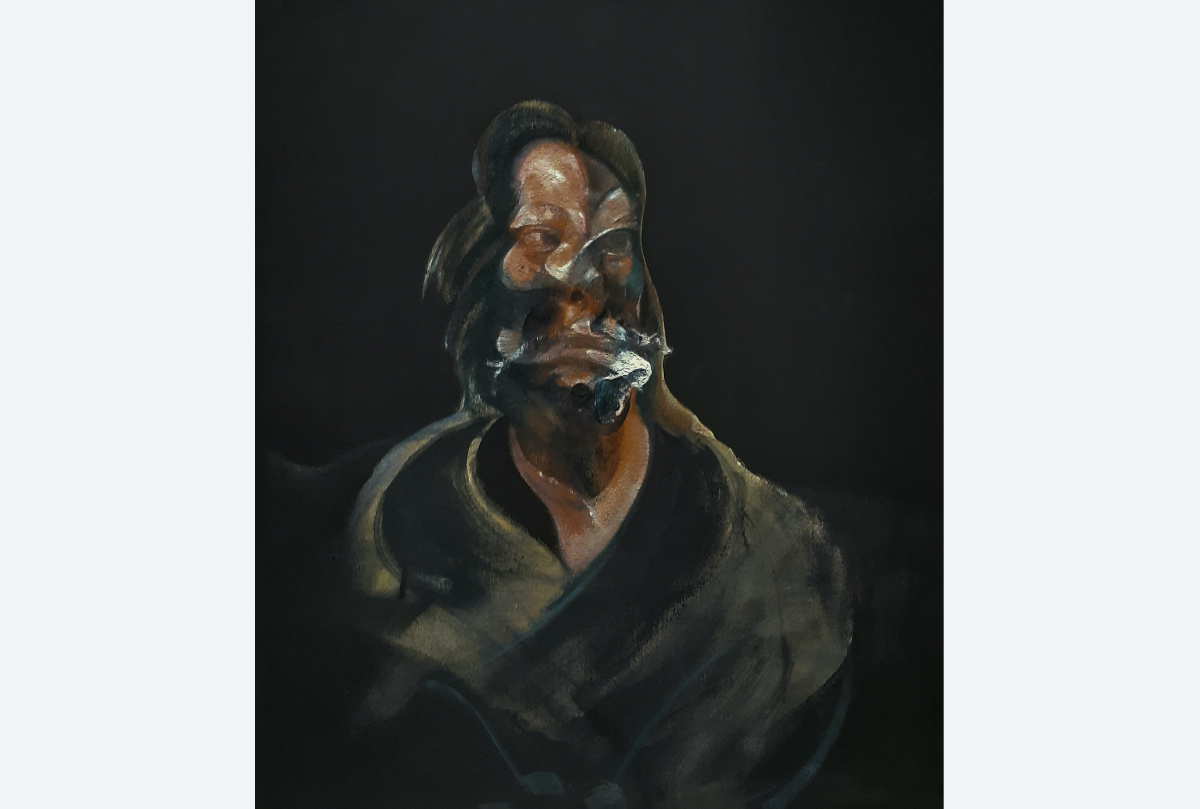
Later in life, it slips away from him, becomes a trick or too ordinary.
It is an eternal pity that after the golden years (the sixties and early seventies) he became more and more a caricature of himself. Was it the alcohol, the environment of admirers or both? It is also possible that he saw no development, got stuck in the same idiom. It became a trick. It is said that his work became softer in tone; it became more shapeless, clichéd and powerless. The market passed that by, long live the genius! What a pity... I do not show images of late works.
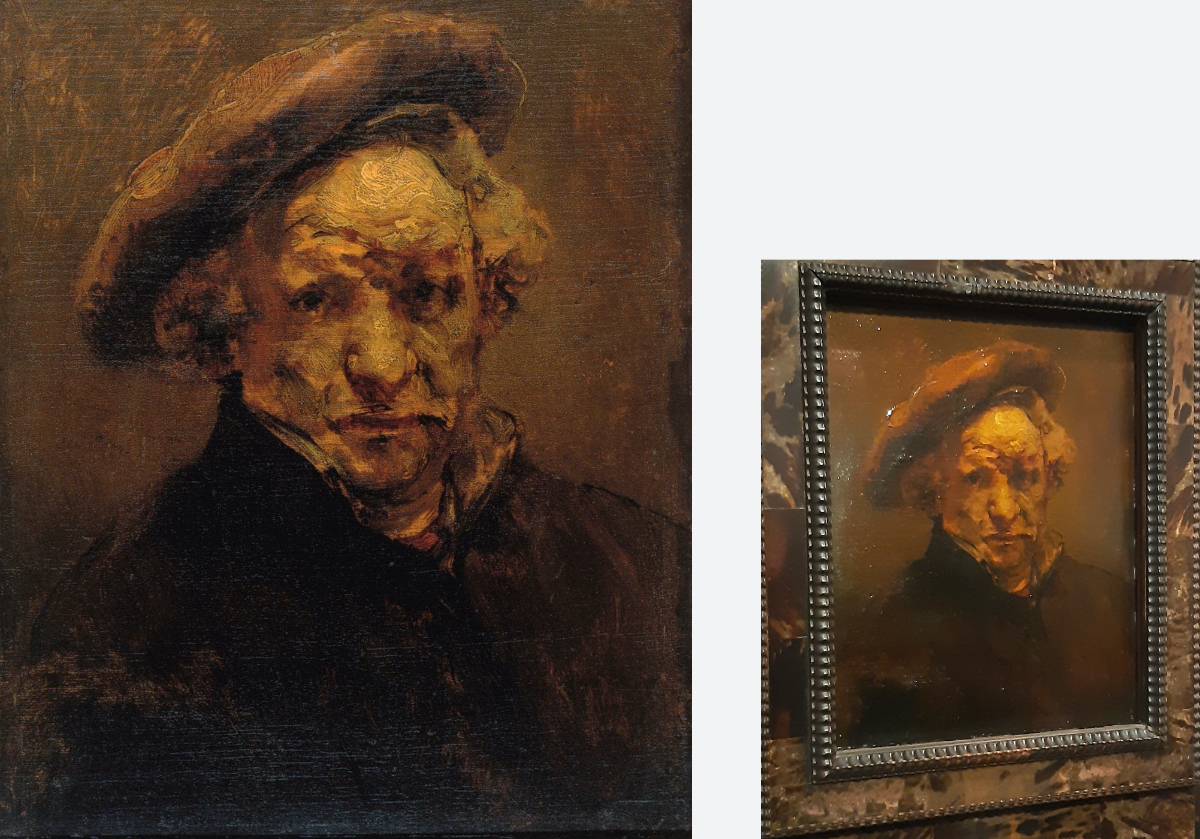
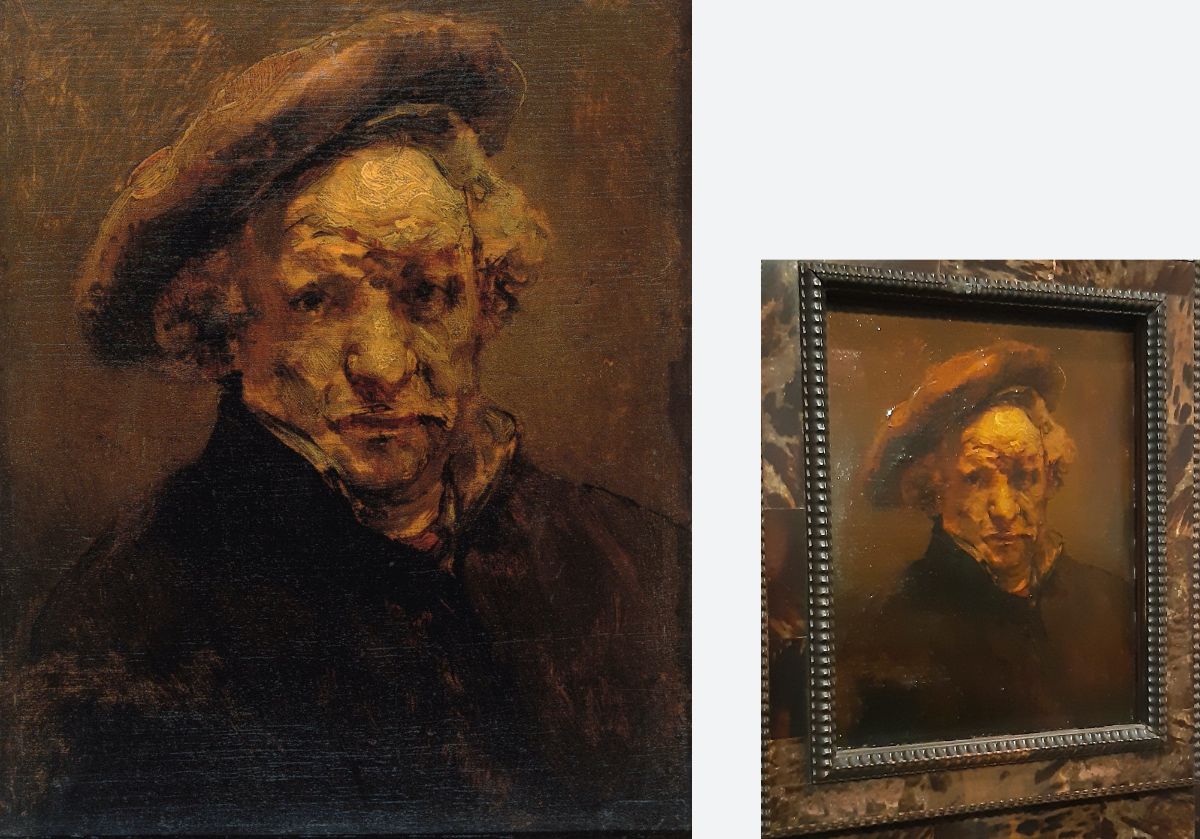
What was very dear to me was seeing Rembrandt's small self-portrait painted in browns. I believe that it is doubted whether it was really painted by Rembrandt. It doesn't matter to me. It has that delicious 'fatness' of his other works. What I think is that he was probably so satisfied with the sketchy underpainting that he didn't go through with it. I look at everything with a painter's mentality and then it doesn't matter who painted it or whether it is a 'full-fledged' Rembrandt. As long as I like it.
Again, it was very difficult to see it properly, let alone take a decent picture of it. I understand that because of some environmental idiots, many works disappear behind glass, but it makes the world so much sadder…
Just like all those canvases with ramshackle cubist monstrosities that, in addition to the relativity of a single-image representation and interpretation of it, also utter a spastic cry of the so-called subconscious.
What is my final conclusion... I am very happy to have visited the exhibition, for me Bacon is a very important painter and must therefore be dissected all the more critically. I don't just get inspiration from what I find beautiful, but also what irritates me helps me further.
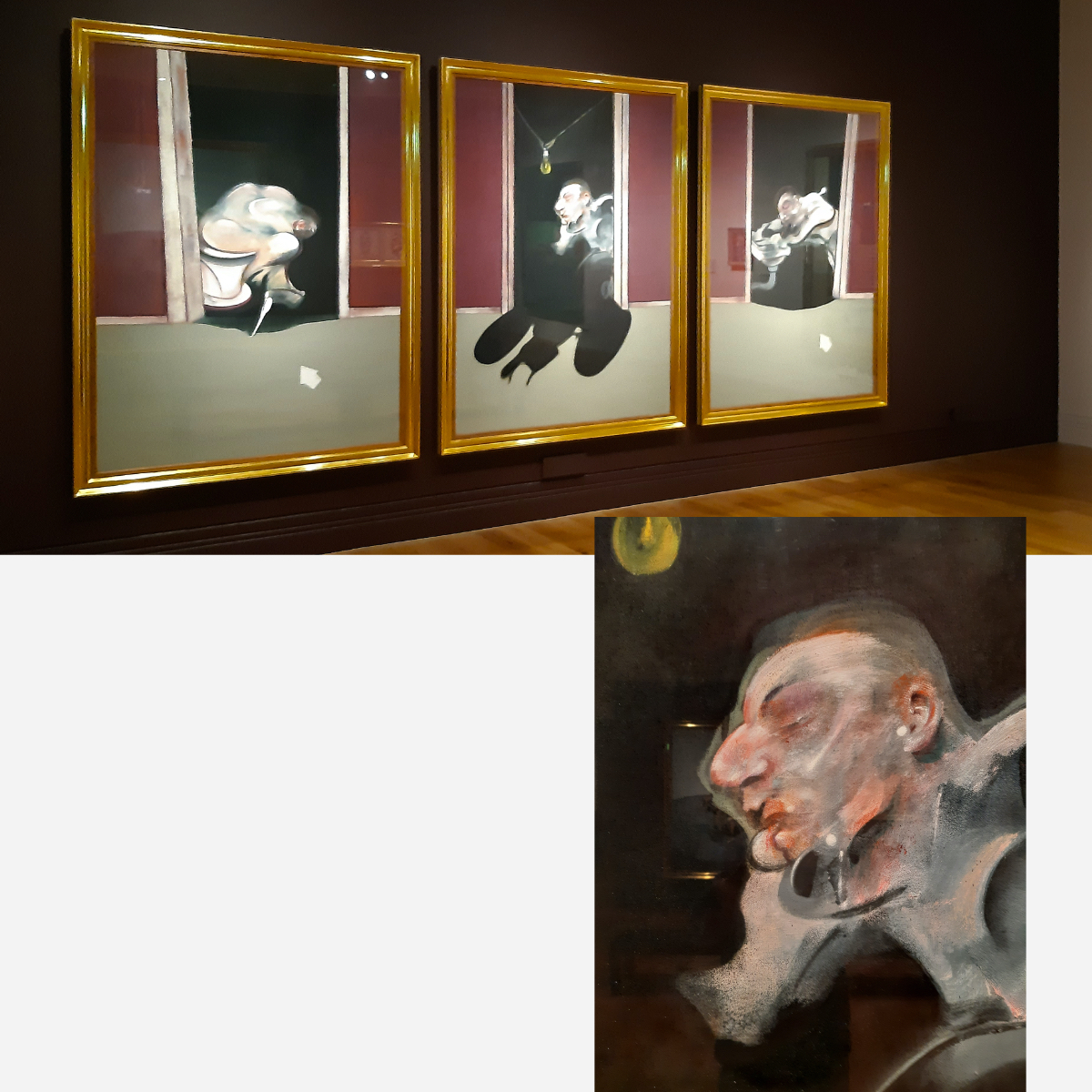
Not to end with an image of Rembrandt, here is the triptych in which Bacon commemorates the death of George Dyer.
I stayed at the house of my dear friend Janet, she writes for theater, television and film, writes poems, in short, someone with passion (click on her name to go to her site).
And I saw the play in which Nicole played the leading role. I hadn't seen her and Brian for so long... as an excuse, the exhibition was more than worth going to London.
Needless to say, I had brought pata negra for my friends.
Except for the triptych shown at the 'GUERNICA', all images of paintings can be seen in the exhibition. The exhibition will last until 19 January 2025. And the video, what else can I say...
29-11-2024: FRANCIS BACON IN DE NATIONAL PORTRAIT GALLERY
Vele jaren was Francis Bacon een schilder die mij de weg wees en nog steeds raadpleeg ik hem vaak. Vandaar dat ik de tentoonstelling ‘FRANCIS BACON: THE HUMAN PRESENCE’ moest zien. Het was de derde keer dat ik een overzichtstentoonstelling van hem bezocht. (klik op de titel om naar de National Portrait Gallery site te gaan)
Ik denk te kunnen zeggen dat na al die jaren van door boeken over hem te bladeren (ik heb er acht; een is de uitgebreide biografie en dan zijn er twee waarin hijzelf veelvuldig aan het woord komt, de rest is vooral gevuld met afbeeldingen) en zijn werk vaak in het echt te hebben gezien, ik een duidelijk beeld over wat zijn werk inhoudt heb.
Geboren vlak voor de Eerste Wereld Oorlog en beroemd geworden vlak na de Tweede Wereld Oorlog maakt dat je in zijn werk natuurlijk de weerklank van die gebeurtenissen vindt ook al zal hij dat hebben ontkend. In zekere zin terecht, zijn werk gaat niet zozeer over de oorlogen als wel over een staat van zijn, in de wereld staan. Een en ander paste goed bij zijn karakter (een wat getormenteerde sado-masochist) en ongelukkige opvoeding. Je zou kunnen zeggen, de man met de juiste karaktereigenschappen op het juiste moment en de juiste plaats.
Wat hem voor mij zo waardevol maakt is de grondtoon van vleselijkheid. Waar bij Picasso de getormenteerde fysieke aanwezigheid niet zo zwaar aangezet is, zelfs niet bij zijn ‘GUENICA’, dreunt die bij bijna alle werken van Bacon door.
Zijn breken van de realistische afbeelding heeft hier mee te maken, is een zinvolle verdraaiing.
Hij heeft nooit een gedegen opleiding in schilderen naar de natuur gehad. Dit maakt dat in de gedeeltes waar het er niet echt om draait hij soms wel erg banaal tekeer gaat. In de vijftiger jaren geeft hij de achtergrond vaak een levendige rol, speelt mee, daarna wordt het veelal een soort van figuurzagen.
Ik smokkel/lieg hier een beetje, omdat ik deze twee wilde tonen, het dekt de lading niet echt, maar nou ja... die schoen in het rechterdoek, zoals die naar voren komt... Zijn wijze van werken is erg direct, er is weinig gelaagdheid en dus weinig mogelijkheid tot correctie. Veelal is het een enkele laag verf over een ondergrond. Alleen in de gezichten wil hij soms verder doorwerken. Wat opvalt (daarvoor moet het werk in het echt worden gezien) is dat zijn figuren niet alleen vaak in een gesloten ruimte zitten (soms werkelijk als in een glazen kubus) maar daarin ook als het ware afgesloten van die ruimte zijn doordat de achtergrond, de ruimte waarin ze zich bevinden niet achter ze doorloopt. Vandaar mijn opmerking over figuurzagen. Ze zijn als het ware uitgezaagd, omlijnd door het onbewerkte achterdoek of omlijnd vaak in rood of groen.
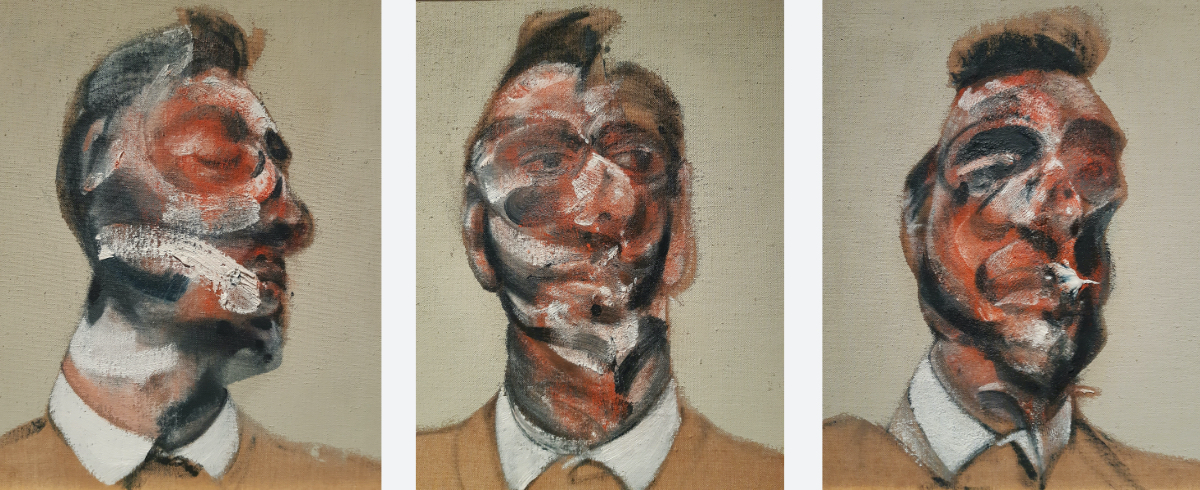
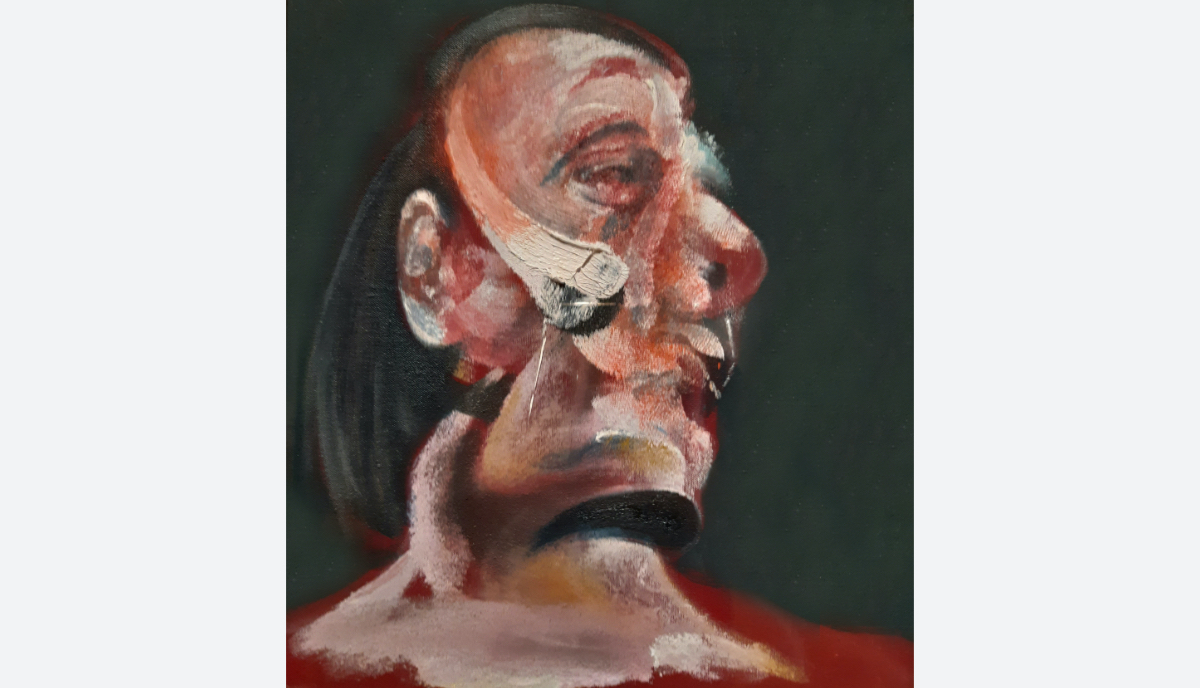
Groen wat tot op zekere hoogte de omgekeerde kleur is van de menselijke huid. Bij bijna alle menselijke figuren gaat hij uit van de normale huiskleur. Waar hij prachtig mee speelt zijn de zware schaduwen. Slagschaduwen die als gaten werken waarin de vorm wel degelijk doorwerkt. Soms lijkt het of de persoon in zijn eigen huls gevangen zit.
Is zijn faam zo groot omdat we nog zo duidelijk de ‘Zeitgeist’ van de twee wereldoorlogen voelen? Zal hij zoals bijvoorbeeld Lourens Alma Tadema na enige tijd van zijn troon tuimelen? Ik denk dat dat moment zeker aan zal breken. Zoals dit ook voor Picasso en Matisse zal gelden. De uitvinding van de fotografie en daar mee samenhangende evolutie in de schilderkunst zal vervagen, is misschien al deels vervaagd. Heeft het nog werkelijk zin om kubistisch tekeer te gaan? Was het eerst een revolutie, een nieuwe wijze van de wereld tonen afgezet tegen de foto, nu is het vaak een holle kreet, geslaakt omdat de techniek iets adequaat weer te geven ontbreekt. En soms raakt ook Bacon hier wat van de rails. In plaats van een secondair gedeelte 'zorgvuldig vaag' te schilderen, iets door suggestie, maar niet zwaar aangezet te schilderen, is hij soms wel erg gemakzuchtig en banaal. Bij hem vaak geen goede 'sprezzatura'...
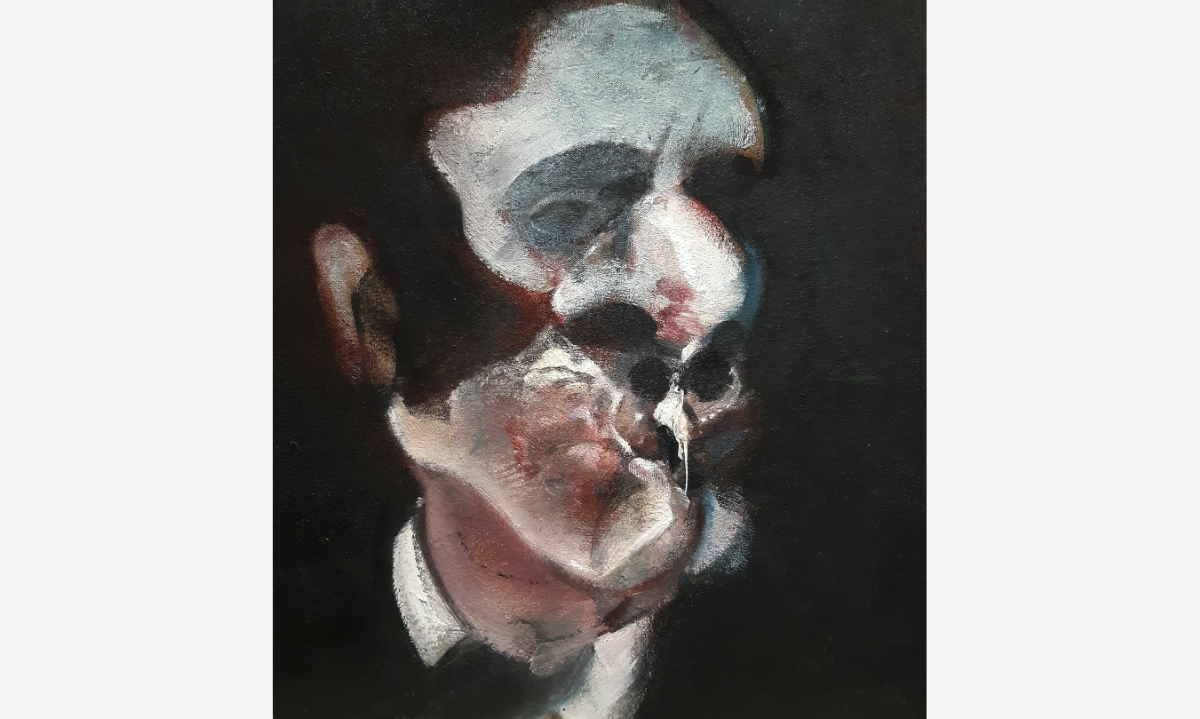
Een uitzondering is dit doek. Hier klopt voor mij alles.
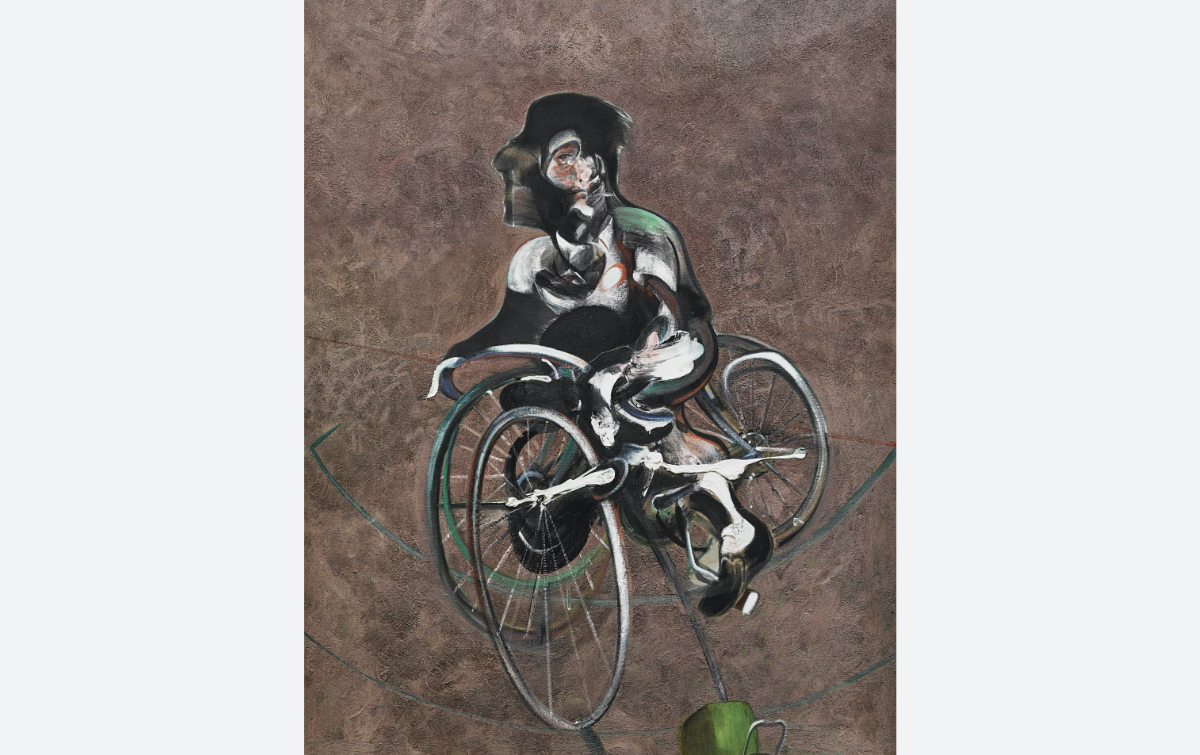
En waar moeten we naartoe? We zijn voorbij de zwarte doeken van Rothko en wat nu? In andere teksten heb ik het er vaak over gehad; er schuilt wel degelijk ‘vooruitgang’ in wat sommige kunstenaars nu maken. Ik moet Wittgenstein er nog eens op naslaan; na zijn Tractatus Logicus-Philosophicus had hij het over taalspelen... als je de randen hebt gevonden waar alles zich in kan bevinden moet je rondzwemmen en genieten. En niet aan de randen blijven hangen.
Waarom wilde Bacon al zijn werk achter glas verbergen? Het schept afstand. Natuurlijk, aangezien hij op ongeprepareerd doek werkte is zijn werk fragiel, maar was dat voor hem de reden? Tijdens mijn bezoek aan de tentoonstelling stoorde het aanzienlijk. Ok, hierdoor ben je je eigen aanwezigheid meer bewust als ook de omringende omgeving. Dat kan een reden zijn geweest, er is het werk en jij bent duidelijk aanwezig… maar de reflectie van het licht van de nooduitgang speelde wel een erg opvallende rol in dit schilderij...
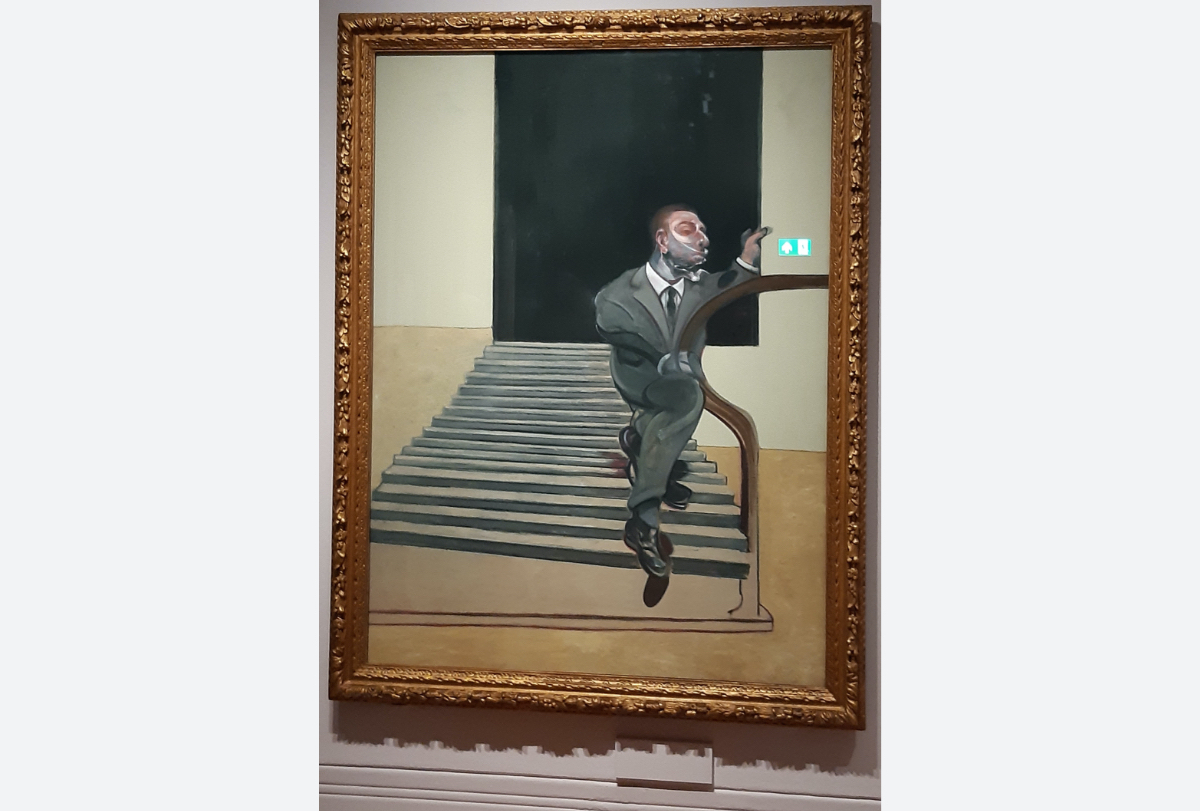
Hij was een bewonderaar van Rembrandt, Van Gogh en Velazquez. Van de laatste twee maakte hij een serie op hun geïnspireerde werken. Het opvallende is dat hij het portret van de paus Innocenzo X nooit heeft gezien. Ook daar weer die afstand zoals het glas? Is het de angst voor de ultieme confrontatie?
Ik voel bij zijn commentaren over Michelangelo jaloezie. De getormenteerdheid, de in zijn beelden gevangen energie heeft hem enorm aangesproken. De lichamen in de schilderijen van Bacon komen er karig vanaf. Veelal zijn ze weergegeven in niet meer dan gedraaide vegen. De lichamen blijven vaak plat en onbeholpen. Hij komt niet in de buurt bij Michelangelo.
Ook hier valt het op dat de lichamen veelal in een gesloten positie worden geschilderd. Veel handen in de schoot of armen om de benen geslagen. Vaak weinig aandacht aan de uitwerking, detaillering van het lichaam. Bij Michelangelo is het lichaam zeer aanwezig. Daverend aanwezig.
Het karigst zijn de ruimtes die Bacon schildert. Wanden en vloeren in slechts een egale kleur geschilderd.
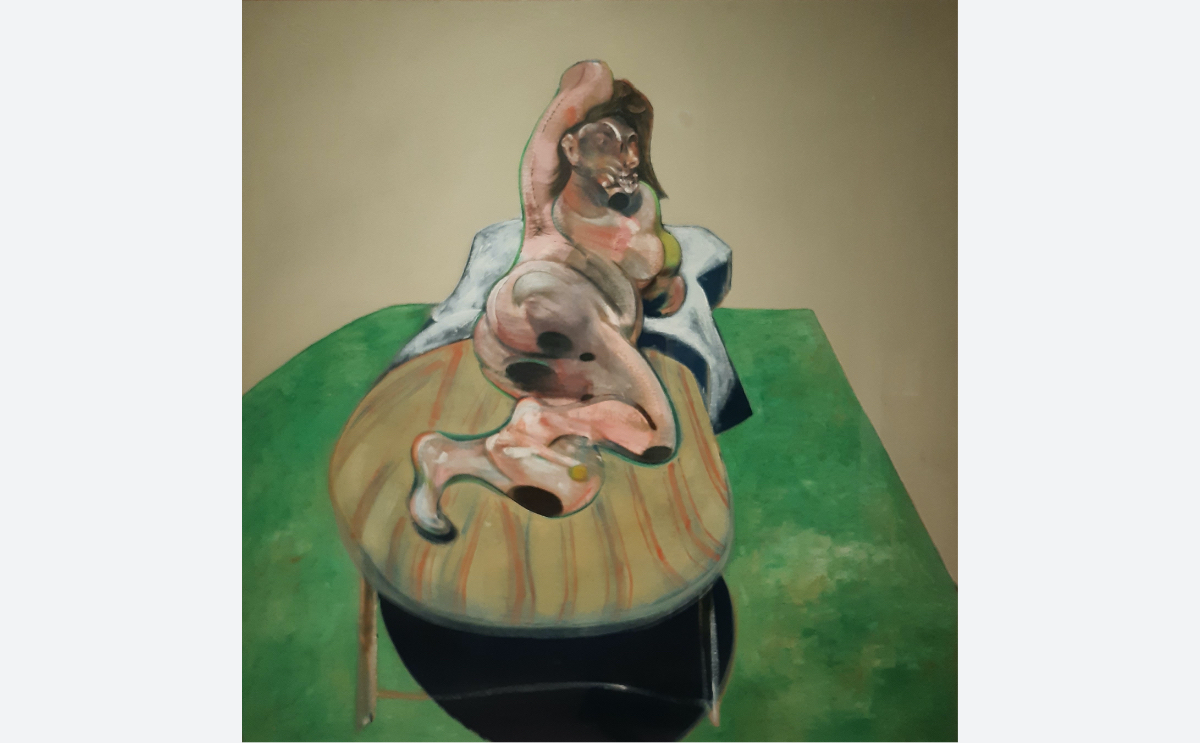
Aanvankelijk zijn de personages op zijn doeken anoniem, later gaat hij vrienden en bekenden portretteren.
Het lukt hem (nog) niet echt Lucien Freud of Frank Auerbach te treffen.
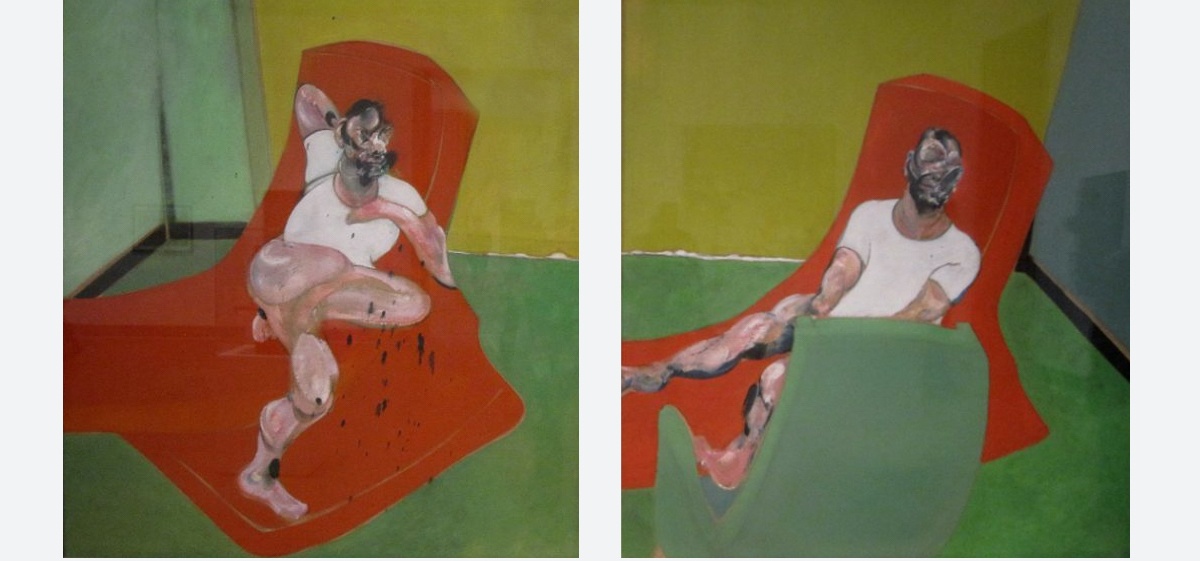
Dat lukt later wel beter bij Muriel Belcher, Henrietta Moraes, Isabel Rawsthorne en het meest bij George Dyer. Op zich met alle toetakeling een enorme prestatie.
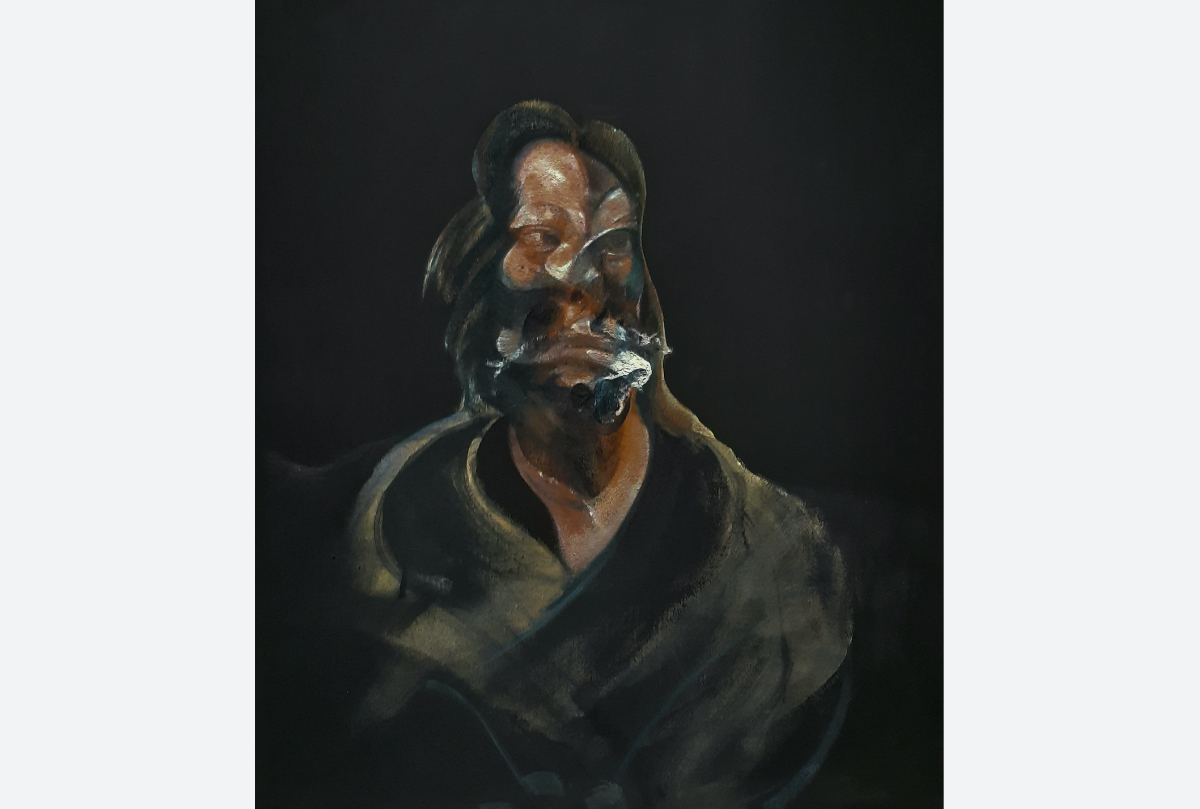
Op latere leeftijd ontglipt het hem, wordt het een trucje of te gewoontjes.
Eeuwig jammer is dat hij na de gouden jaren (de zestiger en begin zeventiger -) meer en meer een karikatuur van zichzelf werd. Was het de drank, de omgeving van bewonderaars of beiden? Het kan ook zijn dat hij geen ontwikkeling zag, bleef steken in hetzelfde idioom. Het werd een trucje. Men zegt dat zijn werk zachter van toon werd; het werd vormelozer, clichématig en krachteloos. De markt ging daar aan voorbij, lang leve het genie! Jammer… ik laat geen afbeeldingen van late werken zien.
Wat me zeer dierbaar was, was het zien van het kleine in bruinen geschilderde zelfportretje van Rembrandt. Ik geloof dat er aan getwijfeld wordt of het werkelijk door Rembrandt geschilderd is. Het is me om het even. Het heeft die heerlijke ‘vetheid’ van zijn andere werken. Wat ik denk is dat hij wellicht zo tevreden was met de schetsmatige onderschildering dat hij er niet aan door is gegaan. Ik bekijk alles met een schilders-mentaliteit en dan maakt het niet uit wie het geschilderd heeft of dat het een ‘volwaardige’ Rembrandt is. Als het me maar bevalt.
Ook hier weer de grootste moeite het goed te zien, laat staan er een fatsoenlijke foto van te maken. Ik begrijp dat vanwege sommige milieu-idioten veel werken achter glas verdwijnen, maar het maakt de wereld er zo veel treuriger op…
Zoals ook al die doeken met krakkemikkig in elkaar geprutste kubistische gedrochten die naast de relativiteit van een enkelbeeldige weergave en interpretatie daarvan ook nog eens een spastische kreet van het zogenaamde onderbewuste slaken.
Wat is mijn eindconclusie… Ik ben heel blij de tentoonstelling te hebben bezocht, voor mij is hij een hele grote en moet dus des te kritischer worden ontleed. Ik put inspiratie niet alleen uit wat ik prachtig vind, ook wat me irriteert helpt me verder.
Om niet te eindigen met een afbeelding van Rembrandt, hier nog het drieluik waarin Bacon het sterven van George Dyer memoreert.
Ik logeerde bij mijn dierbare vriendin Janet, ze schrijft voor theater, film en tv, schrijft gedichten, kortom, iemand met passie (klik op haar naam om naar haar site te gaan).
En ik zag het toneelstuk waarin Nicole de hoofdrol speelde. Ik had haar en Brian al zo lang niet gezien… als excuus was de tentoonstelling het meer dan waard naar Londen te gaan.
Nodeloos te zeggen dat ik voor mijn vrienden pata negra mee had genomen.
Behalve het drieluik getoond bij de ‘GUERNICA’ zijn alle afbeeldingen van schilderijen te zien op de tentoonstelling.
De tentoonstelling duurt tot 19 januari 2025. En de video, wat moet ik nog meer zeggen...
19-11-2024: SUMMER HOLIDAYS AND TREES
Trees… I made sketches of them during holidays. Gala was still very young and when she and her mother were still asleep I’d go out and sketch in the early mornings.
The big question is always how to give the illusion of foliage? This especially when the drawing is in pen and ink. To draw all the leaves one by one is crazy.
What could I steal from one of my heroes: Hercules Seghers?
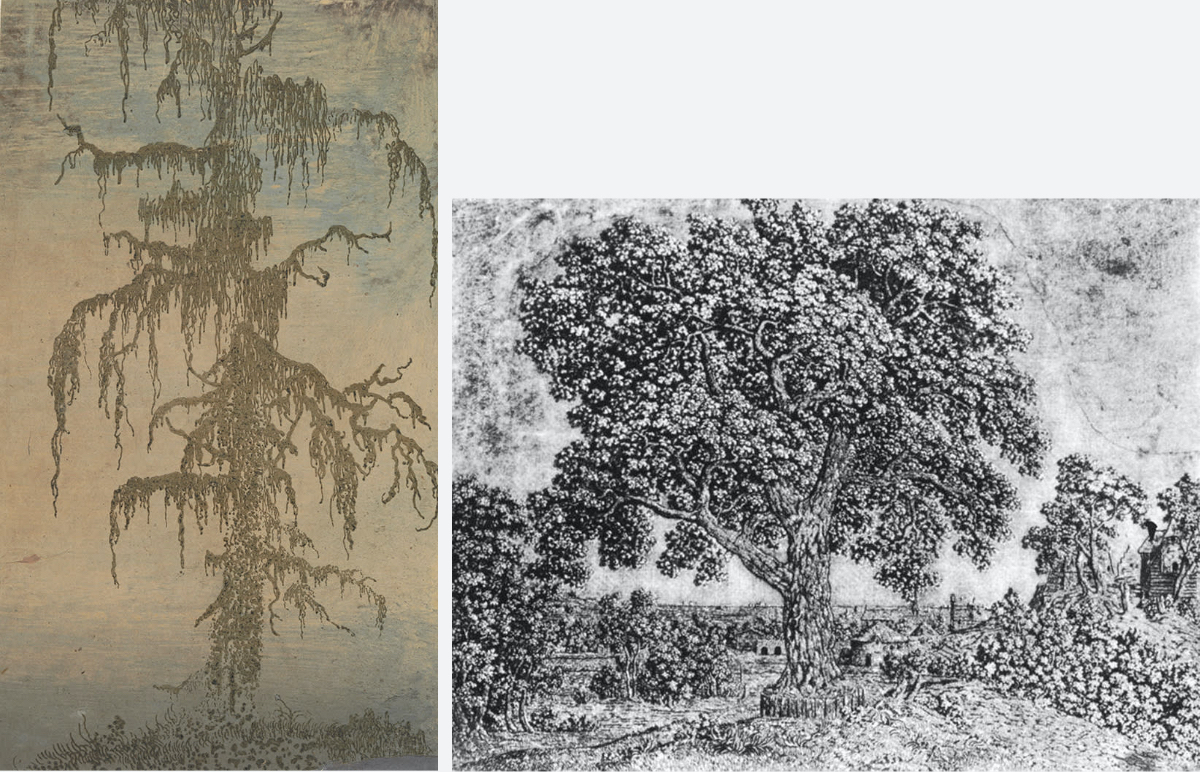
He made the most amazing etchings. Even Rembrandt collected them. In the landscapes he created a hand writing that sometimes makes me think of cauliflowers; where it is tree or soil is not always fully clear.
Rembrandt bought one of his copper plates, wiped out half of the etching by Seghers and made his version of trees.
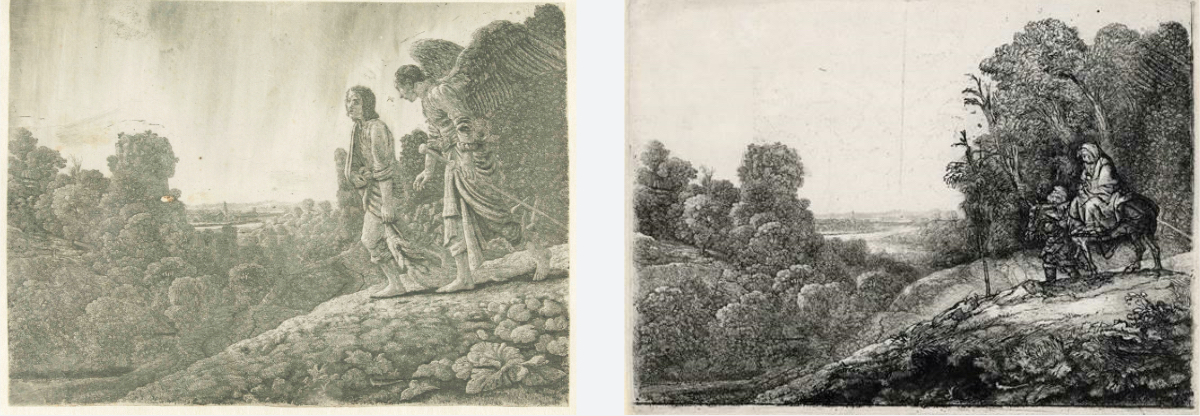
An etching is not the reality and both found beautiful but different solutions. The left part (on the right etching) is the original Seghers part. It has like so many of his works this surrealist atmosphere, an atmosphere of total silence.
Here another landscape by Seghers (cauliflower stuff).
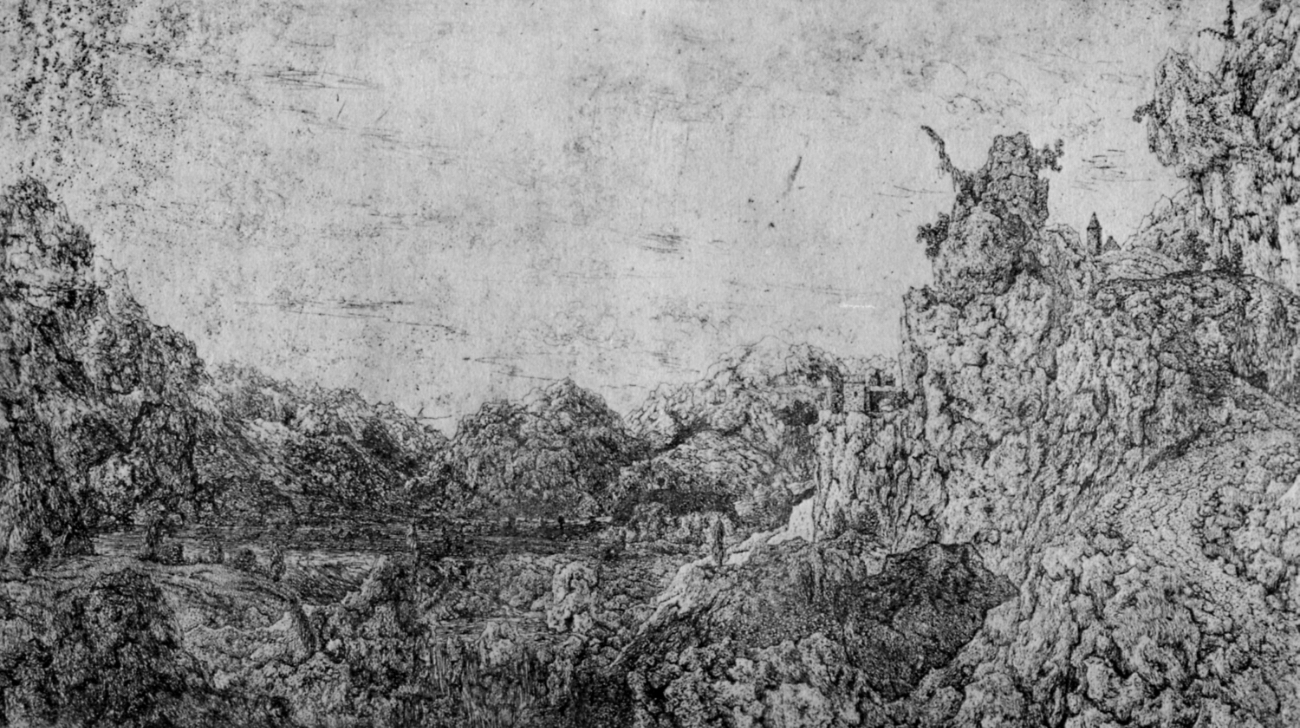
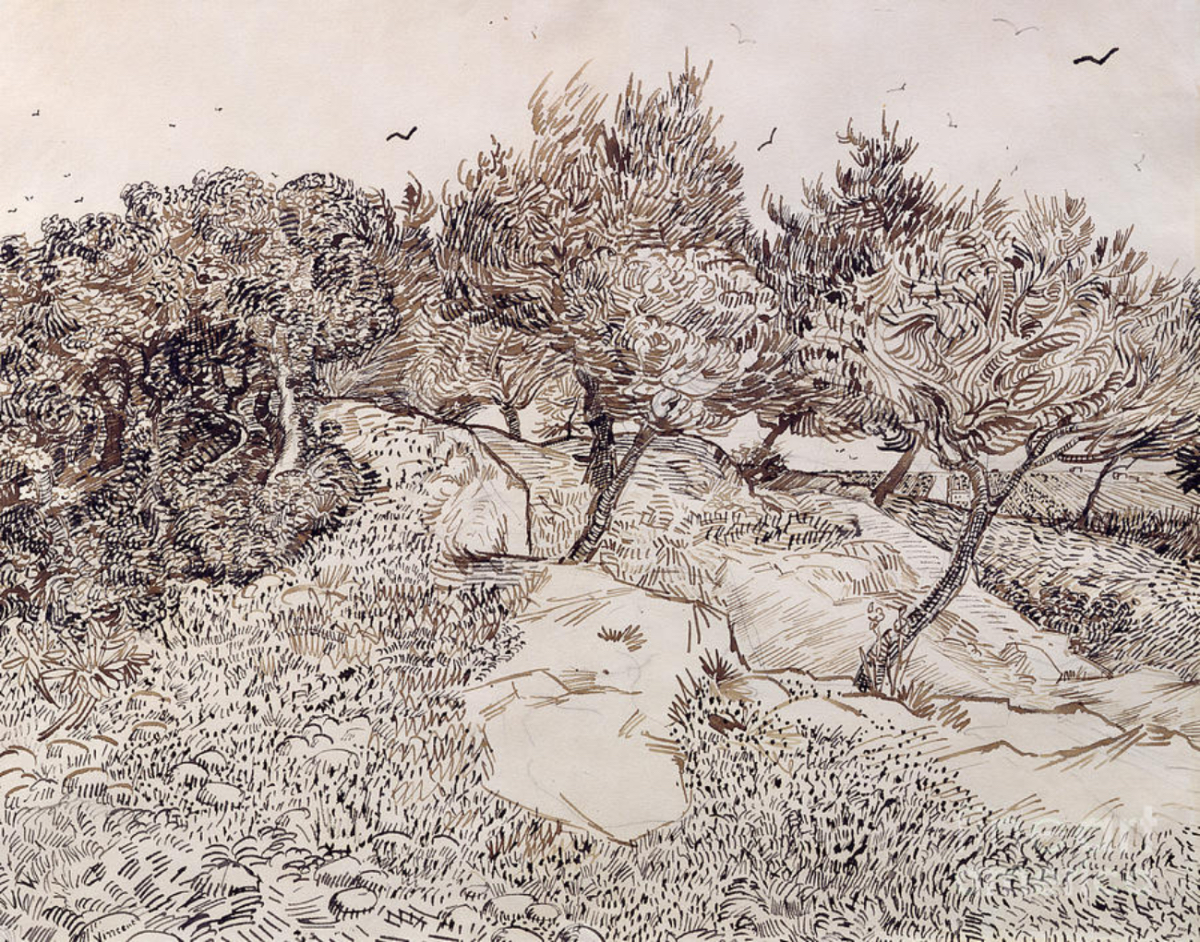
My conviction is that there is no fundamental difference between ancient and contemporary art. The way painters paint or draw has to do with the ideas about how to draw or paint. Seghers reminds me of Vincent van Gogh. There is that certain rhythm…
Two more etchings with just one tree by Seghers.
So I gave it a try during the holidays.
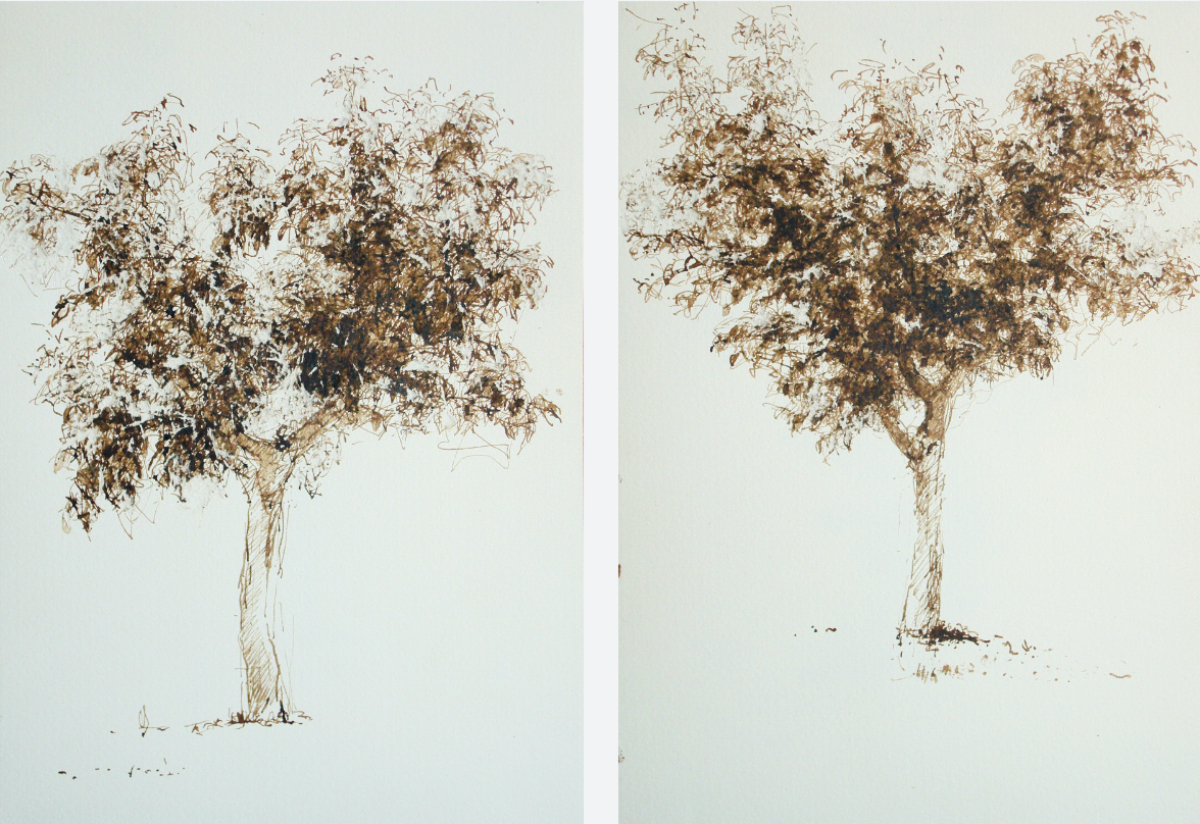
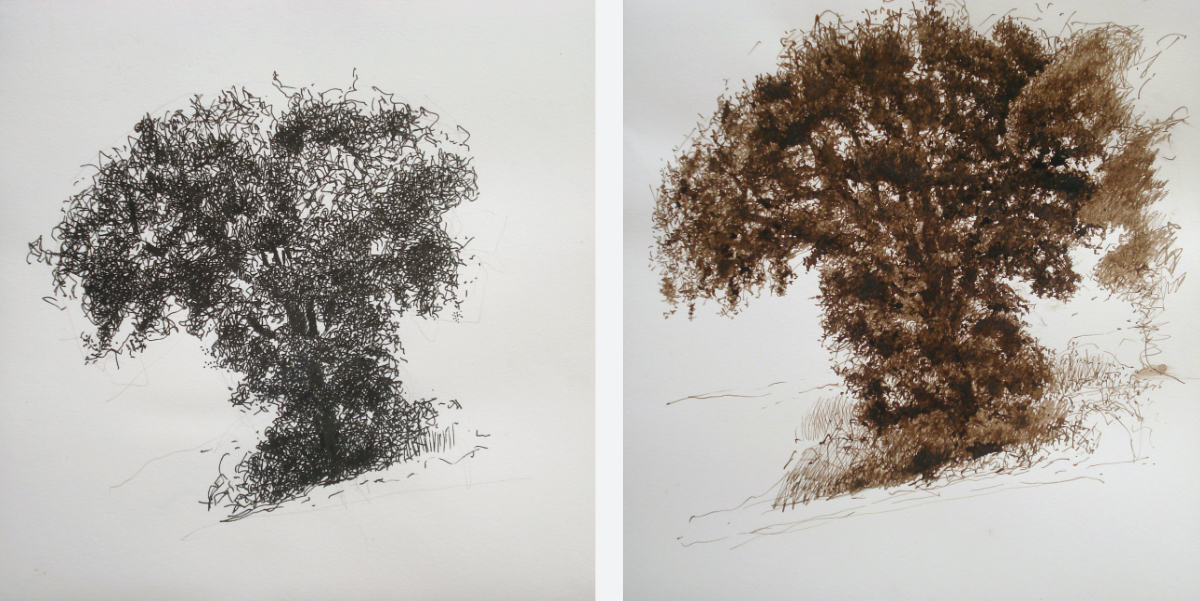
All pen and ink on paper.
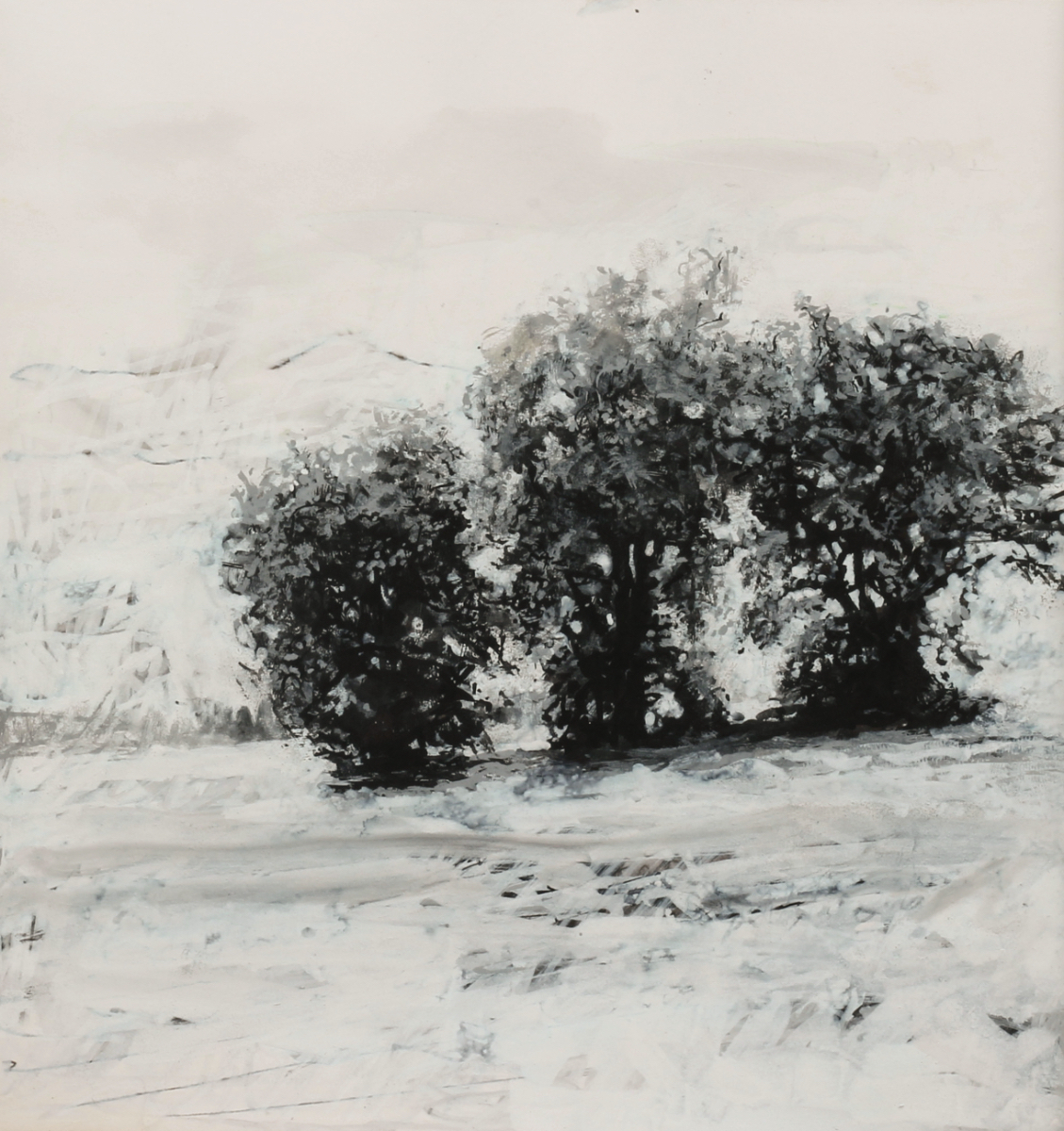
This last sketch is in pen and ink and black and white Posca Markers. Then all was easier… the perforated volume, the foliage.
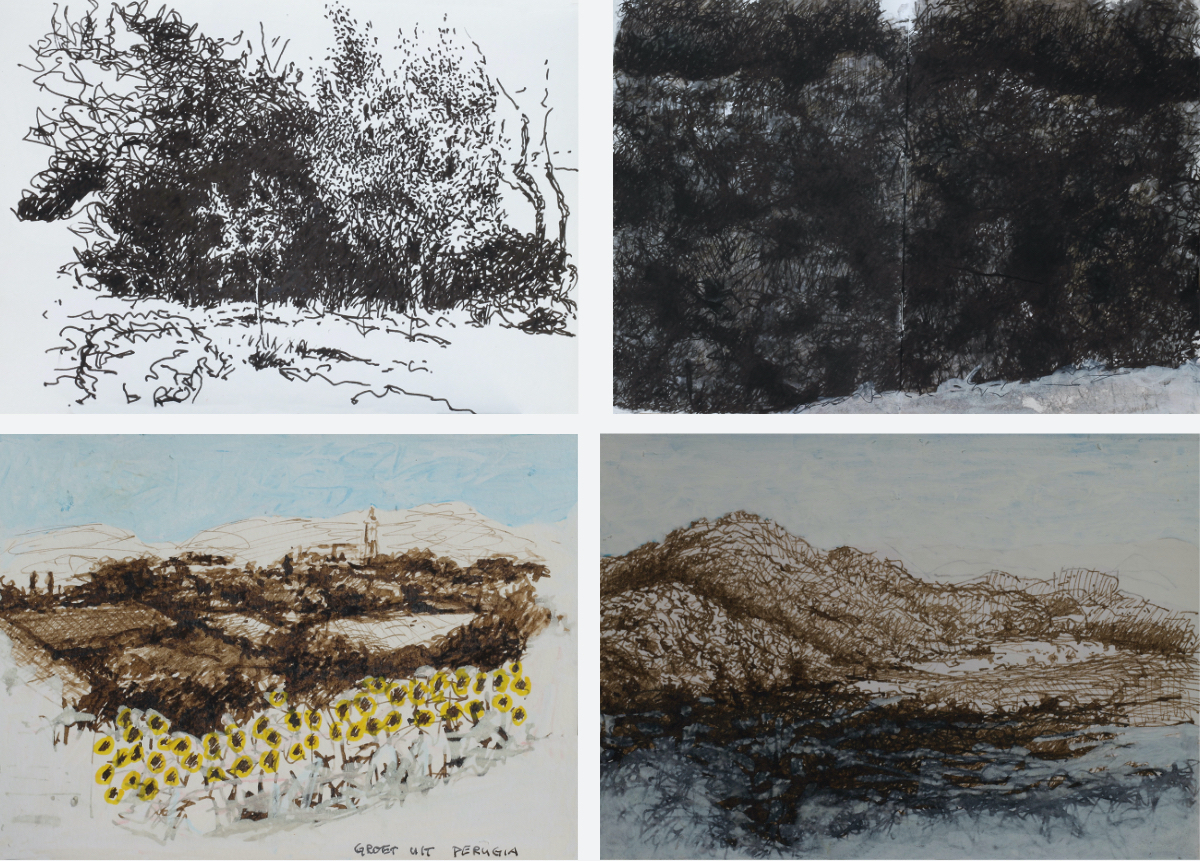
All my sketches were not bigger than 20×20 centimeters and on paper. When you travel with the family, you cannot make big stuff. I made them in 2007.
All these sketches I sold. In my sketch blocks I had more fun, fun without the idea of possibly selling them. Instead just to have memory images of a nice holidays…
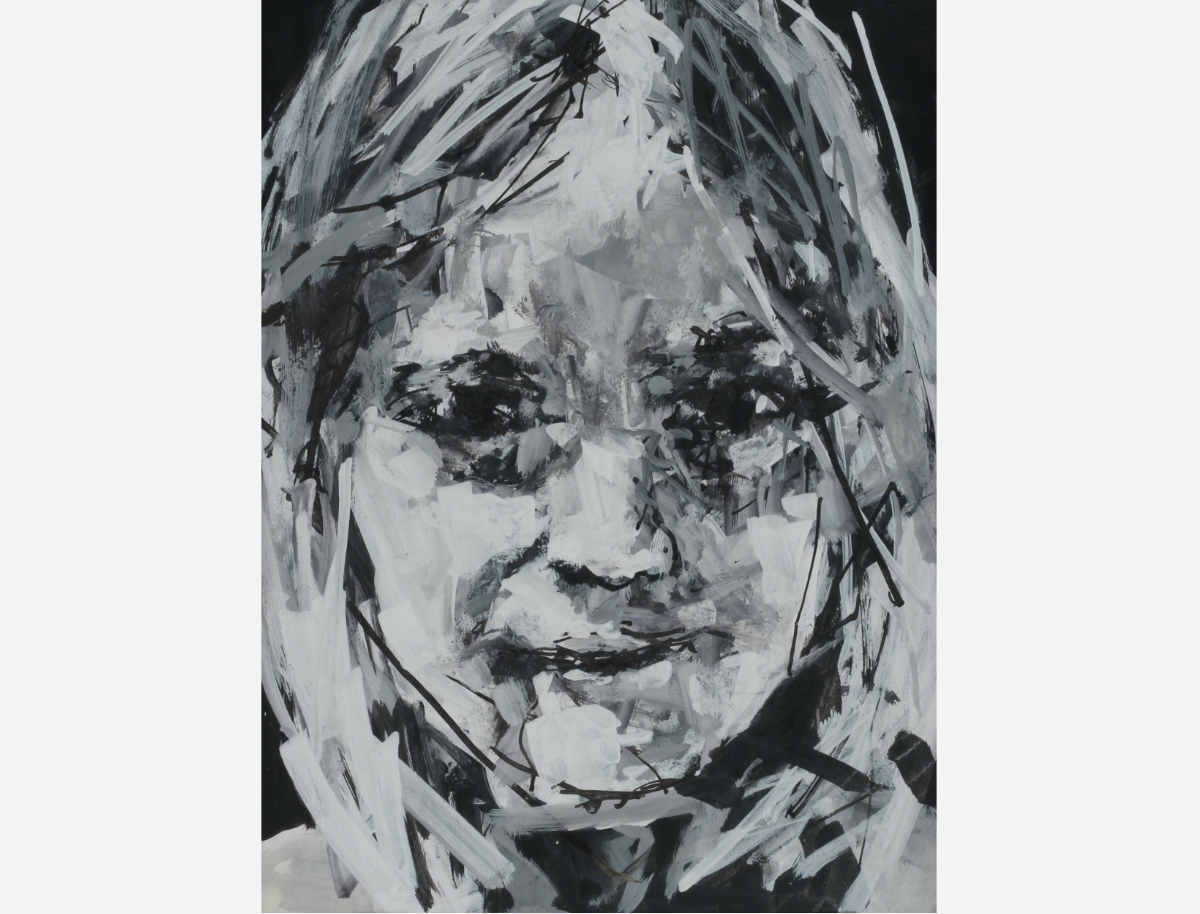
And a sweet daughter that just got up...
This sketch I made much later; it is Gala on a hot summers day. Trying to catch the strong light and shades on her face.
Looking for a nice video to accompany this blog I wandered through the various alternatives on Youtube. I could not find a satisfactory one with trees, holidays or landscapes.
I stumbled on this one, it makes no sense, but it is FUN!
06-11-2024: THE ICE PRINCESS (ENGLISH)
Sometimes it's a flower period, sometimes it's one for feminine beauty. Recently I made 'Morning Glory' (a sad canvas), now I wanted to give another canvas the final kick.
The work that had to be tackled refers to an attempt made in 2001, when I made a nude inspired by a model that I painted in 1979 at the National Academy (click on the grey text to read about that encounter). I messed up that canvas and it turned into a bull...
Years later, in 2017, I tried again. I've never really been completely convinced, but it servived till now.
Now was the moment to attack/change it. Can I leave it alone for the rest of my life? I hope so…
Essential is that you compete with and get inspired by the greatest. I won't settle for less, that's not possible. In this case Vermeer and Rembrandt. A surprise?
In this case 'Girl with a pearl earring'. For me, the magic of the 'girl with a pearl earring' lies in the fact that it is not a real portrait. She may have existed and posed for Vermeer, but the painting transcends a portrait that might remind you of a ‘neighbor’. It is an absolute picture of a beautiful young woman. It is startlingly simple.
Then there is the painting of Rembrandt's bathing woman. What an intimacy…
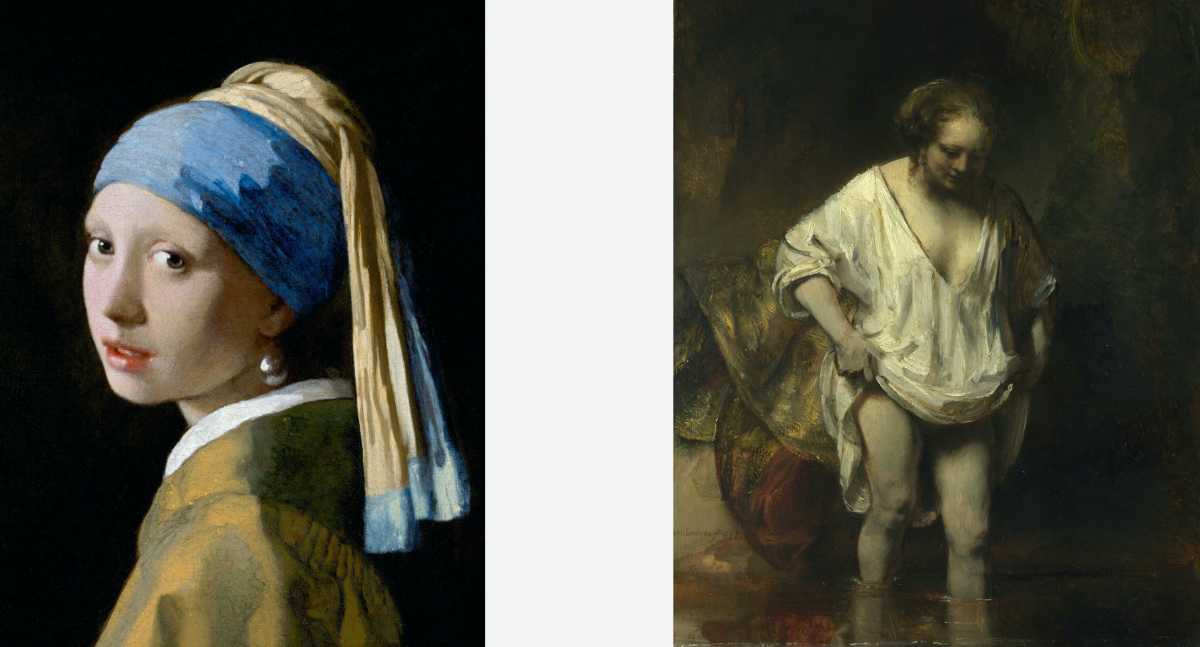
I wanted to get inspired by these canvases, measure myself... an impossible task, but I'd rather go down like a Don Quixote than survive like a mediocre bastard.
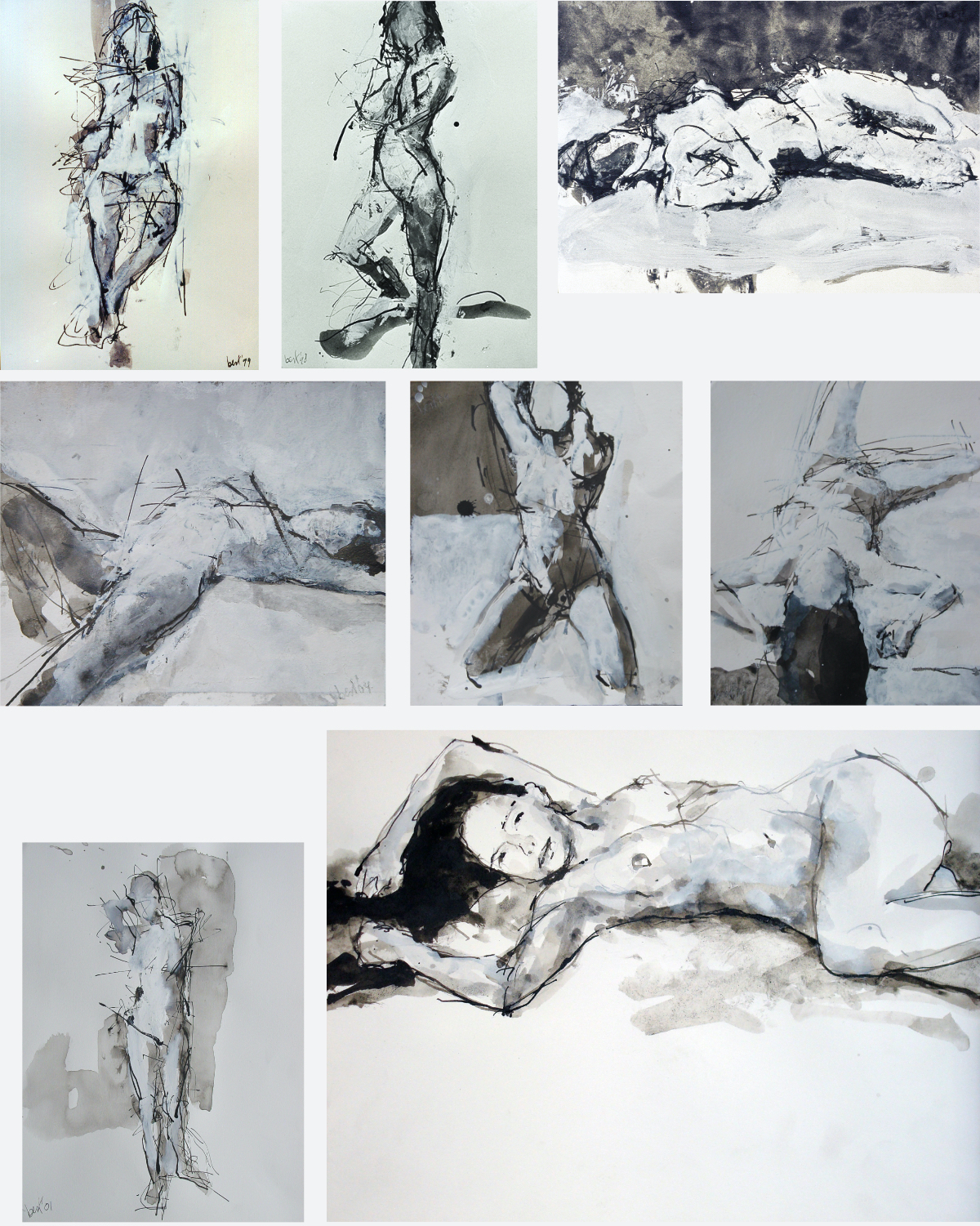
In all my sketches of the beautiful models, I have always strived for dignity, to depict them as self-confident women, not as dolls/toys. I have always asked them to look at me, to confront me, more than just to be an opportunity for me to copy them. They have given me a lot.
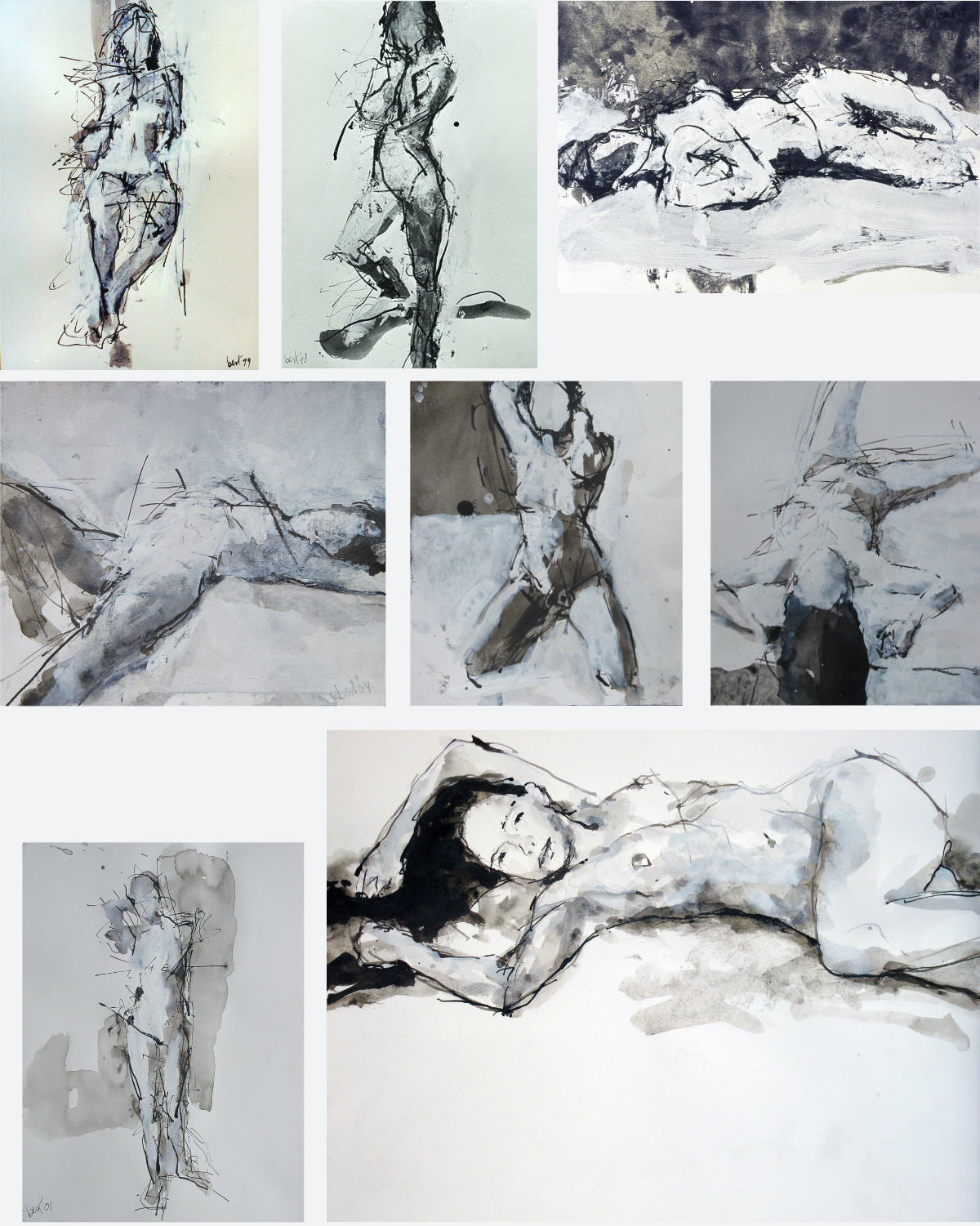
In this canvas I wanted the same pride, the same consciousness. And also go beyond the resemblance to a 'neighbour'.
Initially her body worked out well, but her head… who was she supposed to be?
Where could I find the solution, put the twist on the right expression?
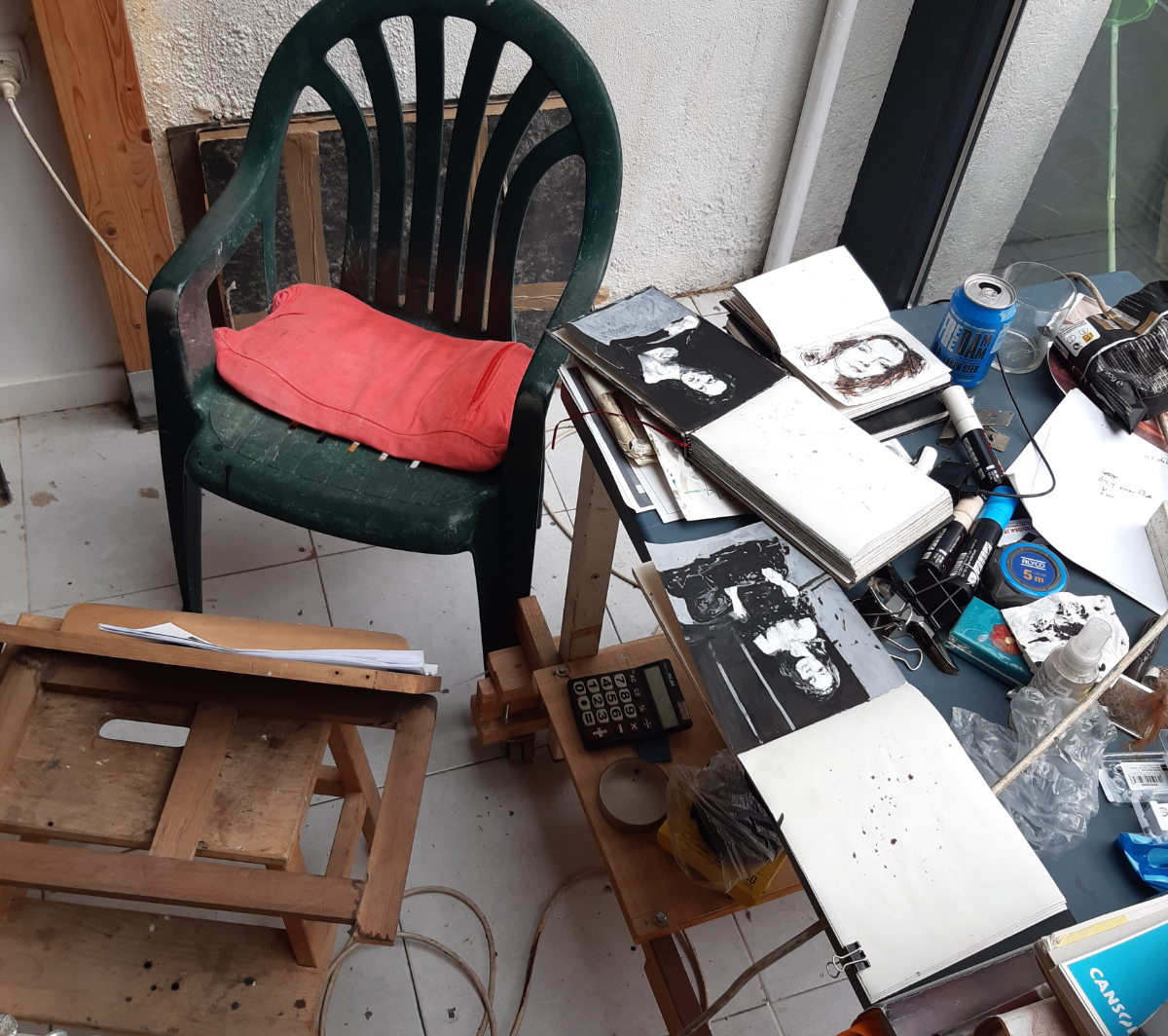
I decided to make a series of sketches of fantastic women from the movies.
First was Rita Hayworth. But too sensual...
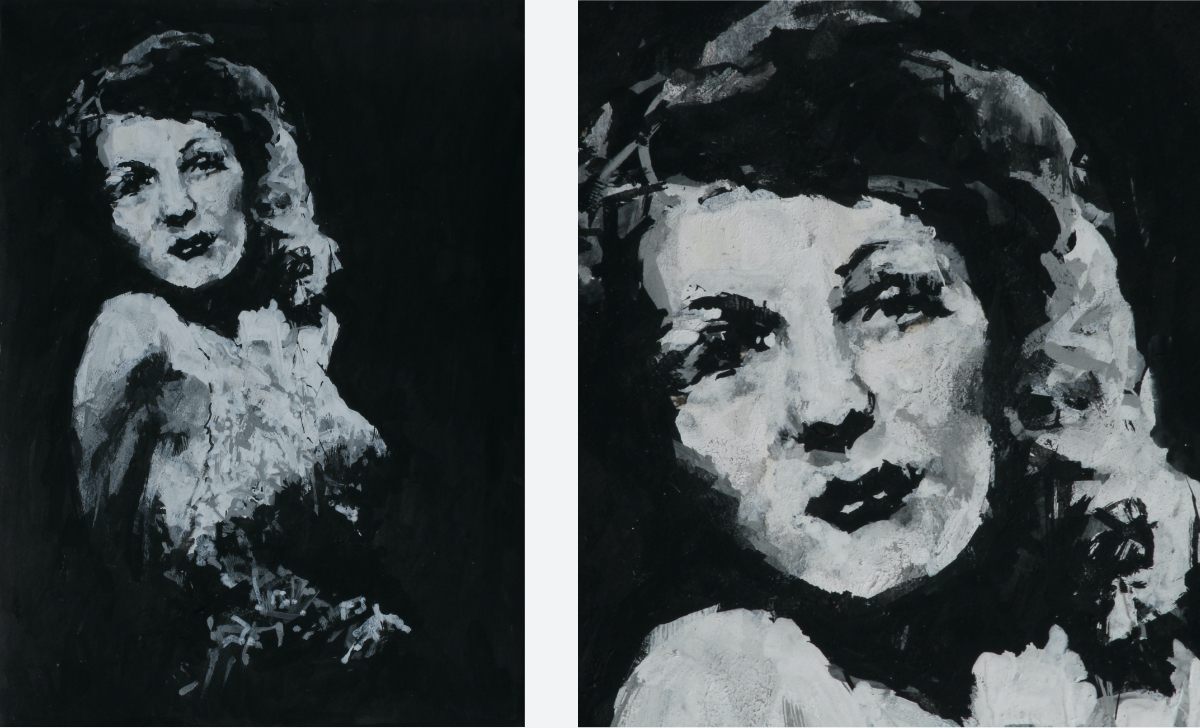
Then I chose Hedy Lamarr, not only a vamp of the screen, but also an extremely intelligent woman, an inventor of importance. Less sensual, but...
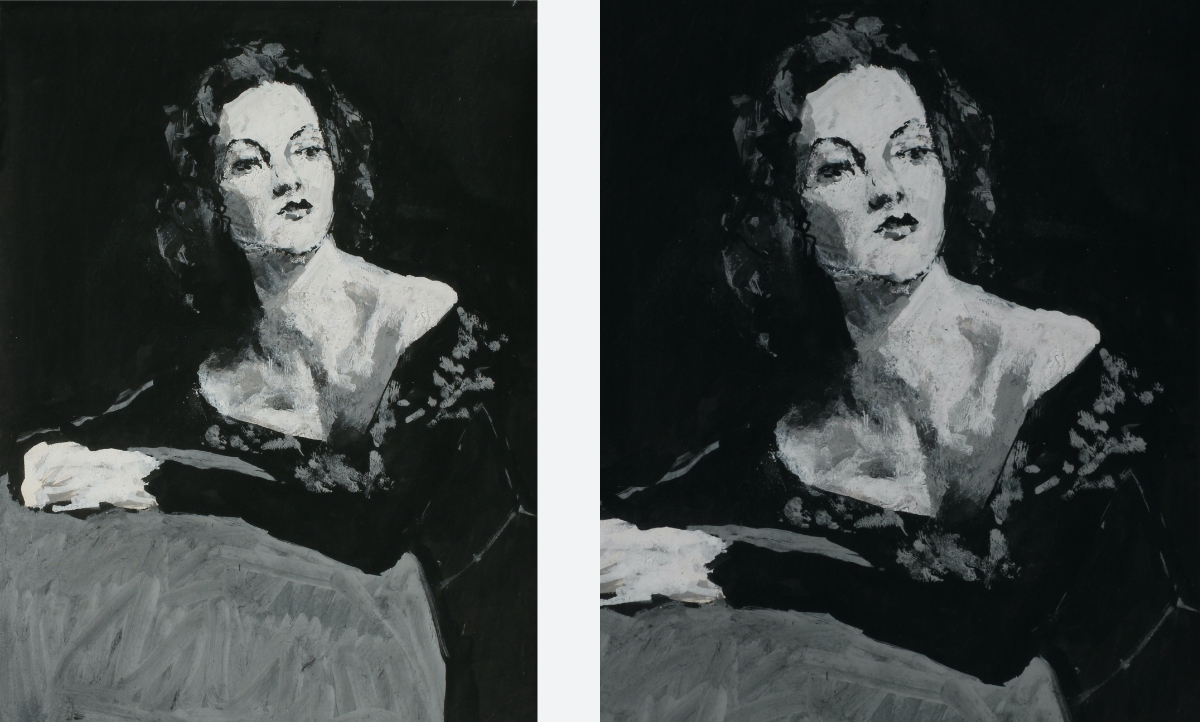
I ended up with Romy Schneider. An incredibly beautiful woman, who is said to have led a tragic life.
The film 'Les Choses de la Vie' moved me deeply. (click on the grey word to go to images of the movie and the title song).
Of course, it's not said that an actress inevitably portrays her life, but something in that look of hers...
I made two sketches.
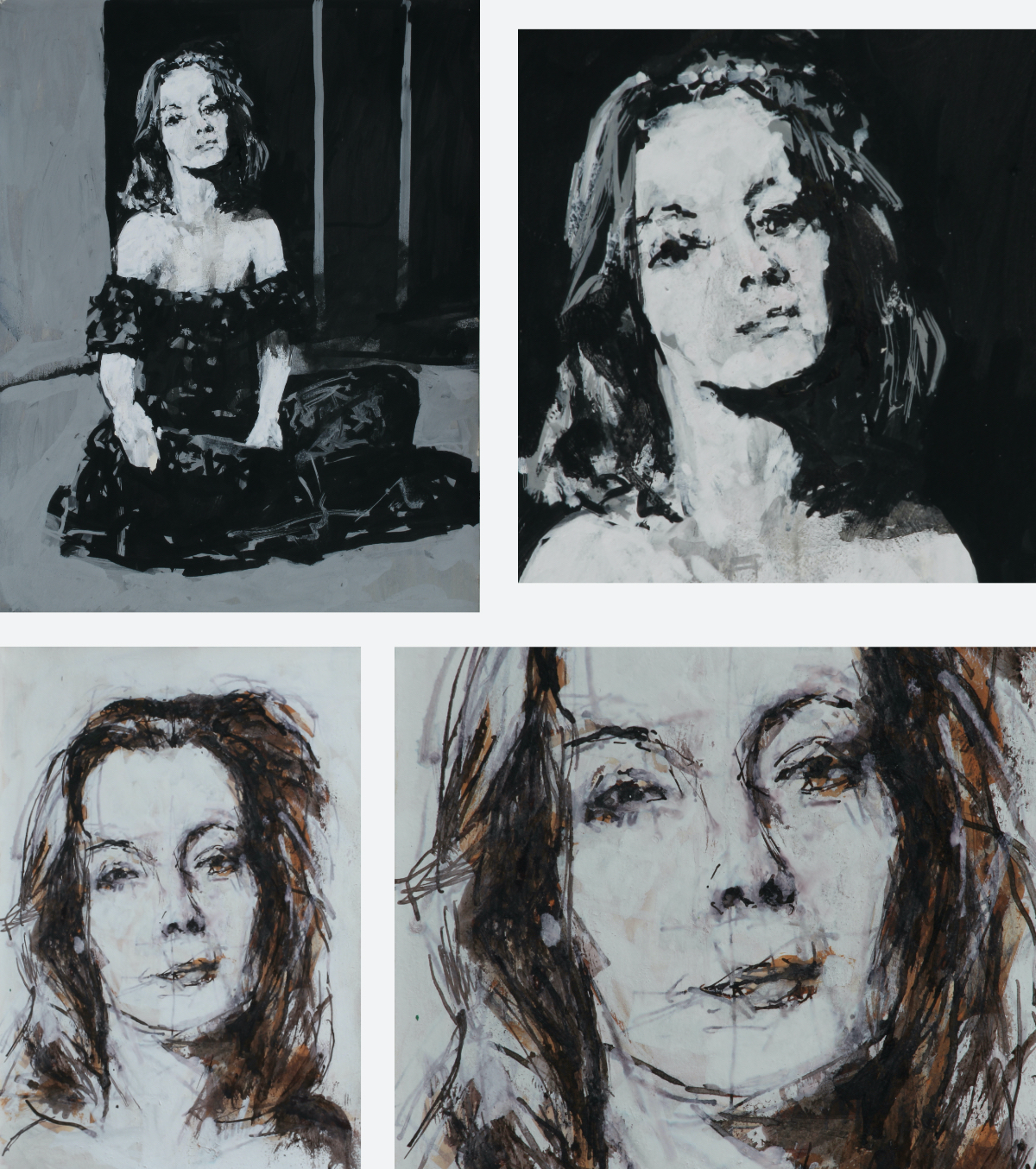
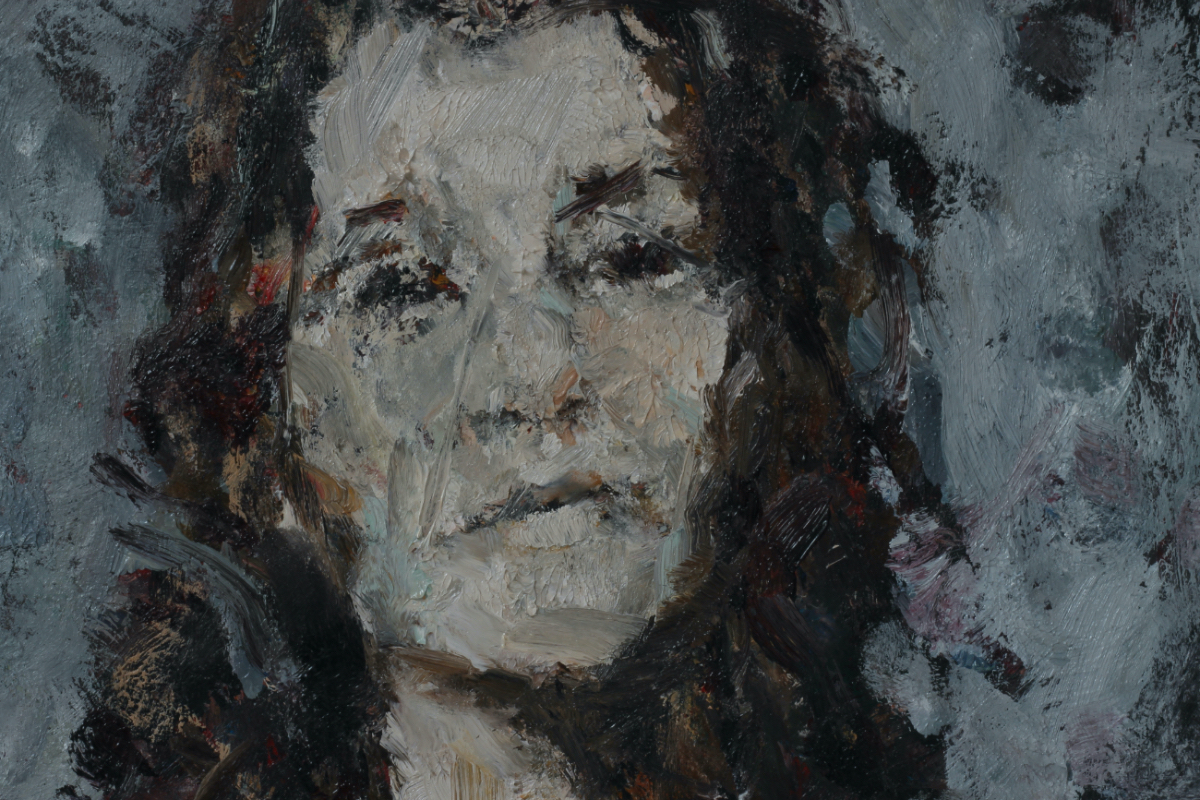
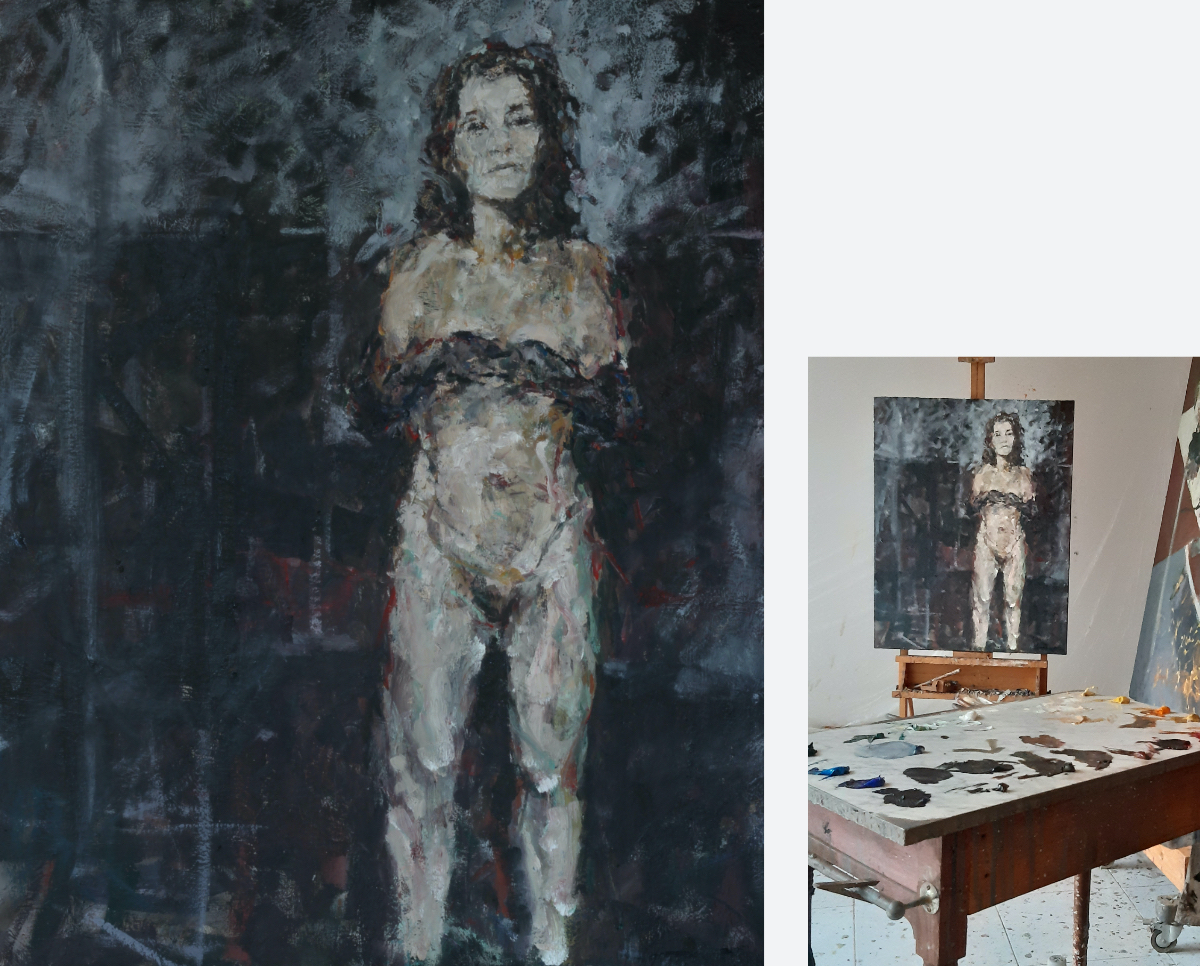
Then I tried to shape the head of the 'Ice Princess'.
Not turning her into Romy, thinking of the 'Girl with a Pearl Earring'.
What I wanted to portray is a proud, self-confident woman; better 'The Proud Self-Conscious Woman'. Someone who looks at you, who enters into confrontation, doesn’t turn away.
The fact that she holds her hands on her breasts while you can see her femininity is on purpose...
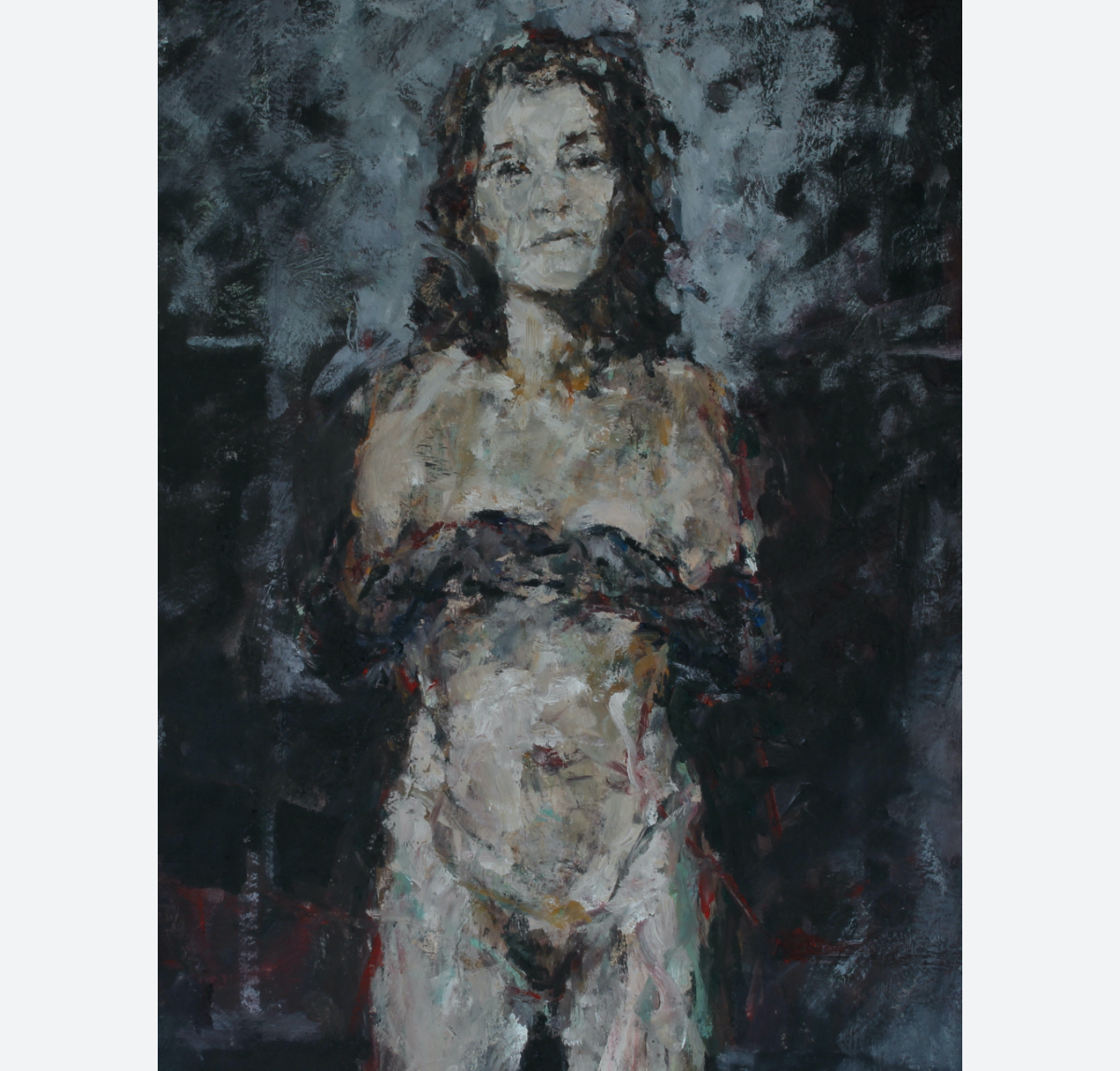
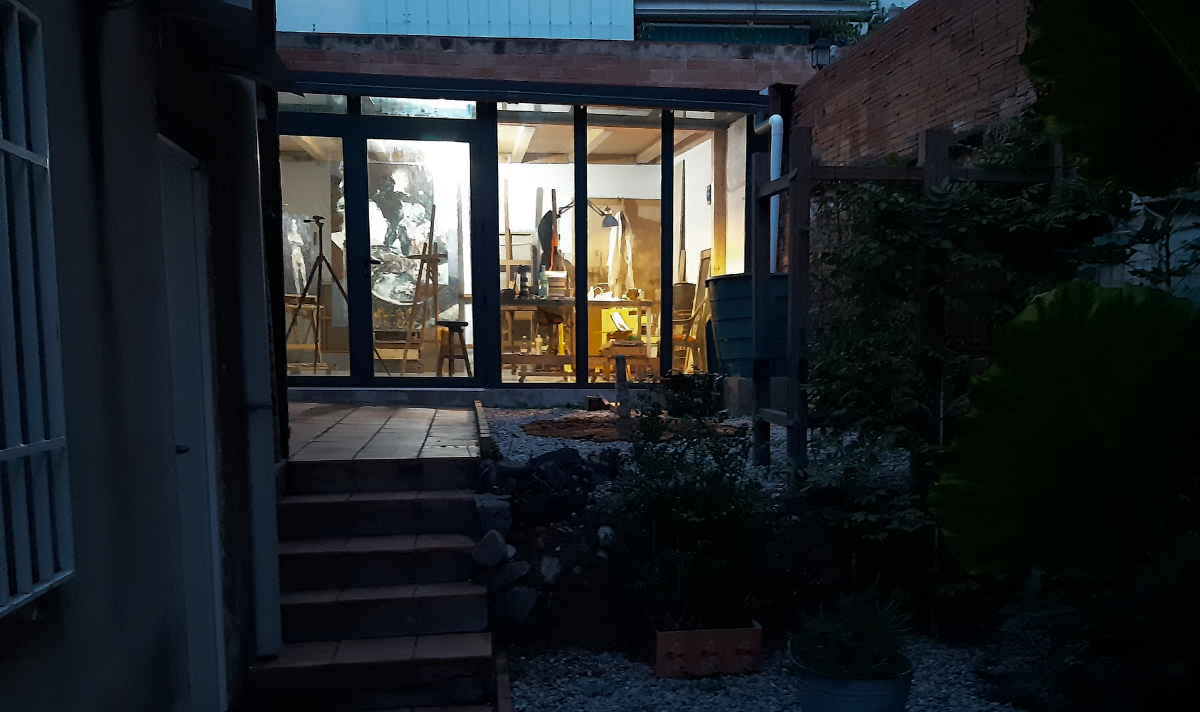
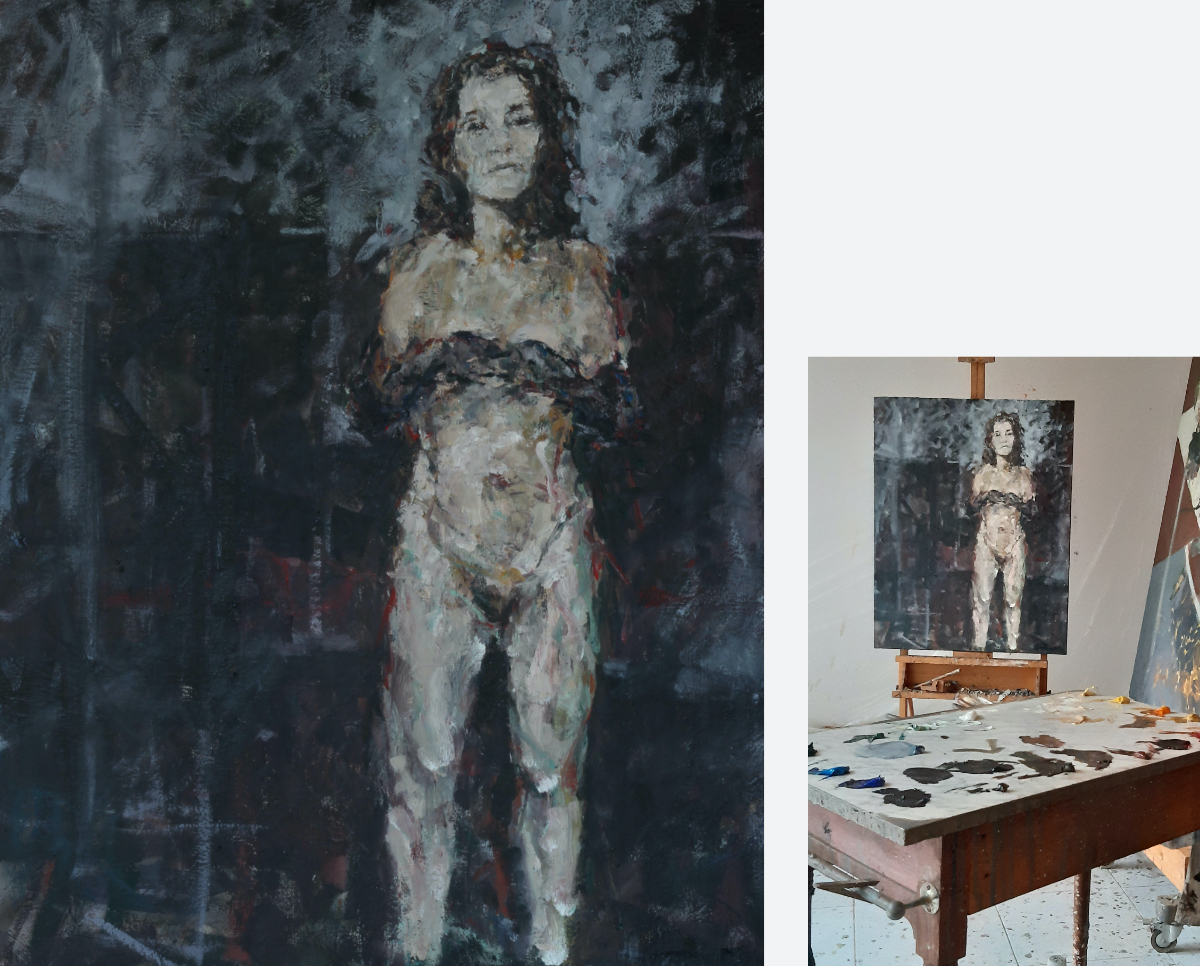
Here the entire painting and seen in the studio.
I am attaching a video ofmusic of Mahler. Romy Schneider was compared to Mozart by the director Claude Sautet, with whom she made 5 films.
Bertrand Tavernier replied that she had more of an atmosphere of Verdi or Mahler. She reminds me of the music of Mahler.
I know, it's the Adagietto of the fifth and conducted by Claudio Abbado. I have a soft spot for him...
03-11-2024: THE ICE PRINCESS (Nederlandse tekst)
Soms is het tijd voor bloemen, soms is het tijd voor het vrouwelijk schoon. Had ik pas ‘Morning Glory’ gemaakt (een doek gewijd aan verloren liefde), nu wilde ik eindelijk een ander doek de definitieve schop geven.
Het werk dat moest worden aangepakt refereert aan een poging gedaan in 2001, toen maakte ik een naakt geïnspireerd op een model dat ik ooit in 1979 geschilderd heb op de Rijks Academie (klik op het grijze woord om naar de tekst over haar te gaan). Dat doek heb ik verprutst en het is een stier geworden…
Jaren later, in 2017 heb ik weer een poging gewaagd. Ik ben er nooit echt helemaal van overtuigd geweest, het kon er mee door.
Nu heb ik dat doek aangepakt/veranderd. Kan ik het voor de rest van mijn leven met rust laten? Ik hoop het…
Wat van belang is dat je je meet met, je laat inspireren door de allergrootsten. Ik ga niet voor minder, dat mag niet. In dit geval Vermeer en Rembrandt. Een verrassing?
Voor mij zit de magie van het ‘meisje met de parel’ in dat het geen echt portret is. Ze zal bestaan en geposeerd hebben voor Vermeer, maar het schilderij ontstijgt een portret dat je wellicht aan een 'buurvrouw' doet denken. Het is een absoluut beeld van een prachtige jonge vrouw. Het is van een ontstellende eenvoud.
Dan is er het schilderij van de badende vrouw van Rembrandt. Wat een intimiteit…
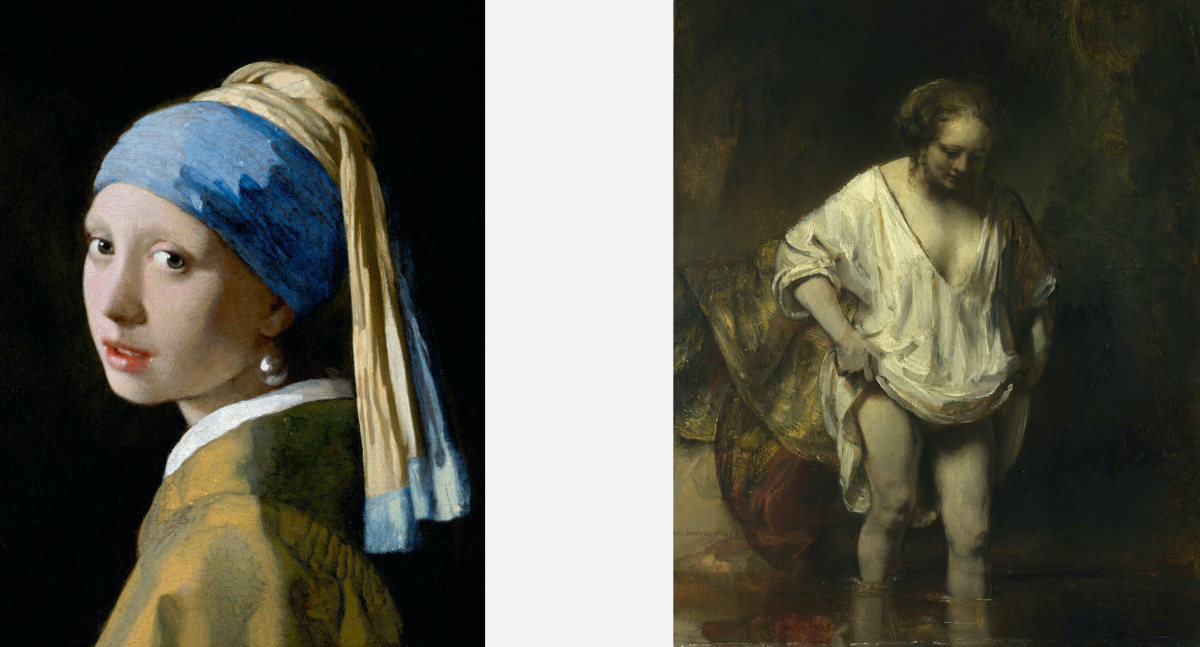
Met die doeken wilde ik strijden, me meten, me door ze laten inspireren… een onmogelijke taak, maar ik ga liever als een don Quichot ten onder dan dat ik overleef als een middelmatige prutser.
In al mijn schetsen naar de prachtige modellen heb ik altijd gestreefd naar waardigheid, naar ze weer te geven als zelfbewuste vrouwen, niet als poppetjes/speeltjes. Ik heb ze altijd gevraagd me aan te kijken, de confrontatie aan te gaan, meer dan alleen een aanleiding voor mij te zijn om ze na te tekenen. Ze hebben me veel gegeven.
En in dit doek wilde ik dezelfde fierheid, het zelfde bewustzijn. En ook voorbij de gelijkenis met een ‘buurvrouw’.
Aanvankelijk lukte het lichaam aardig maar haar hoofd… wie moest ze dan zijn?
Waar kon ik de oplossing vinden, de draai geven aan de juiste uitdrukking?
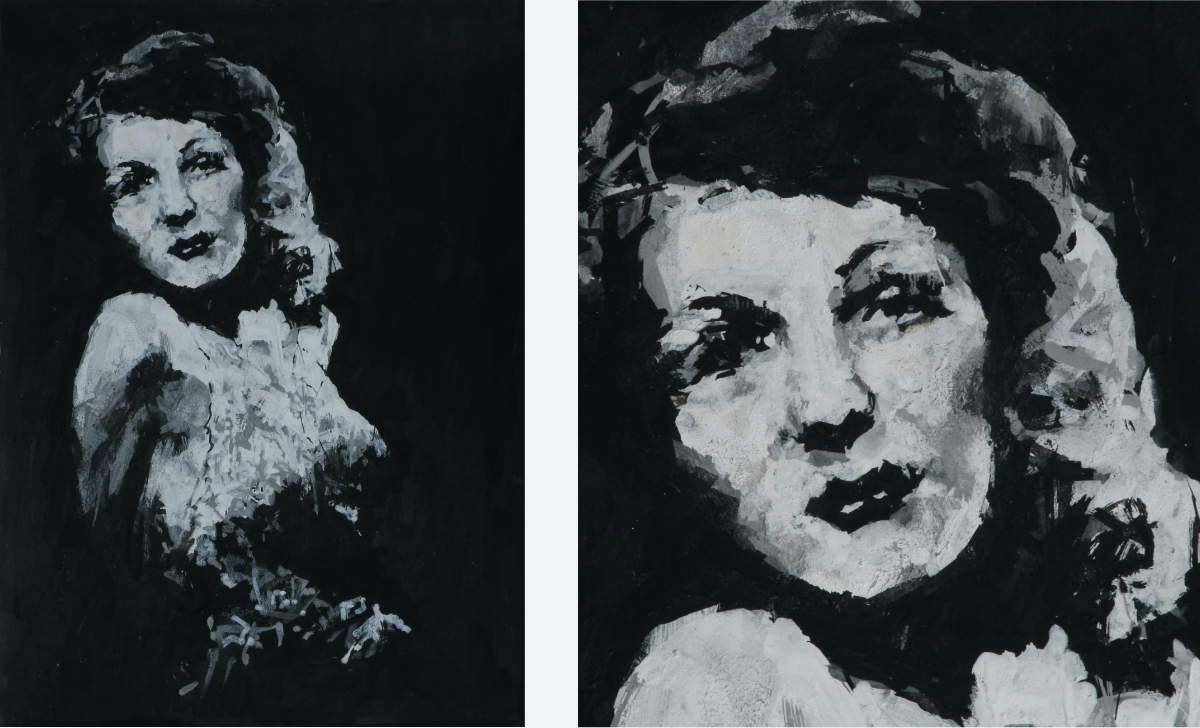
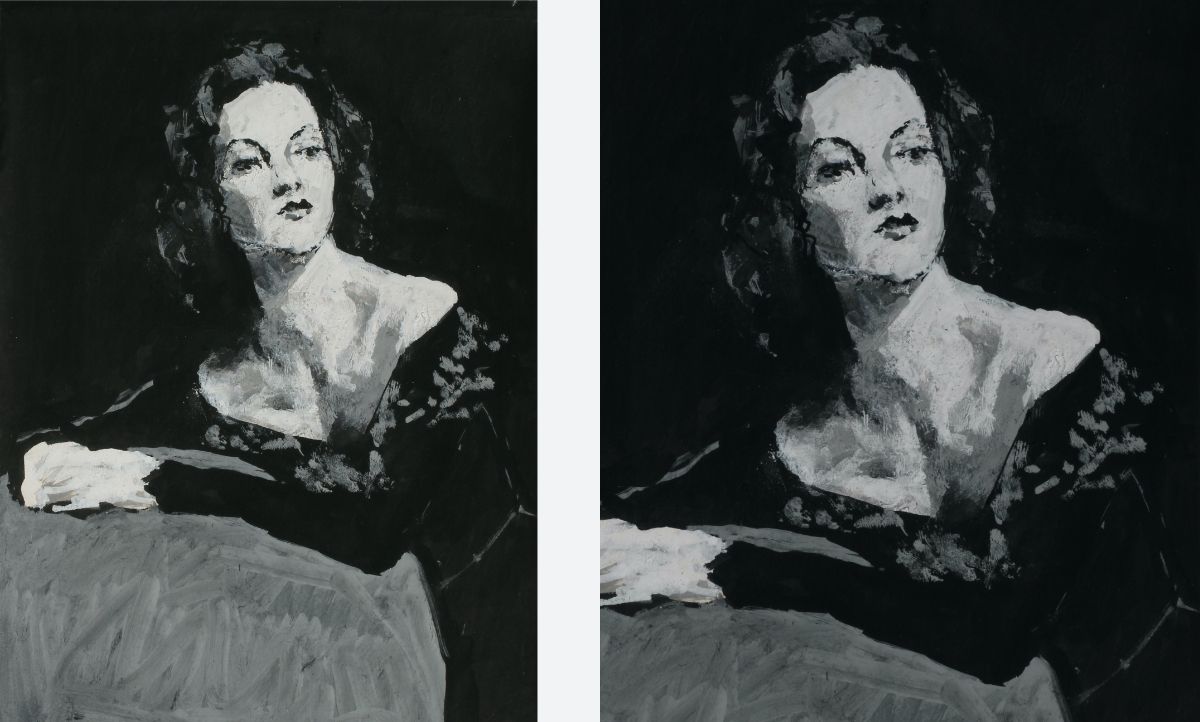
Ik besloot een serie schetsen te maken van fantastische vrouwen van de film.
Eerste was Rita Hayworth. Maar teveel een sensuele vrouw...
Vervolgens koos ik Hedy Lamarr, niet alleen een vamp van het scherm, maar ook een uiterst intelligente vrouw, een uitvinder van belang. Ontstellend mooi maar misschien meer los van dat sensuele.
Uiteindelijk kwam ik uit bij Romy Schneider. Een ongelooflijk mooie vrouw, van wie wordt gezegd dat ze een tragisch leven heeft geleid.
De film ‘Les Choses de la Vie’ heeft me diep ontroerd (klik op het grijze woord om het lied te horen en beelden van de film te zien).
Natuurlijk, het is niet gezegd dat een actrice onvermijdelijk haar leven verbeeldt, maar iets in die blik van haar... die tederheid...
Ik heb er twee schetsen aan gewaagd.
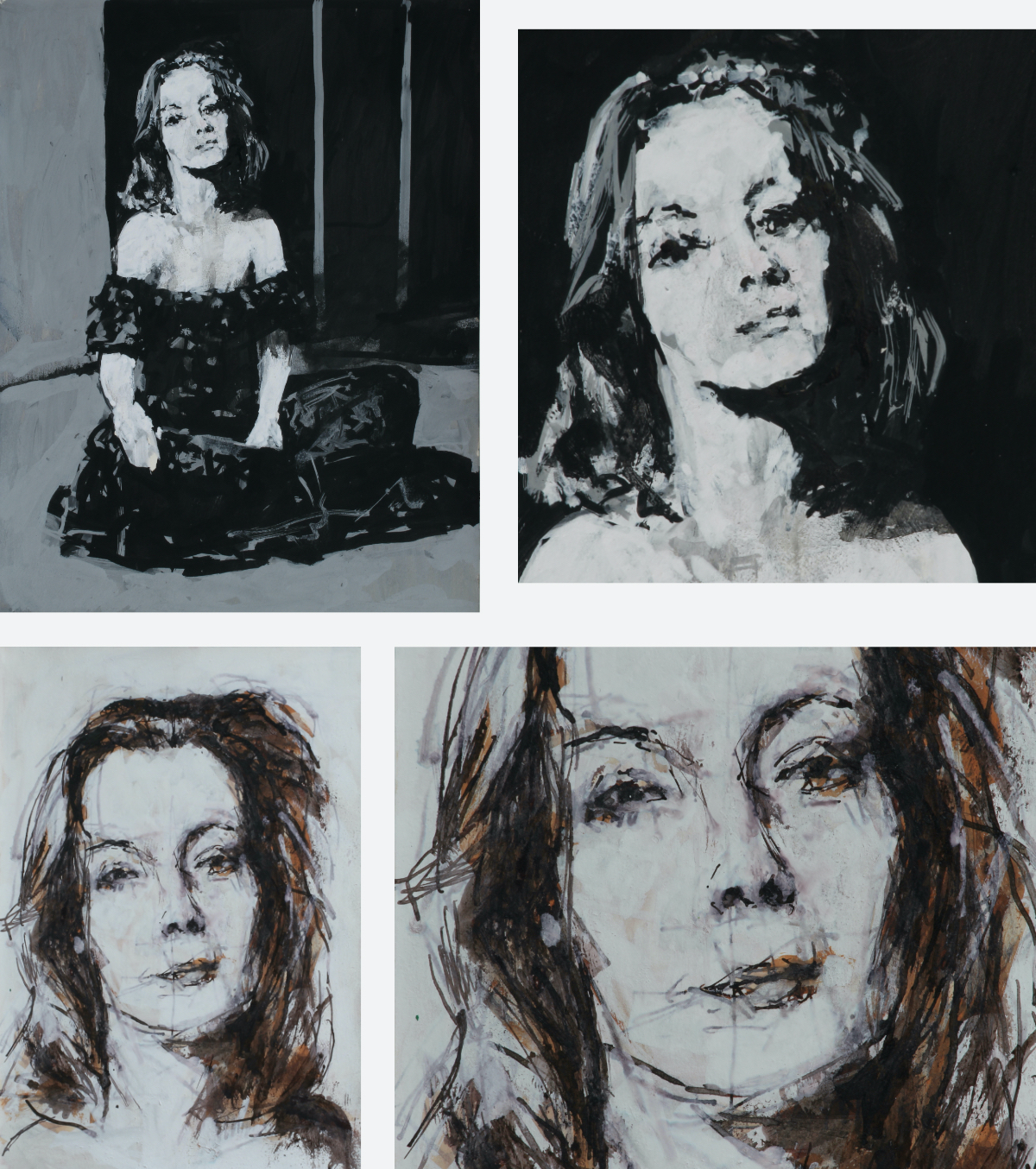
Toen wilde ik het hoofd van de ‘Ice Princess’ gestalte geven.
Haar niet in Romy veranderend, denkende aan het ‘Meisje met de Parel’. Ook wilde ik de tragiek niet.
Wat ik heb willen weergeven is een fiere zelfbewuste vrouw; beter ‘De Fiere Zelfbewuste Vrouw’. Iemand die je aankijkt, die de confrontatie aangaat.
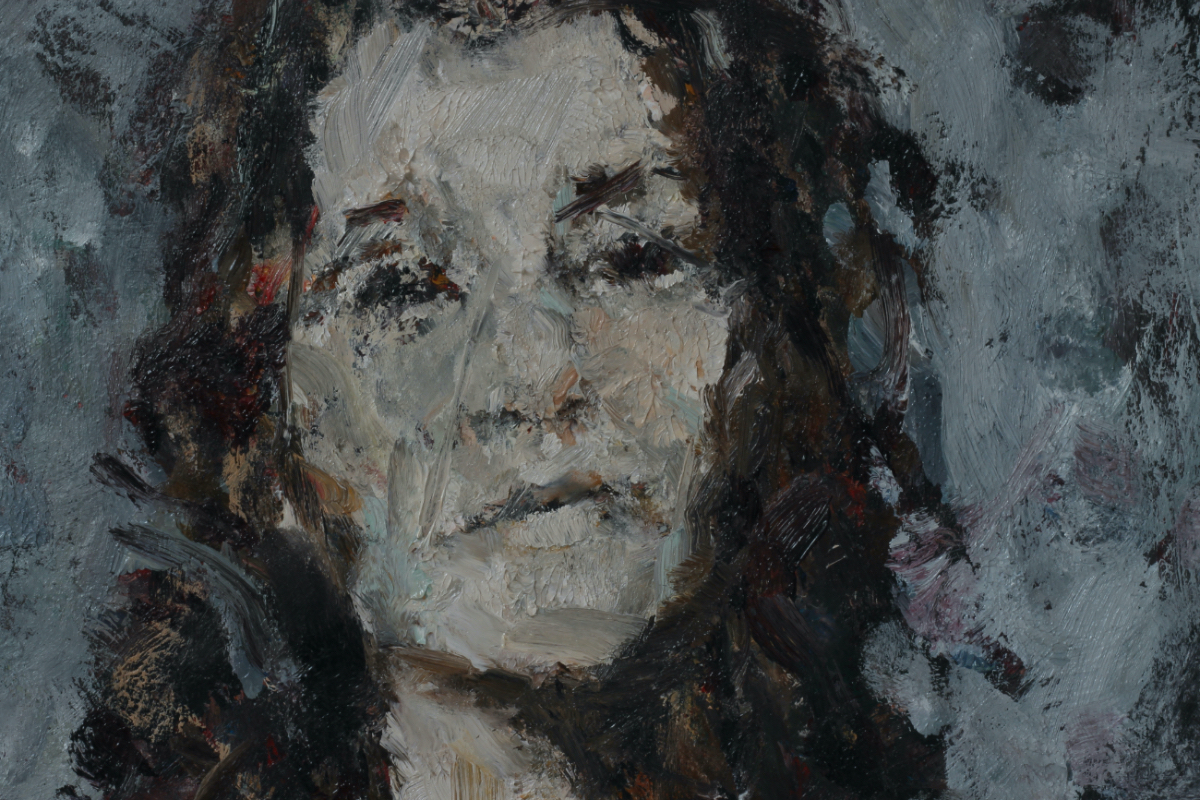
Dat ze haar handen voor haar borsten houdt terwijl je haar vrouwelijkheid kunt zien is met opzet gedaan…
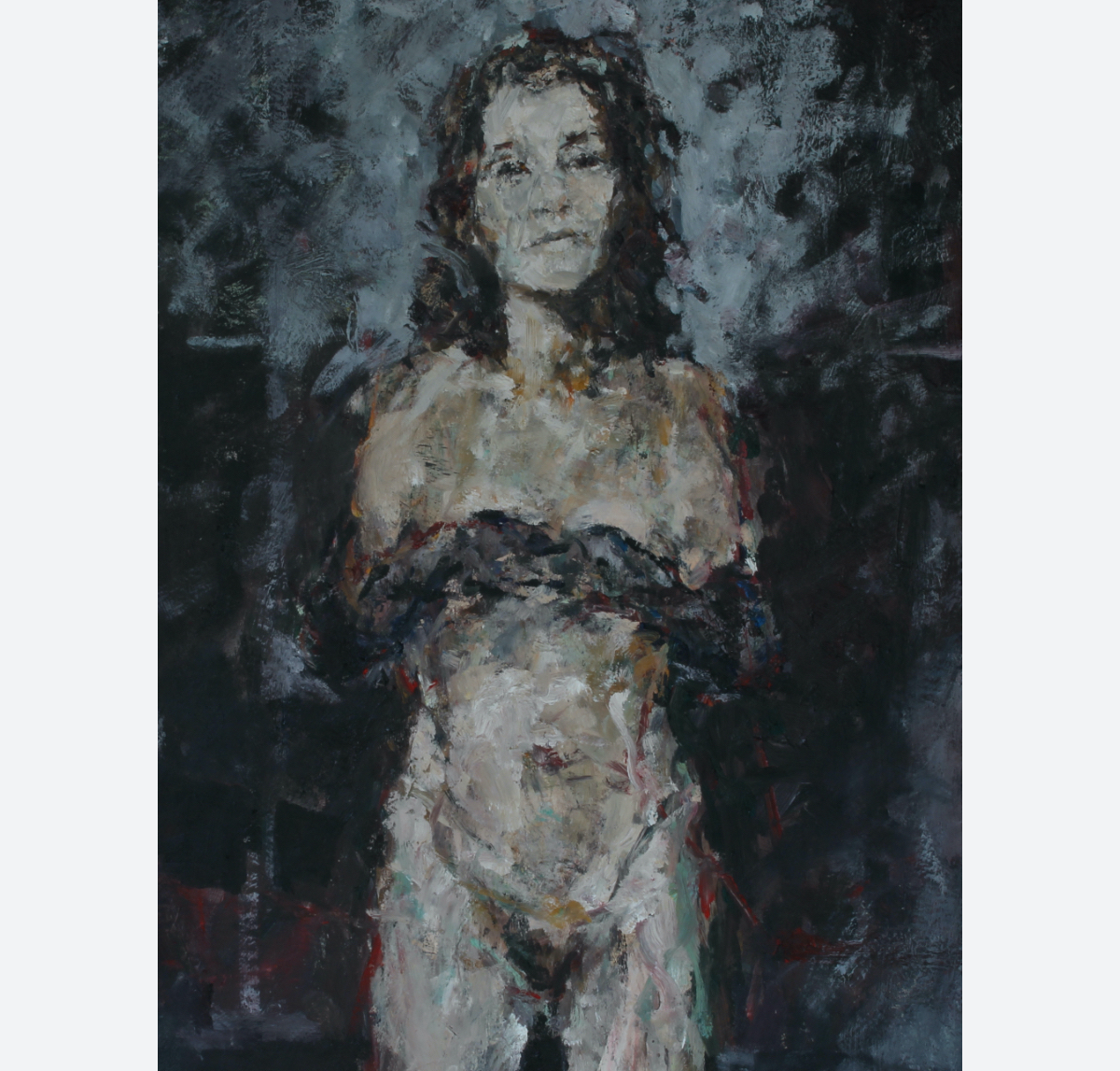
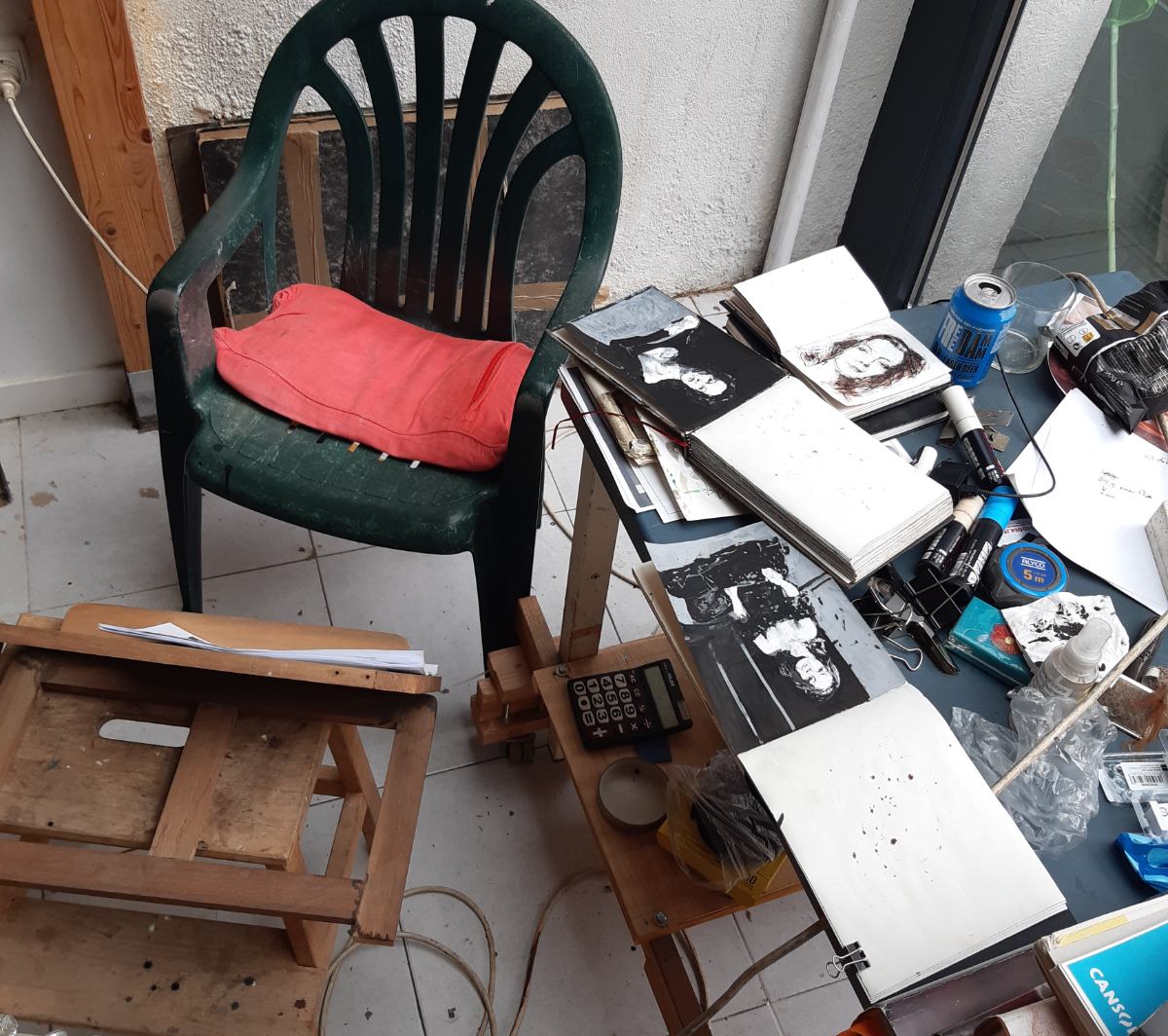
Hier het hele schilderij en in het atelier.
Ik sluit een video van Mahler bij. Romy Schneider werd door de regisseur Claude Sautet met wie ze 5 films maakte vergeleken met Mozart.
Daarop antwoordde Bertrand Tavernier dat ze meer een sfeer van Verdi en Mahler om zich had hangen. Mij doet ze ook veel meer Mahler denken.
Ik weet het, het is het Adagietto van de vijfde en gedirigeerd door Claudio Abbado. Ik heb een zwak voor hem…